



Close Menu

    Get the latest news around the globe

    Editor's Pick

    Meta adds default end-to-end encryption on Facebook & Messenger

    Use of antibiotics in agriculture threatens human immune system; Study

    Heatwave alerts spread across Australia as temperatures soar

    Facebook X (Twitter) Instagram
    Facebook X (Twitter) LinkedIn Instagram
    Britain HeraldBritain Herald
    Subscribe
    • Home
    • World Roundup
    • Business
    • Tech World
    • Entertainment & Events
    • Curious
    • More…
      • Spotlight
      • Knowledge
      • Lifestyle
      • Awareness
      • Women World
      • Sports
      • Travel
      • Notable
      • Contact Us
    Britain HeraldBritain Herald
    Home » AI used to design fully functional viruses for first time
    World Roundup

    AI used to design fully functional viruses for first time

    The breakthrough could help develop treatments for antibiotic-resistant infections but has also prompted warnings about the potential misuse of AI-designed biology.
    Akshara DasBy Akshara DasAugust 7, 2026
    Facebook Twitter LinkedIn WhatsApp
    AI
    Image Credits: Stanford University | Cropped by BH

    California: Artificial intelligence has been successfully used to design complete genomes for new functional viruses for the first time, marking a significant advance in synthetic biology while prompting fresh concerns about biosafety and security.

    Researchers at Stanford University used AI models known as Evo1 and Evo2 to generate designs for bacteriophages, viruses that infect bacteria rather than people. The resulting viruses were capable of functioning and replicating under laboratory conditions.

    The researchers selected 302 of the most promising AI-generated designs and synthesised them in the laboratory. Of those, 16 successfully killed E. coli bacteria, demonstrating that generative AI could design complete viral genomes capable of performing biological functions.

    The models work in a way broadly comparable to large language models, which learn patterns and predict sequences of text. Instead of predicting words, Evo1 and Evo2 were trained to recognise and generate patterns in genetic sequences.

    The models were trained using genetic information from viruses, bacteria, plants and humans before being refined to generate bacteriophages targeting specific bacterial species. Researchers said the development could eventually help scientists create new phages to combat infections that have become resistant to conventional antibiotics.
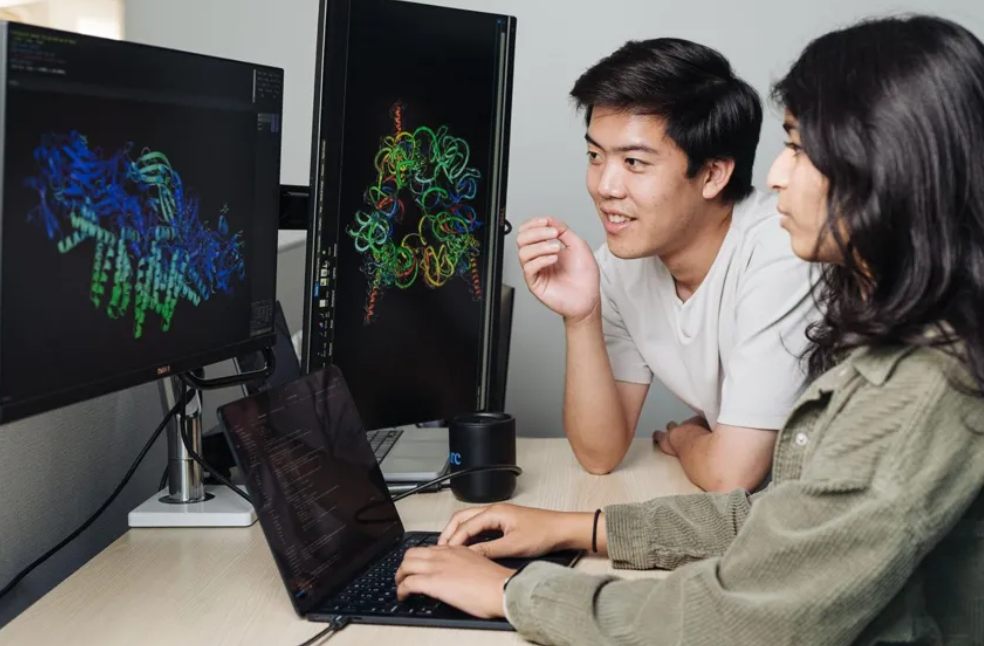
    AI Virus
    Image Credits: Stanford University | Cropped by BH

    AI-assisted biological design could also contribute to the development of medicines, enzymes and other therapies. However, the ability to use generative AI to design complete viral genomes has also raised concerns about potential misuse.

    Experts from the Johns Hopkins Center for Health Security, writing in a commentary accompanying the research in the journal Science, said the findings raised urgent questions about biosafety and biosecurity as AI systems become increasingly capable of designing novel biological systems.

    The Stanford researchers implemented several safeguards during the study. Viruses capable of infecting more complex organisms were excluded from relevant training data, the experiments focused on bacteriophages rather than human-infecting viruses, and laboratory work was conducted under controlled conditions.

    The achievement represents a significant increase in the complexity of biological structures that can be designed using generative AI. The bacteriophage genomes contained roughly 5,400 base pairs, considerably smaller than even the simplest living cells.

    The breakthrough also demonstrates how AI is moving beyond digital applications and increasingly being used to design biological structures that can be physically created and tested in laboratories.

    YOU MAY LIKE | Meta reveals AI model hacked external system during safety testing

    STAR OF SECTOR 2025
    AI Designed Viruses AI Genome Design AI Viral Genomes AI Virus Design Artificial Intelligence Viruses Bacteriophage Research Evo1 AI Model Evo2 AI Model Generative AI Biology Stanford AI Research
    Share. Facebook Twitter LinkedIn WhatsApp
    Akshara Das
    Akshara Das
    • Facebook
    • X (Twitter)
    • Instagram
    • LinkedIn

    Akshara Das holds a B.A. in Mass Communication and a PG Diploma in Journalism. She has been passionately involved in content creation since 2020 and is currently working as a Desk Reporter at Britain Herald and Emirati Times, both operated by WellMade Network. Readers are encouraged to verify facts independently and seek professional advice before making any decisions based on this content.

    Newly Updated

    Possible Ebola mutation under study as DRC outbreak rapidly expands

    August 7, 2026

    Thailand school shooting leaves teacher dead; 4 injured

    August 7, 2026

    US raises polysilicon tariff to challenge China market strength

    August 7, 2026
    STAR OF SECTOR 2025

    Business

    Toronto home sales rise for fifth straight month in July

    Business August 6, 2026

    Toronto: Greater Toronto Area home sales increased for a fifth consecutive month in July 2026,…

    Australia expands solar subsidies to cut costs for businesses

    August 5, 2026

    Tesla’s China footprint complicates path to possible SpaceX merger

    August 4, 2026

    London retailers adopt new tech to tackle shoplifting

    August 4, 2026
    Stay In Touch
    • Facebook
    • Twitter
    • LinkedIn
    • Instagram

    Curious

    Earth to witness billions receiving sunlight together

    July 8, 2026

    Ever wonder why lightning sounds different? Here’s why

    July 3, 2026

    Hercules: The giant hero among summer constellations

    June 22, 2026

    How third places create a sense of belonging in modern life

    June 11, 2026

    Get the latest news around the globe

    Knowledge

    10,000-steps rule: Where did that number actually come from?

    Lifestyle August 2, 2026

    Check your phone or smartwatch at the end of the day and you might see…

    Eating food earlier may help protect brain health; Study

    July 27, 2026

    How blue light from screens disrupts sleep and eye health

    July 19, 2026

    Urban Gardening: How to grow fresh food in small spaces

    July 15, 2026
    18-EA-387-TryEngineeringSummerInst_BannerAd_300x250_Robot
    About Us
    About Us

    Britain Herald is a global news brand that plays a significant role in educating and informing the masses with informative content, the latest updates, and current affairs across the World.

    Operated and Managed by WellMade Network, the portal is a sister concern of GCC Business News and Emirati Times. For inquiries about Media Partnerships, Investment and other opportunities in line with our Editorial Policy, please contact us at;

    Email Us: News@BritainHerald.com
    Whatsapp: +971 5060 12456

    We Have

    Possible Ebola mutation under study as DRC outbreak rapidly expands

    August 7, 2026

    Thailand school shooting leaves teacher dead; 4 injured

    August 7, 2026

    US raises polysilicon tariff to challenge China market strength

    August 7, 2026

    AI used to design fully functional viruses for first time

    August 7, 2026
    Facebook X (Twitter) LinkedIn Instagram
    • Home
    • Business
    • Tech World
    • Awareness
    • Contact Us
    Privacy & Cookies Policy | Terms & Conditions
    © 2002 BritainHerald.com, An Initiative by WellMade Network

    Type above and press Enter to search. Press Esc to cancel.