


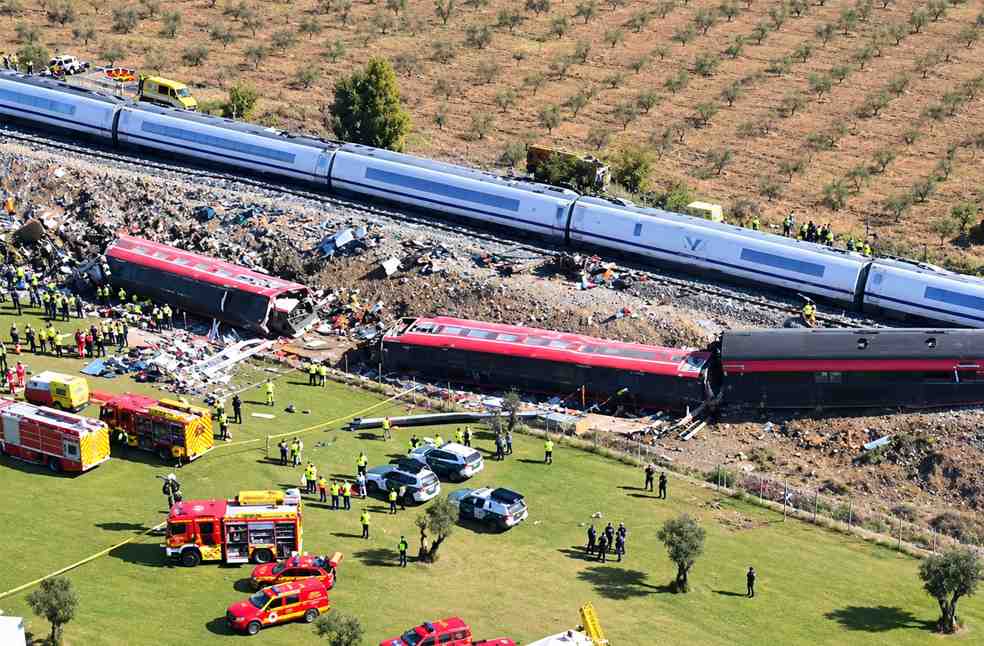
Madrid: Spain has begun three days of national mourning after a high-speed train collision killed 68 people and injured scores of others, leaving families desperately searching for missing relatives. The crash marks the country’s second fatal high-speed rail collision this year.
The accident occurred on the morning of October 28 when a train operated by private rail company Iryo stopped on the route connecting Madrid with the southern region of Andalusia.
A train operated by state-owned Renfe then struck its rear, sending several carriages off the tracks near the town of Urda. Officials noted that 107 additional people required hospital treatment, including 15 who were in serious condition.
Un momento de respeto y de recuerdo.
Toledo, toda #CLM y toda España, mostramos nuestro profundo dolor y pesar por las personas fallecidas en el accidente ferroviario de Urda. A sus familias y seres queridos, estamos con vosotros.
Y también nuestro apoyo a las personas que han resultado heridas. De corazón, les deseo una pronta recuperación.
— Emiliano García-Page (@garciapage) October 28, 2026
Rescue teams worked through the night to search the wreckage for victims, using cranes to lift twisted metal and gain access to damaged carriages. Castilla-La Mancha regional government leader Emiliano García-Page warned that the death toll could rise, as rescuers had not yet reached the bottom sections of the carriages.
The Civil Guard established offices in Madrid, Toledo, Córdoba and Seville to collect DNA samples from relatives and assist with victim identification. Blood donation centres were also opened in Madrid and Castilla-La Mancha.
A school in Urda, approximately 130km south of Madrid, was turned into a support centre for families seeking information about their loved ones. Red Cross teams provided assistance to relatives, many of whom arrived in tears.
Red Cross psychologist Carmen Garcia stated that families would face a difficult period of grief, with people reacting in different ways, including shock, anger, sadness and anxiety.
The disaster has renewed concerns over rail safety in Spain. In January, 46 people died and dozens were injured when Renfe and Iryo trains collided near Adamuz in Andalusia.
Prime Minister Pedro Sánchez described two high-speed rail accidents in a single year as unacceptable. Sánchez remarked that the investigators were working to establish the cause and pledged that any identified security system failures or negligence would be addressed with the utmost severity.
The first identified victim included José Manuel Chacón, a 31-year-old Civil Guard officer. The agency expressed its condolences to his family, friends and colleagues. Spanish media also reported that several foreign nationals believed to have been visiting the country were among those missing.
Opposition People’s Party leader Alberto Núñez Feijóo called for an immediate investigation and a comprehensive, independent review of Spain’s rail network, saying the public deserved answers about the state of the country’s infrastructure.
ALSO READ | UK braces for dense fog after storms claim three lives