


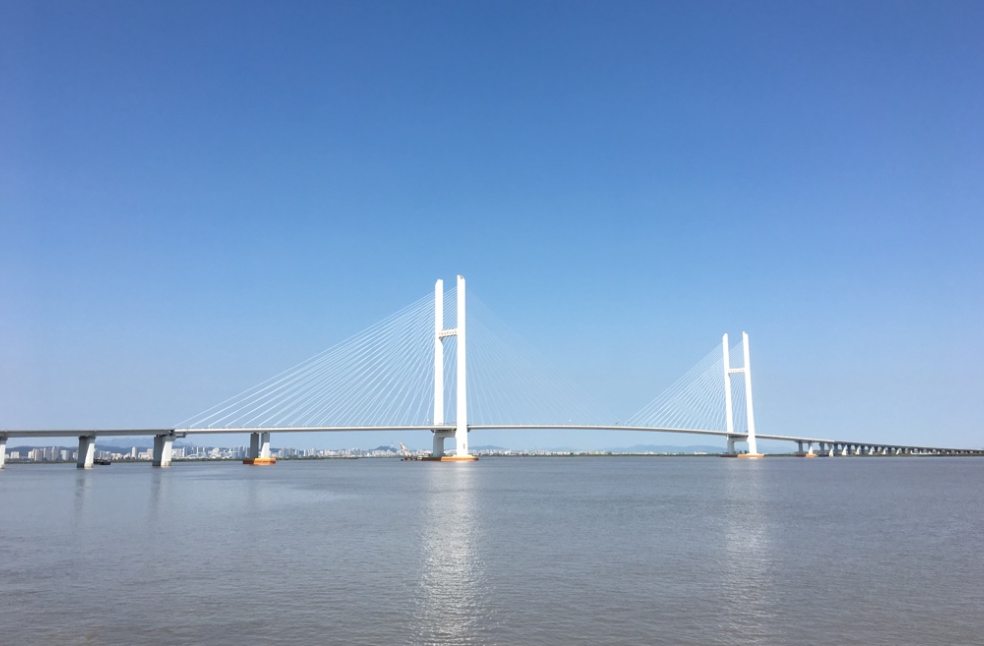
Beijing: China and North Korea are set to open the New Yalu River Bridge to traffic, marking a major development in cross-border connectivity and economic cooperation between the two neighbouring countries.
According to China’s state-run news agency, the bridge will become operational after years of delays, potentially creating new opportunities for trade and transportation between Beijing and Pyongyang.
China completed its section of the bridge in 2014 as part of efforts to strengthen commercial ties with North Korea. However, construction on the North Korean side remained unfinished for several years as diplomatic relations deteriorated following Beijing’s support for United Nations sanctions targeting Pyongyang’s nuclear weapons program.
The opening comes with renewed efforts to strengthen regional connectivity. Earlier this month, Russia and North Korea also inaugurated their first road bridge, highlighting Pyongyang’s growing economic and strategic engagement with its neighbouring countries.
China-North Korea economic relations
Economic cooperation between China and North Korea has shown signs of recovery in recent years. Chinese exports to North Korea reached $2.3 billion last year, the highest level in six years, representing a 25 percent increase compared with the previous year.
Diplomatic engagement has also intensified, with Chinese President Xi Jinping visiting Pyongyang in June for the first time since 2019. Beijing has been working to rebuild its relationship with North Korea since 2018, following a period of strained ties linked to international sanctions and Pyongyang’s nuclear activities.
The two countries share a longstanding political and military relationship dating back to the Korean War. In 1961, they signed the Treaty of Friendship, Cooperation and Mutual Assistance, which remains China’s only formal military alliance.
The agreement includes a mutual defence provision requiring either country to provide assistance if the other faces an armed attack. Despite these historical ties, relations experienced significant challenges in 2017 when China supported tougher international sanctions against North Korea over its nuclear weapons development.
North Korea strengthens regional partnerships
North Korea’s expanding cooperation with Russia has introduced new dynamics into its relationship with China. Analysts suggest that Pyongyang’s closer ties with Moscow could reduce its traditional diplomatic and economic dependence on Beijing.
In 2024, North Korea and Russia signed a comprehensive strategic partnership treaty that included mutual defence commitments. Their military and political cooperation has strengthened considerably, with North Korea deploying thousands of troops to support Russia’s military operations in Ukraine.
Meanwhile, US President Donald Trump has expressed interest in reopening diplomatic engagement with North Korean leader Kim Jong Un. Trump has indicated the possibility of another meeting with Kim during his second presidential term, although no official summit has been announced. Previous negotiations between the two leaders ended without an agreement in 2019.
Despite improving diplomatic relations, North Korea has yet to resume issuing tourism visas to Chinese citizens, who previously accounted for a significant share of its international visitors.
Analysts believe stronger trade connectivity with China could play an important role in supporting North Korea’s civilian economy. While its economic exchanges with Russia are largely associated with military cooperation, trade with China could provide access to essential goods, industrial materials and other resources needed for domestic development.
The opening of the New Yalu River Bridge is therefore expected to serve as an important step toward expanding cross-border trade and strengthening economic relations between the two countries.
MOST READ | Bank of America fined $1.2bn over money laundering failures
