


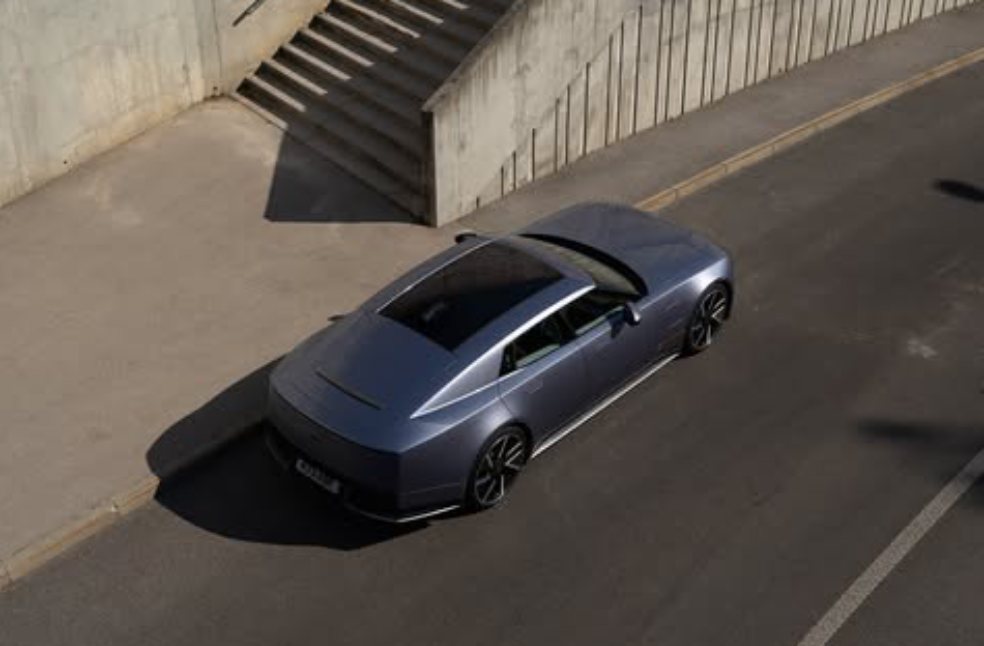
United Kingdom: Jaguar has unveiled its new all-electric Type 01, marking a major step in the luxury carmaker’s efforts to reinvent the brand following a controversial rebranding campaign that sparked widespread criticism.
The four-door Grand Tourer is the first of three planned electric models and features a long bonnet inspired by the iconic Jaguar E-Type of the 1960s. The model combines a distinctive design with high-performance electric technology as Jaguar seeks to establish itself as a premium electric vehicle brand.
Its electric motors deliver around 1,000 horsepower, enabling the car to accelerate from 0 to 62mph in just 3.2 seconds. Jaguar stated that the vehicle can achieve a range of up to 320 miles at sustained highway speeds. The company has described the Type 01 as the most technically advanced, powerful and aerodynamic Jaguar ever engineered.
However, the unveiling has generated mixed reactions, with the car’s bold styling dividing opinion among industry observers and potential customers. Some critics have compared its appearance with vehicles from other luxury and electric carmakers, while others have praised Jaguar for taking a distinctive approach rather than producing another conventional luxury EV.
The launch also comes nearly two years after Jaguar’s dramatic rebranding campaign attracted intense attention. In 2024, the company introduced a new visual identity through an unconventional advertising campaign featuring brightly coloured outfits and a new logo, but notably no cars.
The campaign was followed by the presentation of radical concept cars in Miami, featuring striking colours such as Miami Pink and London Blue. Jaguar’s decision to reposition itself as an all-electric luxury marque triggered criticism from some sections of the media and social media, with opponents accusing the company of abandoning its heritage.
Jaguar’s transformation formed part of JLR’s broader strategy announced in 2023, which included a planned investment of $19.8 billion (£15 billion) in new models and technologies. The company subsequently phased out production of its previous Jaguar models during 2024 and 2025 as it prepared for the new electric era.
Since the controversial rebrand, Jaguar has undergone further changes, including the departure of design chief Gerry McGovern, a split with the agency behind the rebranding campaign and the appointment of a new chief executive.
The Type 01 therefore represents more than the launch of a new car. It is a major test of whether Jaguar can successfully reposition itself in an increasingly competitive luxury EV market. The company will face established rivals including Porsche and Mercedes-AMG, alongside rapidly expanding Chinese electric vehicle brands. The challenge is particularly significant in markets such as the US, where demand for electric vehicles has faced growing uncertainty.
Jaguar is expected to introduce two more electric models as part of its transformation. The success of the Type 01 could determine whether the marque’s ambitious reinvention becomes a successful revival or its final major gamble.
MOST READ | US files 40 cases to revoke naturalised citizens’ citizenship
