


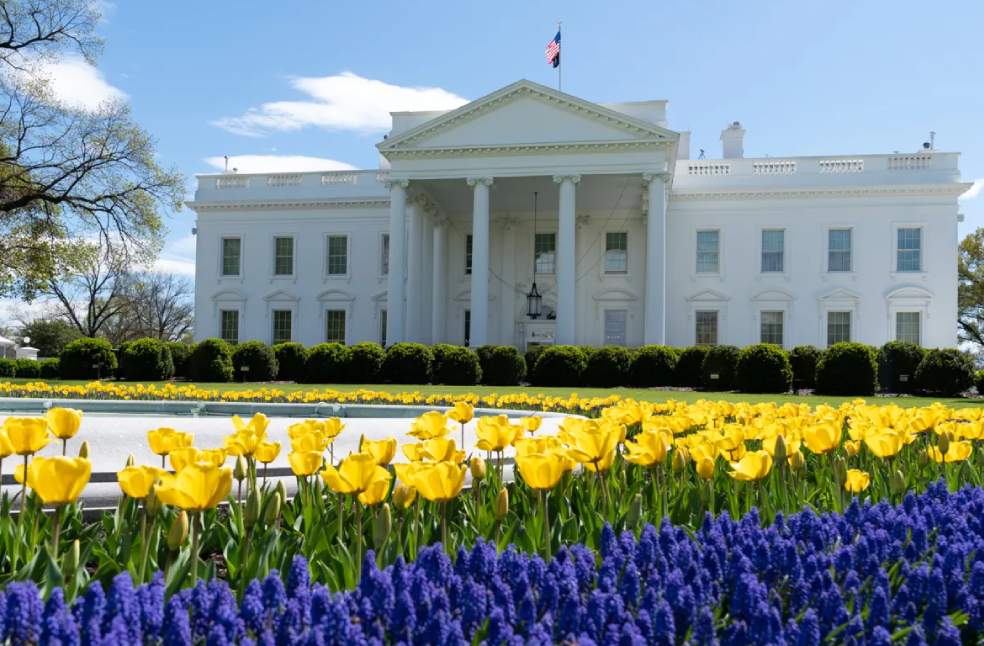
Washington: The US Supreme Court has cleared the way for construction of a $400 million ballroom at the White House, delivering a major legal victory to President Donald Trump.
In a 5-4 ruling, the justices granted the Trump administration’s emergency request to block lower court decisions that had sought to halt construction of the above-ground portion of the project. The ruling allows work on the proposed 90,000-square-foot ballroom to continue while the broader legal challenge proceeds.
The Supreme Court, however, did not make a final determination on whether the project itself is lawful. Five justices in the majority said the lower courts had likely exceeded their authority by ordering construction to stop. They also found that the National Trust for Historic Preservation, which filed the lawsuit, likely lacked standing to challenge the federal government over the project.
The decision drew a strong dissent from Chief Justice John Roberts, who joined the court’s three liberal justices. Roberts argued that the construction was likely unlawful because Congress had not authorised the project.
The National Trust for Historic Preservation said it was disappointed by the ruling but welcomed Roberts’ dissent. The organisation has argued that the president does not have unilateral authority to demolish part of the historic White House complex and undertake a major redesign without congressional approval.
Trump demolished the historic East Wing last autumn to make way for the ballroom project. The White House has said construction is expected to be substantially completed by November, with the full project scheduled for completion by August 2028.
Trump has repeatedly said the White House needs a larger space to host major events. He has also highlighted security concerns as a reason for the project, particularly following an alleged assassination attempt at the White House Correspondents’ Association dinner in April.
The preservation group argued that the construction could cause irreversible damage to a historic landmark. Alison Hoagland, a Washington DC resident and member of the trust’s board of trustees, said the proposed ballroom could affect her professional and personal interests connected to the area’s cultural and historical character.
Following the Supreme Court ruling, Trump said he was pleased that what he described as a ‘baseless’ lawsuit had failed to stop construction. He called the ballroom project one of the major developments planned for Washington, DC.
The ballroom is part of a broader effort by Trump to reshape parts of the capital. Other plans include changes to the Lincoln Memorial Reflecting Pool and a proposed monumental structure dubbed the ‘Arc de Trump’, which has been compared with Paris’s Arc de Triomphe.
POPULAR | A Legend Bids Farewell: Messi’s Argentina era ends
