


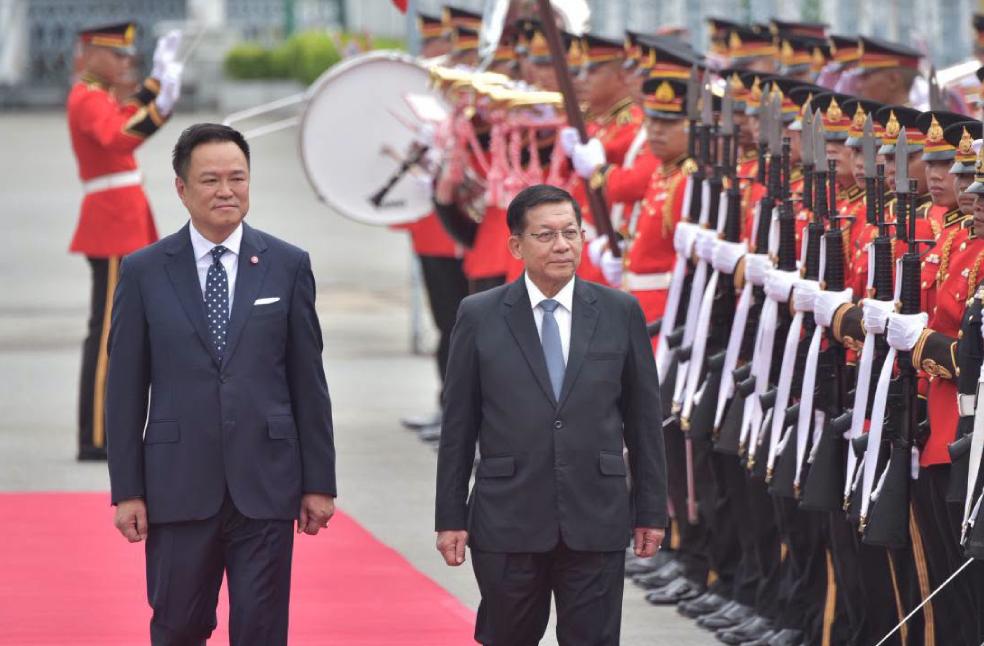
Bangkok: Myanmar President Min Aung Hlaing has arrived in Thailand for an official state visit, marking his first trip to the country since leading the military coup that overthrew Aung San Suu Kyi’s elected government in 2021.
The visit signals Thailand’s growing diplomatic engagement with Myanmar’s military-led administration, despite widespread international criticism. The 2021 military takeover plunged Myanmar into a prolonged civil conflict that has claimed thousands of lives, displaced millions, and severely damaged the country’s economy.
Min Aung Hlaing, who was previously sanctioned over his alleged role in the 2017 Rohingya crisis, has remained largely isolated on the global stage, facing accusations of crimes against humanity and restrictions from several Western nations.
Earlier this year, Min Aung Hlaing assumed the presidency after stepping down as military commander following a controversial general election. The vote was widely condemned by international observers as neither free nor fair, with major opposition parties barred from participating and voting unable to take place in many regions controlled by armed resistance groups. The outcome ensured the military-backed party secured dominance in the new parliament.
Despite being excluded from high-level meetings of the Association of Southeast Asian Nations (ASEAN) for failing to implement the bloc’s five-point peace consensus, Myanmar’s military leadership has recently received increasing diplomatic recognition from neighbouring countries.
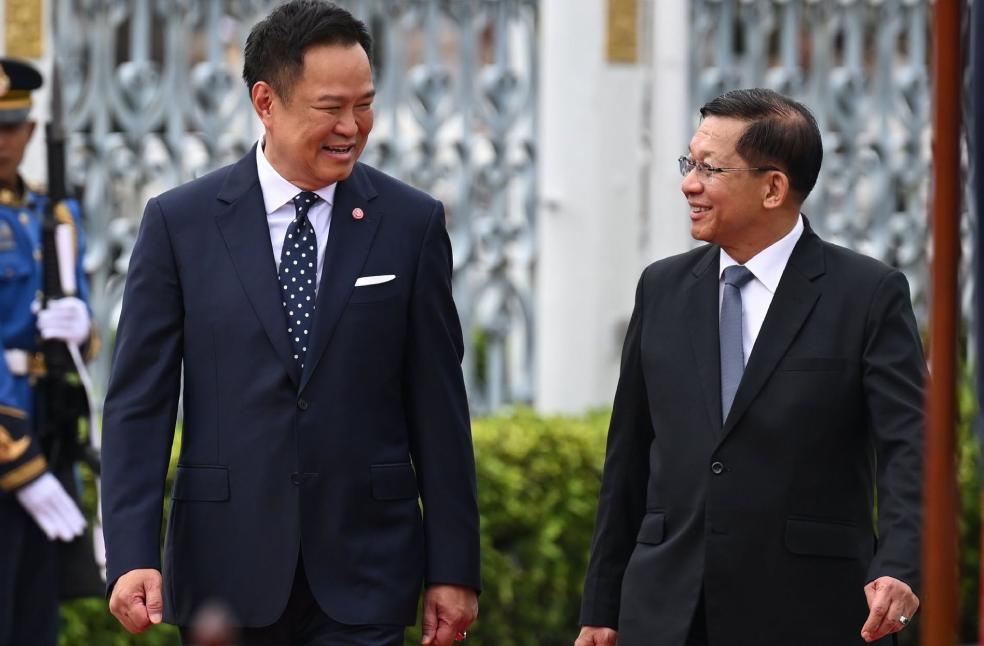
Thailand has defended its approach as a policy of ‘calibrated re-engagement,’ arguing that maintaining high-level communication is essential due to the two countries sharing a 2,400-kilometre border. Bangkok says cooperation is necessary to address cross-border challenges, including transnational crime, security, migration, and economic development.
During his visit, Min Aung Hlaing is receiving full state honours, including a red-carpet welcome from Thai Prime Minister Anutin Charnvirakul. His itinerary includes an official state dinner, meetings with leaders of both houses of Thailand’s parliament, and participation in a Thai-Myanmar business forum aimed at strengthening bilateral trade and investment.
The visit follows similar diplomatic outreach from China and India, both of which recognised Myanmar’s new government after the election and extended official invitations to Min Aung Hlaing. China’s continued backing has been viewed as particularly significant, helping Myanmar’s military regain territory lost to armed resistance groups during the ongoing conflict.
However, Thailand’s decision has sparked criticism from rights organisations and democracy advocates. Campaign group Justice for Myanmar accused Bangkok of granting the military government ‘false legitimacy’ through continued diplomatic engagement, arguing that such recognition undermines efforts to restore democracy and could prolong the country’s humanitarian crisis.
Several ASEAN members, including Indonesia, Malaysia, Singapore, and the Philippines, continue to push for stronger action against Myanmar’s military leadership, insisting that meaningful progress toward peace and dialogue must occur before normal diplomatic relations are restored.
Thailand’s latest move highlights the growing divide within ASEAN over how to engage with Myanmar’s military-led government, balancing regional security interests against calls for accountability and democratic reforms.
POPULAR | Alexandra Eala creates history with Washington open triumph
