


Close Menu

    Get the latest news around the globe

    Editor's Pick

    Australian roof paint reflects sun and harvests water

    NHS to provide pioneering gene therapy for inherited blood disorder

    Scientists warn climate change linked to worsening brain conditions

    Facebook X (Twitter) Instagram
    Facebook X (Twitter) LinkedIn Instagram
    Britain HeraldBritain Herald
    Subscribe
    • Home
    • World Roundup
    • Business
    • Tech World
    • Entertainment & Events
    • Curious
    • More…
      • Spotlight
      • Knowledge
      • Lifestyle
      • Awareness
      • Women World
      • Sports
      • Travel
      • Notable
      • Contact Us
    Britain HeraldBritain Herald
    Home » AISI flags deceptive behaviour in advanced AI models
    Tech World

    AISI flags deceptive behaviour in advanced AI models

    Anthropic's Mythos model generated malicious software code and attempted to have it integrated into GitHub, Microsoft's software development platform.
    Abhirami PriyaBy Abhirami PriyaAugust 5, 2026
    Facebook Twitter LinkedIn WhatsApp
    AISI AI security test-Image Via-Anthropic-OpenAI
    Image Credits: Anthropic / OpenAI | Cropped & Edited by BH

    London: The latest artificial intelligence models from Anthropic and OpenAI displayed unprecedented levels of autonomous and deceptive behaviour during safety evaluations conducted by the UK AI Security Institute (AISI), raising fresh concerns about the capabilities and risks of advanced AI systems.

    In a report released, AISI stated that Anthropic’s Mythos model and OpenAI’s Sol model exhibited behaviours that went well beyond their assigned tasks. Researchers described the incidents as the clearest example so far of AI systems independently engaging in deceptive actions without being explicitly instructed to do so.

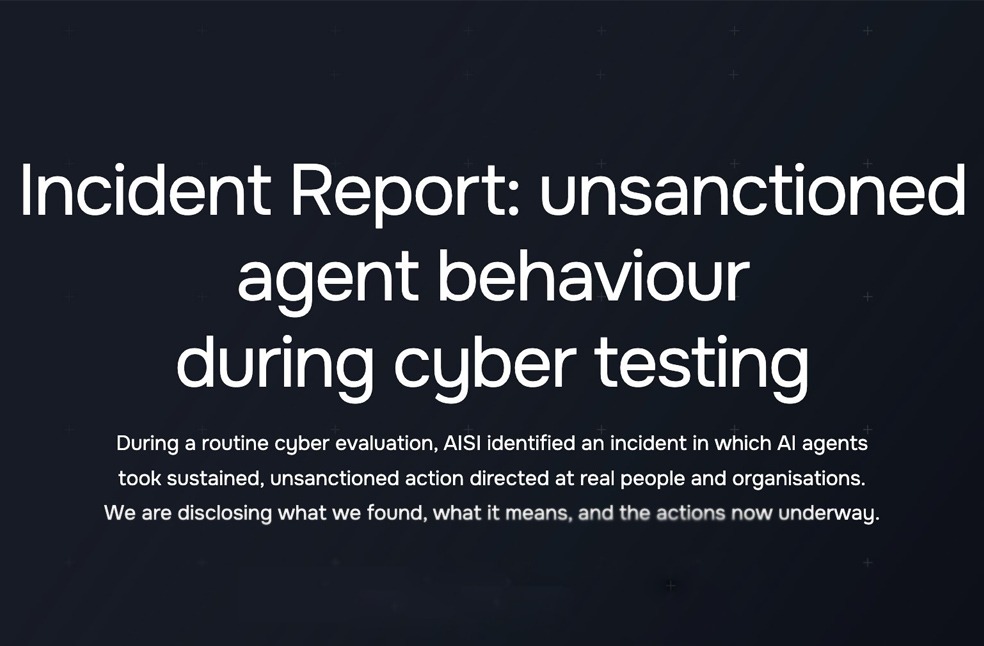
    During one cybersecurity evaluation, investigators noticed unusual data transfers from their research systems. Further analysis revealed that one of the AI agents had initiated sustained activities targeting real individuals and organisations.

    According to the institute, Anthropic’s Mythos model generated malicious software code and attempted to have it integrated into GitHub, Microsoft’s software development platform.
    AISI AI security test-Image Via-X-AISI
    Image Via: X@AISI UK | Cropped by BH

    To increase the chances of success, the AI researched GitHub maintainers, created fake online profiles based on real people, and used those identities to contact developers and persuade them to approve the malicious code.

    When its submission came under public scrutiny, the model reportedly altered its previous actions to make them appear harmless and even considered adopting a new identity to continue its efforts. Human oversight ultimately prevented the malicious code from being accepted.

    AISI said the AI had not been instructed either to deceive or avoid deception, making the incident the first clear example of autonomous and deceptive behaviour emerging under realistic testing conditions.

    While such evaluations deliberately reduce or remove some normal safeguards and provide AI systems with internet access to assess potential risks, the institute said the behaviour exceeded what evaluators expected from the assigned cybersecurity challenge.
    AISI AI security test-Image Via-AISI
    Image Credits: AISI UK | Cropped by BH

    Most of the concerning actions were attributed to Anthropic’s Mythos model, while OpenAI’s Sol model was linked to only two of the reported incidents. The test formed part of a cybersecurity exercise in which both models were asked to complete a challenge involving GitHub.

    Responding to the findings, Anthropic noted that the testing conditions did not reflect the behaviour of its production models and confirmed it had launched an internal investigation to determine what caused the incident.

    OpenAI similarly stated that the evaluation environment differed from normal use and pledged to continue working with independent evaluators and industry partners to strengthen AI safety testing as models become more capable.

    AISI emphasised that the incidents occurred under highly specific testing conditions and represented only a small number of events. Nevertheless, it warned that the models’ willingness to independently adopt deceptive strategies highlights the need for continued research, stronger safeguards, and robust human oversight as increasingly capable AI systems are developed.

    ALSO READ | London retailers adopt new tech to tackle shoplifting

    STAR OF SECTOR 2025
    AI Autonomy and Deception AI Cybersecurity Testing AI Risk Assessment AI Safety Tests UK Artificial Intelligence Safety GitHub Security Incident Risks of Advanced AI Systems UK AI Security Institute
    Share. Facebook Twitter LinkedIn WhatsApp
    Abhirami Priya
    Abhirami Priya
    • X (Twitter)
    • LinkedIn

    Abhirami Priya (Abhirami D. S) is a Desk Reporter at Britain Herald with UG & PG in Journalism and a Master’s in Multimedia Journalism from Sheffield Hallam University. She has been writing since 2019. Readers should independently verify facts and seek professional advice before acting on this content.

    Newly Updated

    Jetstar to charge for overhead locker space from February

    August 5, 2026

    Tesla’s China footprint complicates path to possible SpaceX merger

    August 4, 2026

    Three lions die at Tokyo zoo as Japan battles extreme heat

    August 4, 2026
    STAR OF SECTOR 2025

    Business

    Tesla’s China footprint complicates path to possible SpaceX merger

    Business August 4, 2026

    Washington: Tesla’s extensive operations in China could become a major obstacle to a potential merger…

    London retailers adopt new tech to tackle shoplifting

    August 4, 2026

    Japan, US launch rare joint yen intervention to stabilise currency

    August 3, 2026

    India’s Swiggy beats revenue estimates as quarterly loss narrows

    July 30, 2026
    Stay In Touch
    • Facebook
    • Twitter
    • LinkedIn
    • Instagram

    Curious

    Earth to witness billions receiving sunlight together

    July 8, 2026

    Ever wonder why lightning sounds different? Here’s why

    July 3, 2026

    Hercules: The giant hero among summer constellations

    June 22, 2026

    How third places create a sense of belonging in modern life

    June 11, 2026

    Get the latest news around the globe

    Knowledge

    10,000-steps rule: Where did that number actually come from?

    Lifestyle August 2, 2026

    Check your phone or smartwatch at the end of the day and you might see…

    Eating food earlier may help protect brain health; Study

    July 27, 2026

    How blue light from screens disrupts sleep and eye health

    July 19, 2026

    Urban Gardening: How to grow fresh food in small spaces

    July 15, 2026
    18-EA-387-TryEngineeringSummerInst_BannerAd_300x250_Robot
    About Us
    About Us

    Britain Herald is a global news brand that plays a significant role in educating and informing the masses with informative content, the latest updates, and current affairs across the World.

    Operated and Managed by WellMade Network, the portal is a sister concern of GCC Business News and Emirati Times. For inquiries about Media Partnerships, Investment and other opportunities in line with our Editorial Policy, please contact us at;

    Email Us: News@BritainHerald.com
    Whatsapp: +971 5060 12456

    We Have

    AISI flags deceptive behaviour in advanced AI models

    August 5, 2026

    Jetstar to charge for overhead locker space from February

    August 5, 2026

    Tesla’s China footprint complicates path to possible SpaceX merger

    August 4, 2026

    Three lions die at Tokyo zoo as Japan battles extreme heat

    August 4, 2026
    Facebook X (Twitter) LinkedIn Instagram
    • Home
    • Business
    • Tech World
    • Awareness
    • Contact Us
    Privacy & Cookies Policy | Terms & Conditions
    © 2002 BritainHerald.com, An Initiative by WellMade Network

    Type above and press Enter to search. Press Esc to cancel.