


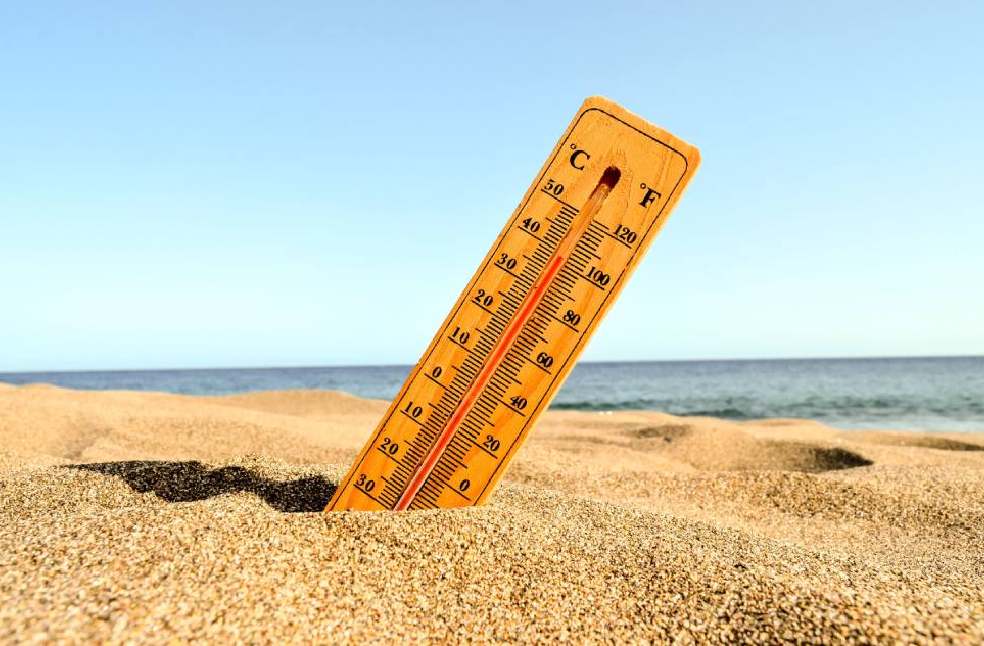
Europe: Western Europe has recorded its hottest June on record as heatwaves intensify across the region, raising risks for people, ecosystems and infrastructure.
Scientists have reported that extreme heat has pushed average surface air temperatures 3.06 degrees celsius above recent decades, according to the EU’s Copernicus Climate Change Service (C3S). The findings come as the UK has entered a third heatwave within six weeks while wildfires have spread rapidly across France and Spain.
Globally, June 2026 has been measured at 0.56 degrees celsius above the 1991–2020 average and 1.39 degrees celsius higher than preindustrial levels. This has made it the second-warmest June ever recorded. Ocean temperatures have also reached their highest levels on record, adding to climate concerns.
Western Europe has faced repeated heatwaves in a short span. Prolonged dry conditions have allowed small fires to escalate into large and difficult-to-control blazes.

Across southern Europe, large wildfires have destroyed extensive land areas. European Union authorities have deployed firefighters and water-dropping aircraft to support national emergency teams struggling with simultaneous outbreaks. Data has shown that wildfires across the EU have burned 56 percent more land than the seasonal average.
France has reported 35,400 hectares burned, which is four times higher than the usual figure for this period. Spain has recorded 55,128 hectares burned, which is double its seasonal average, based on figures from the European Forest Fire Information System.
In Spain, Barcelona has set a new temperature record of 40.5 degrees celsius. In France, a 22-year-old firefighter has died while responding to a blaze in the Alps, according to the interior ministry.

The UK’s National Fire Chiefs Council (NFCC) has warned of rising wildfire risks due to the ongoing heatwave. Fire services have responded to multiple incidents across southern and eastern England.
The World Health Organization (WHO) has estimated that 200,000 people have died from heat across Europe over the past four years. WHO has stated that most of these deaths could have been prevented with better preparedness measures. Recommendations include expanding cooling centres, improving healthcare response, and increasing shading in urban areas.
Urban tree cover has emerged as a key factor in reducing heat exposure. Analysis from the Energy and Climate Intelligence Unit (ECIU) has shown that UK cities average just 18 percent tree cover compared to about 30 percent across European cities. Out of 47 UK urban areas studied, 45 have fallen below the European average.
London has matched the national average at 18 per cent tree cover. Burnley has recorded the lowest level at 11 percent, while Guildford has reached 37 percent. In comparison, Barcelona has 31 percent tree cover and Nice has 39 percent.
Research has also indicated that the least shaded areas are often the most deprived. Neighbourhoods with higher tree cover have been up to 4 degrees celsius cooler during heatwaves, highlighting the importance of urban planning in adapting to rising temperatures.
ALSO READ | Australia network outage hits trains and emergency systems
