


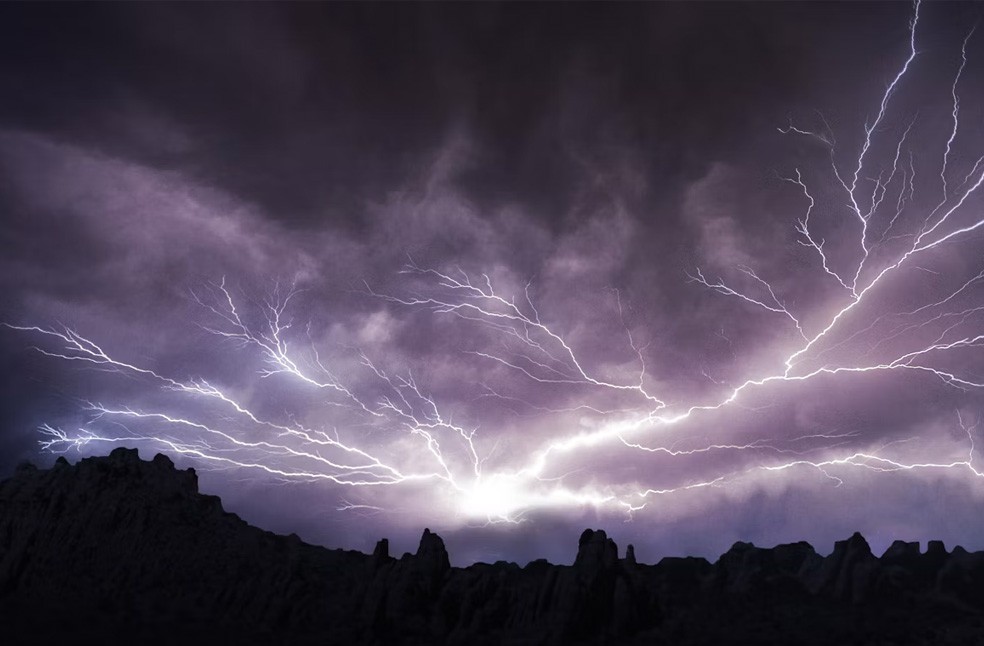
A lightning bolt heats the surrounding air almost instantly to temperatures of up to 30,000°C, causing the air to expand explosively. This rapid expansion creates a supersonic shock wave, which we hear as thunder. However, the way thunder sounds depends largely on how far a person is from the lightning strike.
When lightning strikes nearby, it often produces a sharp crack, snap, or loud explosive boom. Larger and more complex lightning bolts, made up of multiple branches, can generate a rolling peal of thunder as sound from different sections of the bolt reaches the listener at slightly different times.
Thunder from distant lightning sounds very different. As the sound travels through the atmosphere, higher-frequency waves are absorbed more quickly than lower frequencies. Over long distances, only the deeper, low-frequency sounds remain, creating the familiar rumbling effect.

This rumble can last much longer because the sound reflects off clouds, hills, and other landscape features, producing multiple echoes before gradually fading away.
Although low-frequency thunder can travel farther than higher-pitched sounds, it is still largely absorbed after about 10 miles (16 kilometres). Lightning, however, can remain visible from much greater distances, particularly over open plains or at sea.
This explains why people sometimes see flashes of lightning without hearing any thunder. The phenomenon has long been referred to as ‘heat lightning,’ especially on warm summer evenings, but the term is misleading. There is no separate type of lightning known as heat lightning, it is simply ordinary lightning occurring too far away for its thunder to be heard.
ALSO READ | India seeks pause on WhatsApp username feature rollout
