


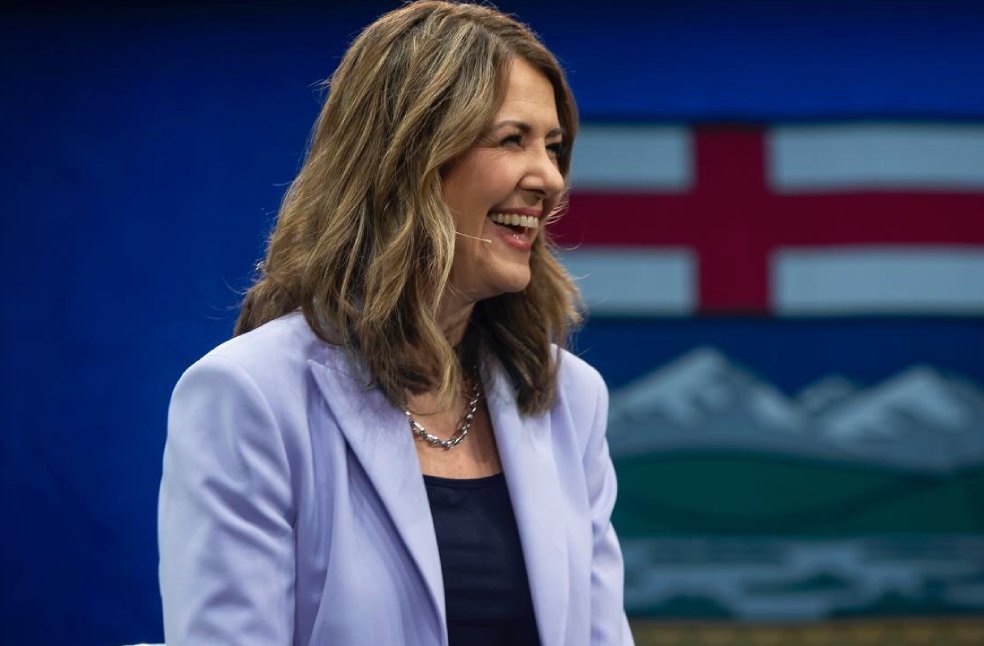
Alberta: Premier Danielle Smith has announced that Alberta will hold a referendum on October 19 to determine whether the province should remain part of Canada or move toward a second binding vote on separation, setting up one of the most significant national unity tests in decades.
The announcement follows mounting pressure from separatist groups after a citizen-led petition supporting Alberta independence reportedly gathered more than 300,000 signatures earlier this year. A separate campaign supporting Alberta remaining within Canada attracted over 400,000 signatures, highlighting the province’s deepening political divide.
Speaking in a televised address, Smith said Albertans will be asked that, “Should Alberta remain a province of Canada or should the Government of Alberta commence the legal process required under the Canadian Constitution to hold a binding provincial referendum on whether or not Alberta should separate from Canada?” Despite opening the door to the vote, Smith said she personally supports Alberta staying in Canada.
Court ruling sparks political backlash
Smith sharply criticised a recent court ruling that halted verification of signatures tied to the separatist petition after Indigenous First Nations groups argued they had not been properly consulted, claiming the process violated their rights.
The premier accused the court of silencing Albertans seeking a vote on the province’s future. Smith added that delaying the debate would only deepen tensions surrounding Alberta’s place within the federation.
Separatist movement gains momentum
Alberta’s independence movement has grown steadily in recent years, fuelled by frustration over federal policies related to energy development, climate legislation and provincial autonomy. Many Albertans argue that Ottawa has restricted the province’s oil and gas sector while benefiting disproportionately from Alberta’s resource wealth.
Though separatist sentiment has gained visibility, opinion polls continue to suggest that most Albertans oppose leaving Canada. Lawyer and separatist advocate Jeffrey Rath criticised the referendum wording announced by Smith, claiming the premier had dealt a referendum question from the bottom of the deck and alienated her political base.
Echoes of Quebec’s independence battles
Canada has previously faced major unity crises, most notably in Quebec, which held two referendums on independence. The second vote in 1995 ended in an extremely narrow defeat for separatists, with 50.58 percent voting against independence.
Following that referendum, Canada introduced the Clarity Act, which outlines the legal framework for any province seeking separation.

Earlier this month, Mark Carney said Alberta would need to comply with the Clarity Act before any separation process could proceed. The legislation requires a clear referendum question and a clear majority vote in favour of independence before negotiations with the federal government can begin.
Even if Alberta voters support the October proposal, any future independence process would likely involve lengthy and politically difficult negotiations with Ottawa.
Federal leaders call for unity
Federal leaders have responded cautiously to the growing separatist debate. Dominic LeBlanc, Canada’s Minister of Internal Trade, said the federal government believes cooperation between Alberta and Ottawa remains the best path forward.
Meanwhile, Pierre Poilievre, who leads the federal Conservatives and is from Alberta, reiterated his support for national unity, saying he would continue campaigning to unite this country around hope.
Smith has recently worked with the federal government on major energy initiatives, including discussions around a long-sought oil pipeline to Canada’s Pacific coast. Earlier this month, Alberta and Ottawa announced a new climate and energy agreement that could pave the way for pipeline construction as early as next year.
Growing debate over Alberta’s future
While Alberta separatists remain divided on the ultimate goal of full independence, many are demanding greater provincial control over natural resources, taxation and political decision-making.
Smith accused Ottawa of attempting to centralise power at the federal level and said Alberta would continue resisting federal interference in provincial matters. The October referendum is expected to intensify political debate across Canada as questions surrounding regional autonomy, economic control and national unity return to the forefront of Canadian politics.
MOST READ | Standard Chartered to cut 7,800 jobs as AI reshapes banking operations
