


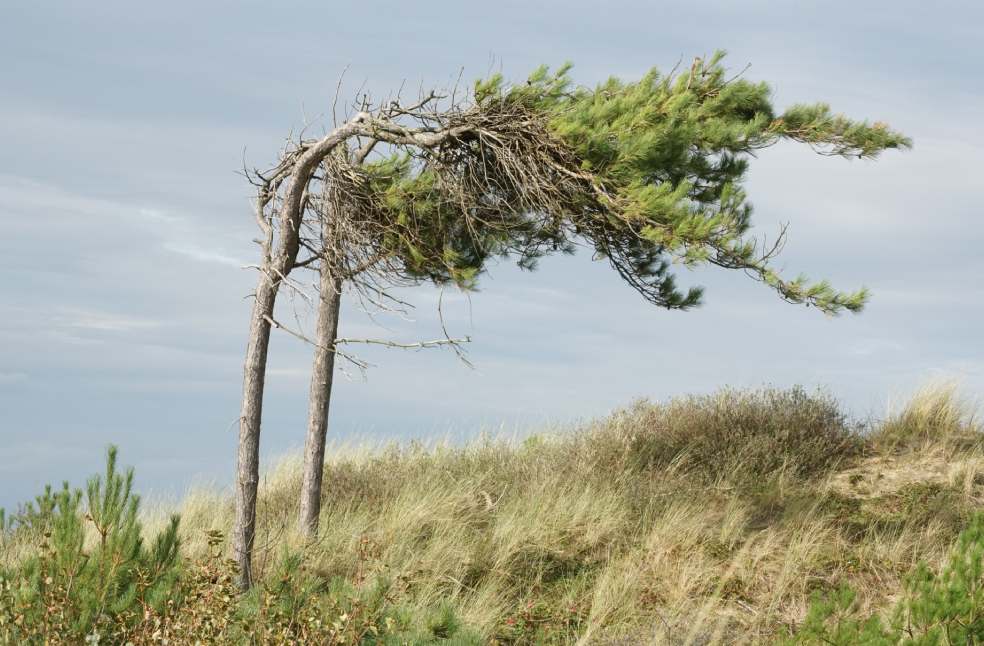
England: Two powerful storms, Boelo and Austen, have battered northern Europe, killing one person, leaving more than 150,000 homes without electricity and disrupting flights, mobile networks and transport services across several countries.
Authorities reported that more than 82,000 homes in the United Kingdom, nearly 60,000 in France and at least 10,000 in Germany remained without power after the storms swept through the region within 24 hours. The severe weather also brought down trees, damaged infrastructure and prompted warnings about flooding and dangerous coastal conditions.
In southwestern Scotland, a 60-year-old man died after being struck by a falling tree, while two women were injured in a similar incident in central Scotland, according to the Press Association. Wind speeds of up to 135 km/h (84 mph) were recorded in the Argyll and Bute region of western Scotland. Fallen trees and damaged power lines blocked roads and railway routes across Scotland and northern England.
Winds easing this evening as Storm Boelo pushes eastwards ⚠️
A mixture of clear spells and showers in the north 🌧️
Cloud thickening in the far southwest into the night ☁️ https://t.co/01ZGRcQf4R
— Met Office (@metoffice) October 25, 2026
The storms also caused damage along England’s southern coast, where strong winds from Austen blew away an unused pier in Brighton. The UK’s national weather service, the Met Office, warned that Storm Boelo could pose a danger to life due to flying debris and powerful waves. Authorities urged residents to remain indoors as much as possible and warned of potential flooding in parts of Scotland and England.
Storms cause widespread disruption across Europe
In France, energy company Enedis reported that approximately 288,000 homes lost electricity at the height of Storm Austen. Around 59,000 homes remained without power, mainly in the Normandy and Brittany regions. A marathon runner participating in a race in northern France sustained minor injuries after a tree fell in strong winds.
Germany also experienced significant disruption, with Austrian authorities cutting electricity to around 10,000 homes in and around Freiburg-Breisgau in the country’s southwest. The blackout affected mobile phone services and forced the town’s main hospital to restrict its operations to emergency cases. German police reported that two people were seriously injured when strong winds blew scaffolding onto a market in Nastätten.
The storms also affected the Netherlands and Belgium. In Brussels, falling trees injured four people, while three crew members aboard a freight ship were injured in rough weather north of the Dutch island of Schiermonnikoog. The country’s coastguard stated that two of the crew members were rescued by helicopter and transported to a hospital on the mainland.
Air travel across northern Europe faced major disruption, with hundreds of flights cancelled or diverted. Amsterdam’s Schiphol Airport, one of Europe’s busiest aviation hubs, was among the airports affected by the severe weather.
The storms come with growing concerns over the increasing frequency and intensity of extreme weather events associated with climate change. The widespread damage and transport disruption highlight the risks posed by severe storms to communities and critical infrastructure across Europe.
MOST READ | Giant Python successfully treated with human cancer therapy