


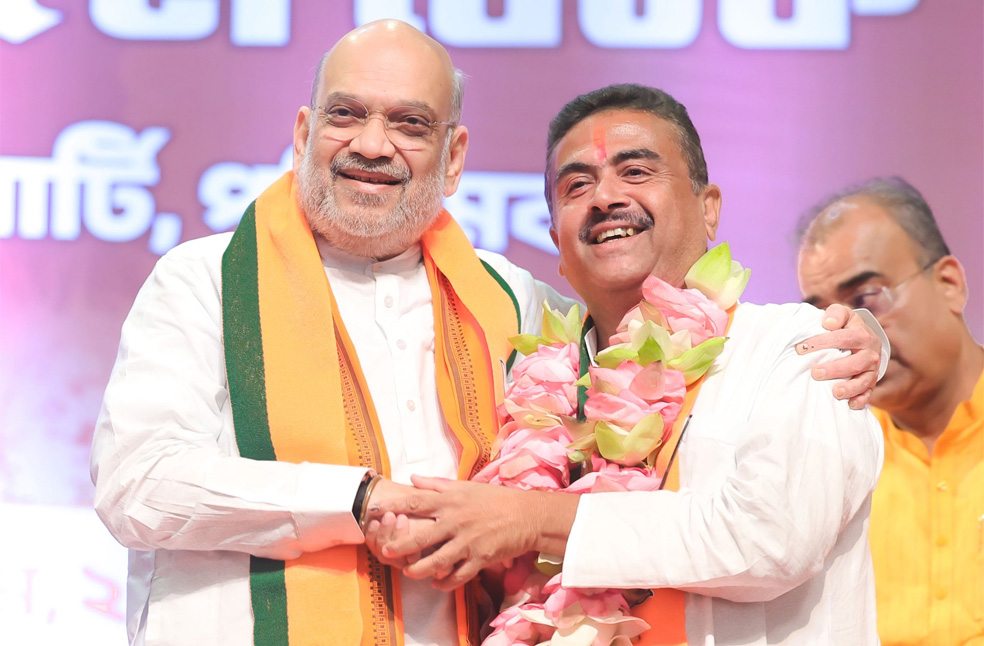
Kolkata: Indian politician Suvendu Adhikari, once regarded as a close protégé of outgoing West Bengal Chief Minister Mamata Banerjee, is set to replace her after the Bharatiya Janata Party (BJP) announced that he would become the state’s next chief minister, with the swearing-in ceremony scheduled for May 9.
The BJP secured a decisive victory in West Bengal’s assembly elections, winning 207 out of 294 seats during vote counting held on May 4. The result ended the 15-year rule of Banerjee’s All India Trinamool Congress (TMC) and brought the Hindu nationalist party to power in the state for the first time.
Over the years, Adhikari built a reputation as an aggressive political organiser with a strong understanding of Bengal’s shifting political landscape and an ability to consolidate grassroots support.
A historic dawn for West Bengal indeed.
It is a moment of profound pride and jubilation to welcome Visionary Leader Hon’ble PM Shri @narendramodi Ji to the City of Joy.
Today, as we witness the Swearing-in-Ceremony of the first-ever BJP Government in West Bengal since… pic.twitter.com/XCuJxwPBw3— Suvendu Adhikari (@SuvenduWB) May 9, 2026
Supporters view him as the BJP’s most recognisable face in West Bengal, rooted in local political networks rather than Delhi’s central leadership, while critics argue that he symbolises the increasingly polarised political rhetoric in the state.
Born in 1970 in Purba Medinipur district into one of West Bengal’s most influential political families, Suvendu Adhikari began his political career in the Congress party before joining the TMC during its rise as an anti-Left movement. His father, Sisir Adhikari, was a veteran Member of Parliament, and the Adhikari family established a strong political presence across coastal West Bengal, with several relatives holding elected positions over the years.
Adhikari first rose to prominence during the 2007 Nandigram protests against a proposed land acquisition project. The violent agitation weakened the then-ruling Left Front government and played a major role in helping Banerjee and the TMC come to power in 2011. Adhikari, who was deeply involved in organising the protests on the ground, emerged with a reputation as one of the state’s most effective political strategists and organisers.
For many years, he was considered one of Banerjee’s closest aides. However, in 2016, Suvendu Adhikari became embroiled in controversy following a sting operation in which several senior TMC leaders were allegedly filmed accepting cash from a fake businessman posing as an investor. Videos released before the state elections appeared to show Adhikari receiving money in his office, allegations he denied while questioning the authenticity and context of the footage.
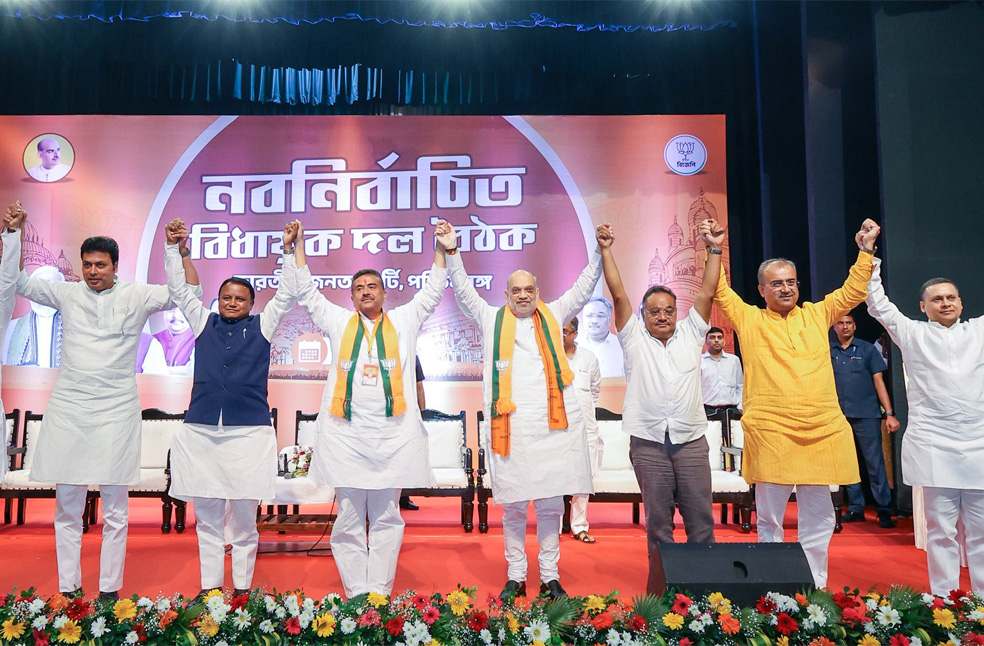
Relations between Adhikari and the TMC leadership deteriorated over time, culminating in his dramatic defection to the BJP in 2020, months ahead of the 2021 state elections. Contesting from Nandigram, he defeated Banerjee in one of the most closely watched electoral battles in the country.
Although the BJP lost the wider election that year, Suvendu Adhikari’s victory elevated his standing within the party and cemented his image as Banerjee’s principal political challenger.
Five years later, Adhikari has helped engineer an even larger political upset. In the 2026 election, the BJP not only swept to power but also defeated Banerjee in her long-time stronghold of Bhabanipur, where Adhikari contested against her while simultaneously retaining Nandigram.
His rise marks a dramatic political reversal in West Bengal, a state where the BJP had once been considered a marginal force. However, Adhikari’s political career has also been accompanied by repeated controversy over inflammatory and communal remarks.
ALSO READ | Cruise ship sails to Canary Islands after hantavirus outbreak
