


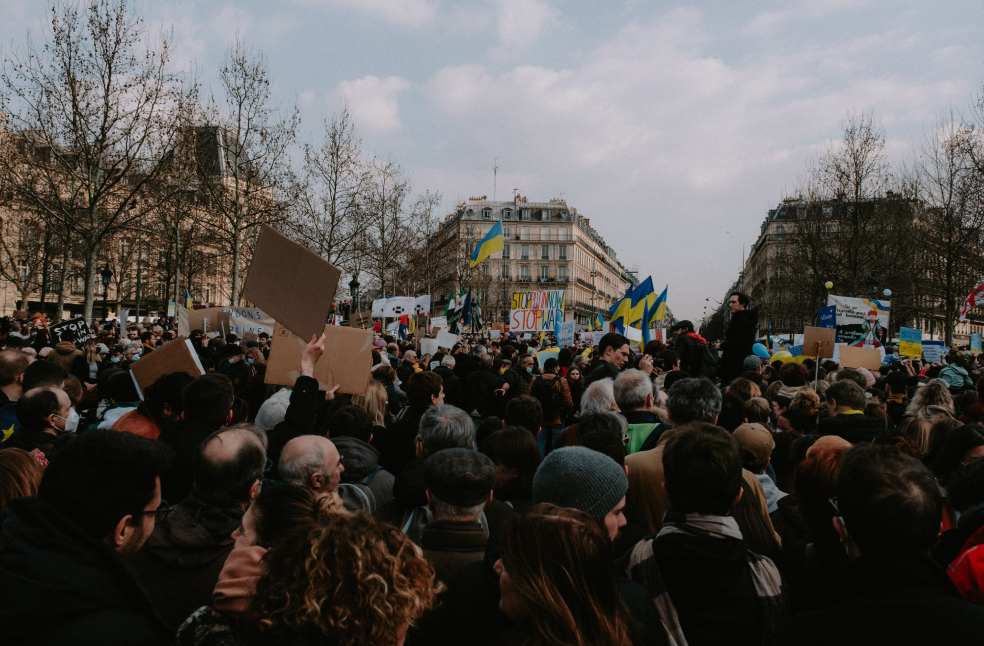
France: Hundreds of thousands of people have taken to the streets across France as protests led by high-school students expanded to include parents, university students and trade unions, intensifying pressure on the government over the state of the country’s education system.
Demonstrators gathered in cities including Paris, Marseille, Lyon and Rennes, demanding greater investment in schools, improved working and learning conditions and an end to what protesters described as excessive police action. In Paris, large groups of teenagers marched from Place de la République, calling for more resources for schools and opposing what they see as heavy-handed policing.
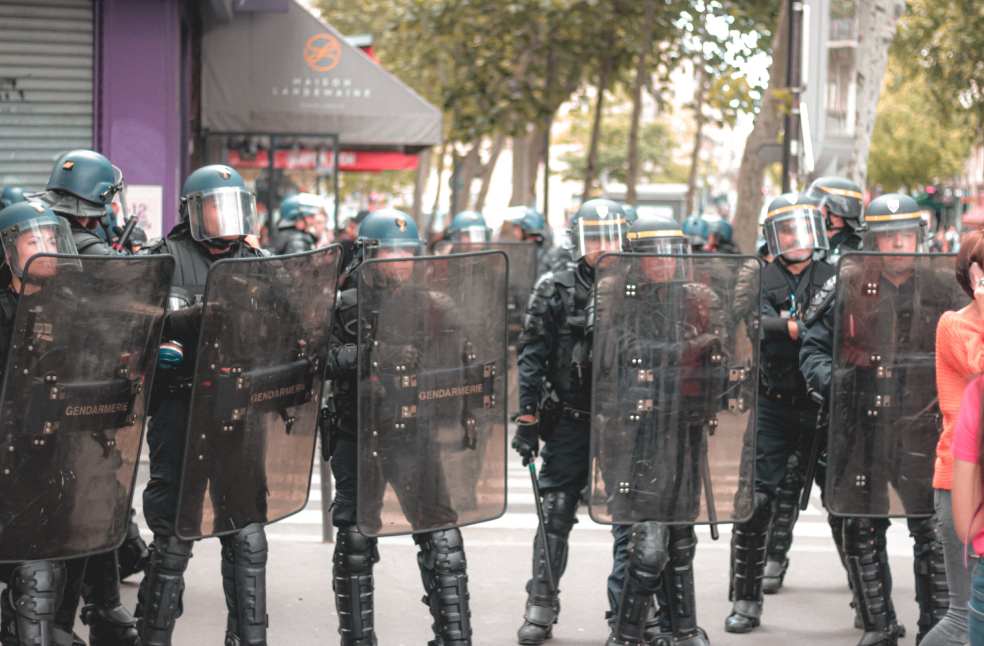
Clashes in several cities accompanied the demonstrations. Police used tear gas in Paris and Marseille, while water cannons were deployed in Rennes. Officers also confronted protesters in Lyon. However, authorities reported that unrest was less severe than some of the violence seen during earlier demonstrations.
Les manifestations d’aujourd’hui sont accueillies avec respect et même avec soulagement : enfin, les désaccords peuvent s’exprimer dans un cadre légal, déclaré et démocratique.
Il faut maintenant entendre le mécontentement et l’angoisse des lycéens, qui sont réels, sans céder aux instrumentalisations politiciennes.
Après quinze jours de mobilisation, les revendications sont nombreuses et différentes d’un lycée à l’autre. Il faut les objectiver, établissement par établissement.
C’est pourquoi du temps sera libéré dès cette semaine, à partir de mercredi, pour permettre à chaque équipe de direction d’organiser un temps de démocratie interne au sein de son lycée.
On ne peut pas condamner la violence sans, dans le même temps, donner toute sa place au débat au sein des lycées.
Remplacements, état des bâtiments, orientation, organisation du temps scolaire, démocratie lycéenne : tous les sujets doivent être mis sur la table.
Les conseils régionaux ont beaucoup fait ces dernières années pour nos lycées. Ce travail doit être reconnu. Une réunion de travail commune entre l’État et les conseils régionaux permettra d’objectiver la situation du bâti scolaire et d’avancer ensemble.
— Sébastien Lecornu (@SebLecornu) October 6, 2026
Prime Minister Sébastien Lecornu condemned the previous violence and highlighted that 215 students and 85 education staff members had been injured since the protests began, alongside 715 police officers. The government stated that demonstrations and blockades disrupted activity at 891 high schools, representing almost a quarter of the country’s lycées.
The unions also claimed that about 1,800 high schools had been blockaded as part of what they called the ‘Act Three’ of the protest movement.
Students demand better school conditions
In Marseille, thousands of protesters moved through the city, stopping at various points to chant slogans. Tensions rose when a group of masked demonstrators used bins and street barriers to create makeshift barricades as riot police moved towards them. Officers responded with tear gas, prompting the protesters to disperse.
Students remarked that poor infrastructure, overcrowded classrooms and a shortage of teachers were among the main reasons behind the protests. The protests began in mid-September following local anger over overcrowded classrooms, staff shortages and deteriorating school buildings in Seine-Saint-Denis, north-east of Paris. The movement has since spread to schools across France and has also reached some universities.
Government faces pressure over police response
The demonstrations have also sparked growing concern over allegations of disproportionate police force. France’s police inspectorate, IGPN, is investigating several incidents involving officers and protesters.
A police officer who fired a tear-gas grenade at a high-school student in Saint-Ouen-l’Aumône, north-west of Paris, has been charged with violence resulting in mutilation or permanent disability. The 14-year-old student, Eden, was reportedly left with a fractured jaw and severe dental injuries.
The French Interior Ministry stated that 6,547 people had been stopped or arrested by police since September 28 as authorities continued efforts to contain the unrest.
Political tensions rise
The protests have also become a growing political issue ahead of France’s next presidential election. In parliament, Prime Minister Lecornu accused the radical-left France Unbowed (LFI) party of attempting to ‘sow chaos’ ahead of the election, which is expected in about seven months.
President Emmanuel Macron is approaching the end of his second and final term, while LFI leader Jean-Luc Mélenchon is currently behind National Rally leader Marine Le Pen in opinion polls. Education Minister Édouard Geffray has urged students to engage in dialogue rather than blockade schools. However, he has also warned that ultra-violent elements have infiltrated some high-school protests.
The government’s initial measures, including a new website for students to submit complaints and a planned discussion session in schools, have so far failed to satisfy protesters.
MOST READ | US files 40 cases to revoke naturalised citizens’ citizenship
