


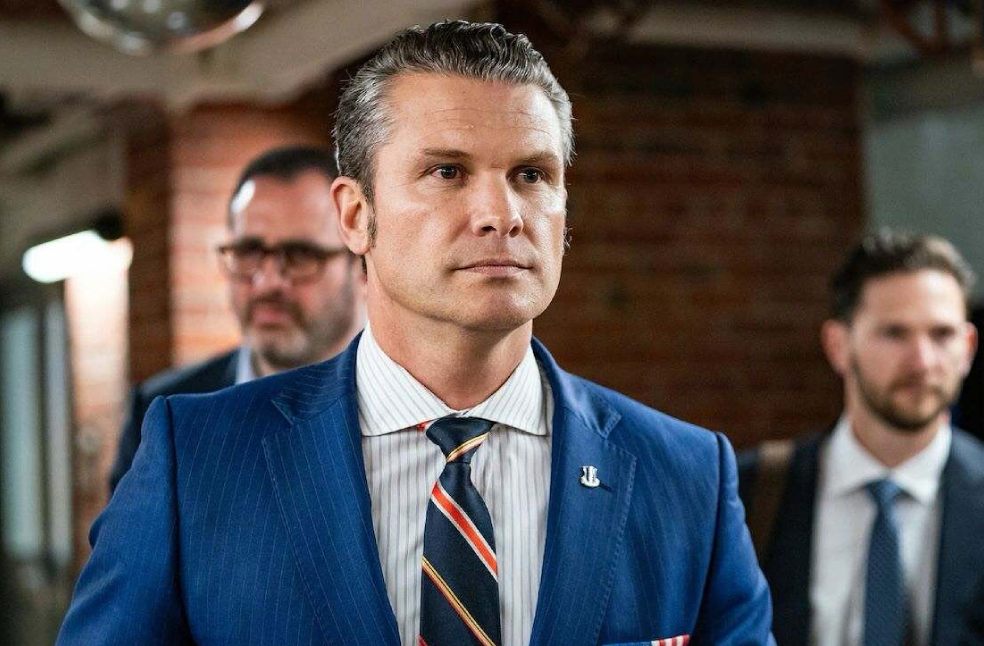
Texas: The United States has planned to livestream the execution of former US Army major Nidal Hasan, who killed 13 unarmed soldiers at Fort Hood in Texas in 2009, according to US Defence Secretary Pete Hegseth.
The announcement has drawn criticism from legal experts, who have questioned the legality and implications of broadcasting an execution to the public. A US Defense Department official stated that Hasan’s execution would be livestreamed. If carried out, the move would mark an unprecedented development in modern US history, with experts raising concerns over its legal basis and the potential consequences of making an execution publicly accessible.
Hegseth added that people needed to understand the serious consequences of such crimes. The Pentagon announced that Hegseth had recommended the execution and that US President Donald Trump had approved it. The execution is scheduled for December 3 at Fort Hood, Texas, and would be the first military execution in the United States in more than 60 years. It would also mark the first military execution by firing squad since the end of World War II.
Hasan, a US Army psychiatrist from Virginia, admitted during his court-martial proceedings that he was responsible for the November 5, 2009, shooting. The attack took place inside a crowded medical building where soldiers were awaiting medical examinations and vaccinations before deployment. It remains the deadliest non-combat attack on a US military base.
During his trial, Hasan stated that he believed he was protecting Muslims and the Taliban in Afghanistan. He was convicted and sentenced to death in 2013. However, the legal process surrounding his execution is not complete. According to legal experts, military executions require presidential approval, appellate review and a final determination that the sentence can legally proceed. John Mills, a lawyer who works with death-row inmates, remarked that Hasan could seek federal court review of his conviction and sentence, potentially delaying the execution.
Mills described the proposed livestream as unprecedented in the modern era and remarked that the execution was unlikely to take place soon given the outstanding legal proceedings. He also criticised the administration’s approach, arguing that broadcasting the execution would amount to political attention-seeking rather than delivering justice.

Eugene R Fidell, a visiting lecturer at Yale Law School, also expressed concern over the decision, describing the livestream proposal as a step backwards. Fidell highlighted further legal proceedings could continue for years, potentially extending beyond Trump’s current presidential term.
Deborah Denno, a law professor at Fordham University who has studied execution methods in the United States, remarked that no execution had previously been livestreamed in the country. She noted that such a broadcast could expose the public to a level of transparency surrounding capital punishment that the country had not experienced before.
The proposal has also raised questions about where the livestream would be hosted. Major platforms, including Meta, YouTube, TikTok and X, have policies restricting or prohibiting graphic violent content and footage depicting death. Meta and TikTok have explicit restrictions against livestreaming executions, while X’s policy allows for the removal of footage showing a person’s death under certain circumstances. Truth Social, the social media platform owned by Trump, does not offer a livestreaming feature for users.
According to Amnesty International, only two countries were known to have carried out public executions in 2025. Iran accounted for 11 known public executions, while Afghanistan recorded six. The organisation reported more than 2,700 executions across 17 countries during the year.
Trump has long supported the death penalty. After returning to office in January 2025, he overturned former President Joe Biden’s moratorium on federal executions and signed an executive order aimed at reinstating capital punishment and strengthening public safety.
The last military execution in the United States took place in 1961, when an Army private was hanged after being convicted of raping an 11-year-old Austrian girl. The last military execution by firing squad occurred in January 1945, when US Army deserter Eddie Slovik was shot during World War II.
The proposed execution and livestream remain subject to legal proceedings, leaving uncertainty over whether the execution will proceed as scheduled and how any broadcast would be made available to the public.
MOST READ | Google Maps helps UK motorists find cheaper fuel
