


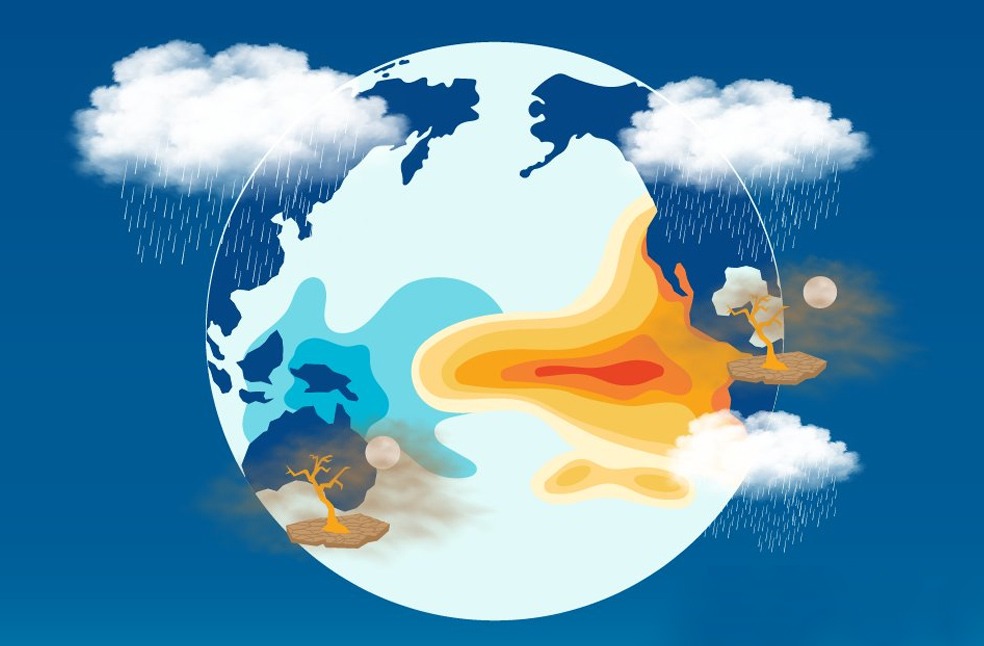
Singapore: The El Niño climate phenomenon is expected to strengthen further before reaching its peak in December and is almost certain to continue through February 2027, according to the World Meteorological Organization (WMO).
The UN weather agency noted that there is a near-100 percent probability that El Niño will persist through February, with the current event potentially becoming one of the strongest recorded since at least 1950.
WMO Secretary-General Celeste Saulo stated that sea surface temperatures in the central and eastern tropical Pacific are expected to reach exceptionally high levels between October and December.
El Niño will continue to intensify ahead of its forecast peak in December. Sea-surface temperatures in central & eastern tropical Pacific are set to increase to record levels. Above-average temperatures globally & shift in rainfall patterns are likely.
↪️ https://t.co/RkalrbYa4Q https://t.co/JkXBOhtYD7— World Meteorological Organization (@WMO) October 8, 2026
Temperatures in the region, which is central to the El Niño phenomenon, could rise to 3.7°C above normal during the period. This would exceed the previous record anomaly of 2.6°C recorded between November 2015 and January 2016.
The Secretary-General added that the unusually warm ocean is providing more heat that can be released into the atmosphere, contributing to the strength of the current El Niño.
El Niño is the warm phase of the naturally occurring El Niño-Southern Oscillation, a climate pattern that affects weather conditions around the world. It generally raises global temperatures and can disrupt rainfall patterns, bringing drought to some regions while causing heavier rainfall elsewhere.
The phenomenon typically occurs every two to seven years. Global temperatures are also continuing to reach exceptional levels. The European Union’s Copernicus Climate Change Service reported that the average global temperature in August was 16.96°C, matching July 2023 as the hottest month on record.
Researchers at the University of Chicago’s Climate Impact Lab said last month that the current event, described as a ‘super-El Niño,’ could contribute to as many as 451,000 excess deaths worldwide between June 2026 and February 2027.
MOST READ | Messi signs off Argentina career with goal and two assists
