


Close Menu

    Get the latest news around the globe

    Editor's Pick

    Google Pixel 10 launches with Gemini AI Magic Cue

    Greenland’s ‘rock flour’ offers promising solution for capturing CO2; Study

    Normal body temperature is no longer 98.6 degrees; Study

    Facebook X (Twitter) Instagram LinkedIn
    Facebook X (Twitter) LinkedIn Instagram
    Britain HeraldBritain Herald
    Subscribe
    • Home
    • World Roundup
    • Business
    • Tech World
    • Entertainment & Events
    • Curious
    • More…
      • Spotlight
      • Knowledge
      • Lifestyle
      • Awareness
      • Women World
      • Sports
      • Travel
      • Notable
      • Contact Us
    Britain HeraldBritain Herald
    Home » London LFR trial scans 500,000 faces with one false match
    Tech World

    London LFR trial scans 500,000 faces with one false match

    The six-month British Transport Police trial scanned over 500,000 faces across London railway stations, producing one false match at a cost of £320,786.
    Abhirami PriyaBy Abhirami PriyaSeptember 29, 2026
    Facebook Twitter LinkedIn WhatsApp
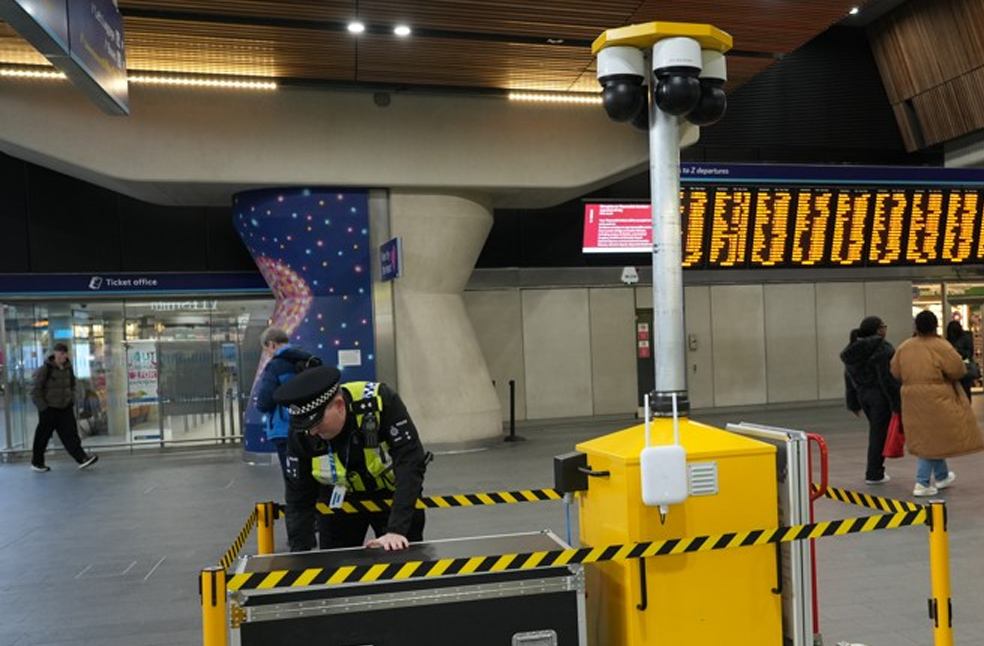
    London railway LFR Trial-Image Via-BTP
    Image Credits: British Transport Police | Cropped by BH

    London: A six-month trial of live facial recognition (LFR) technology at London railway stations cost more than £320,000, scanned more than 500,000 faces and produced only one alert against a police watchlist, which turned out to be a false match.

    The British Transport Police (BTP) conducted the trial between February and July across 18 deployments at some of the capital’s busiest transport hubs. The technology was tested as a way of identifying wanted offenders and people breaching court orders.

    Freedom of information data obtained by Liberty Investigates and shared with the Guardian showed that equipment hire and police staffing for the deployments cost taxpayers £320,786. The single watchlist alert did not lead to an arrest because it was an incorrect identification, known as a false positive.

    BTP announced last month that it would extend the trial by another four months, while also expanding deployments to London Underground stations.
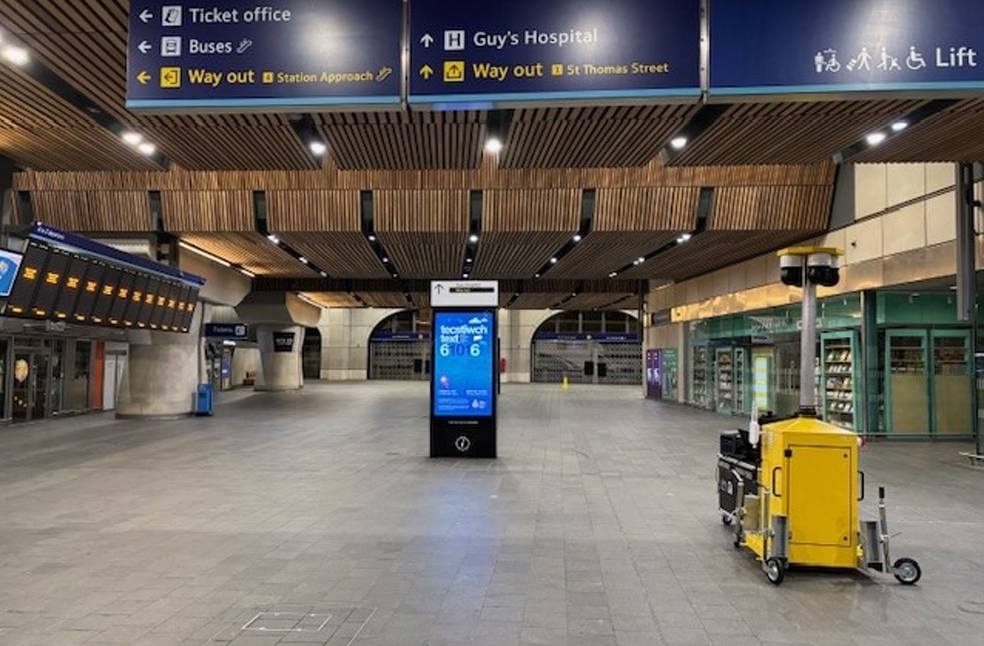
    London railway LFR Trial-Image From-BTP
    Image Credits: British Transport Police | Cropped by BH

    When Transport for London (TfL) announced its support for the extension, it emphasized that LFR would be used at selected key stations to identify people on police watchlists. TfL said the technology would also specifically target violence against women and girls, whose travel patterns can be affected by experiences of sexual harassment and sexual offences.

    Fraser Sampson, a former Biometrics and Surveillance Camera Commissioner, remarked that police needed to demonstrate that LFR deployments were proportionate. Sampson added that several factors could affect the effectiveness of the technology, including the location and time of deployment, the composition of the watchlist and the likelihood of people on the list being present.

    The Commissioner, who is now a non-executive director at facial recognition company Facewatch, noted that the use of LFR in public transport environments was different from its deployment in shops. While preventing a suspected offender from entering a shop could be considered a successful outcome, police deployments are intended to identify and apprehend people.

    The effectiveness of railway deployments therefore depended heavily on the police watchlists. People who are not included on a watchlist are not identified by LFR cameras, and their images are not retained in the same way as images captured through conventional CCTV.
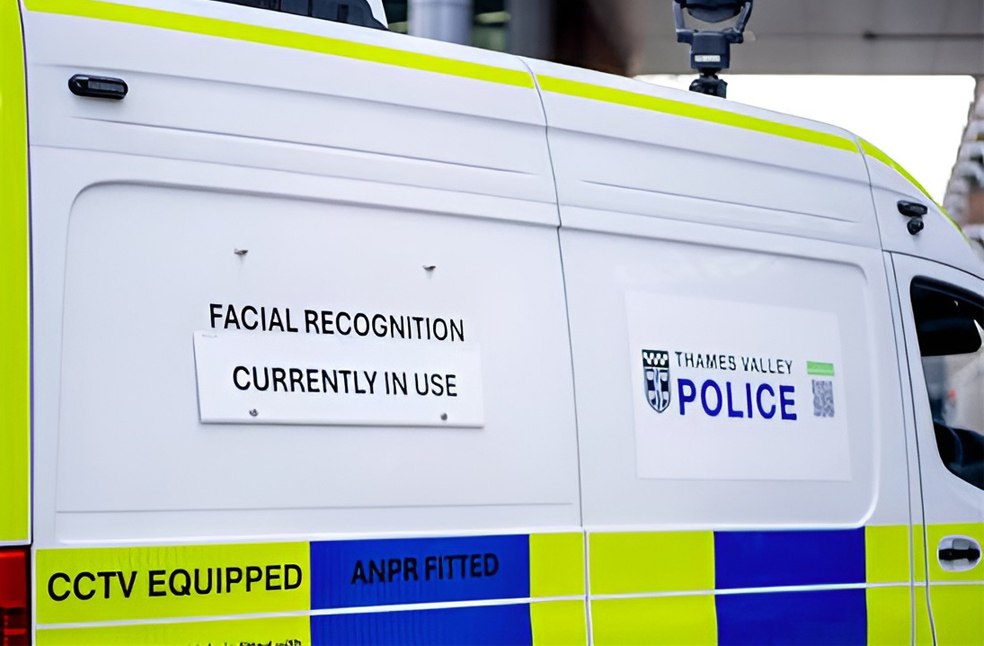
    London railway LFR Trial-Image From-TVP
    Image Credits: Thames Valley Police | Cropped by BH

    Sampson also emphasized that LFR processes special-category personal data, meaning its use must be appropriate, proportionate and necessary. He added that police must demonstrate that deployments meet those requirements and that oversight boards should scrutinise how the technology is being used.

    The Metropolitan Police and the London mayor’s office announced this summer that fixed LFR cameras would be installed in the capital’s West End. London Mayor Sadiq Khan has also confirmed that the technology will be used on the newly pedestrianised Oxford Street.

    A recent report by Parliament’s Joint Committee on Human Rights, which called for legislation to address the risks artificial intelligence poses to human rights, identified the expansion of live facial recognition as a particularly clear example of such risks.

    Labour MP Bell Ribeiro-Addy described LFR technology as a serious privacy concern and called for its rollout to be suspended until stronger safeguards, including a proper legal framework, are established. BTP stated that it launched the pilot to assess how LFR could best support identifying wanted offenders and people who may pose a risk to passengers and staff.
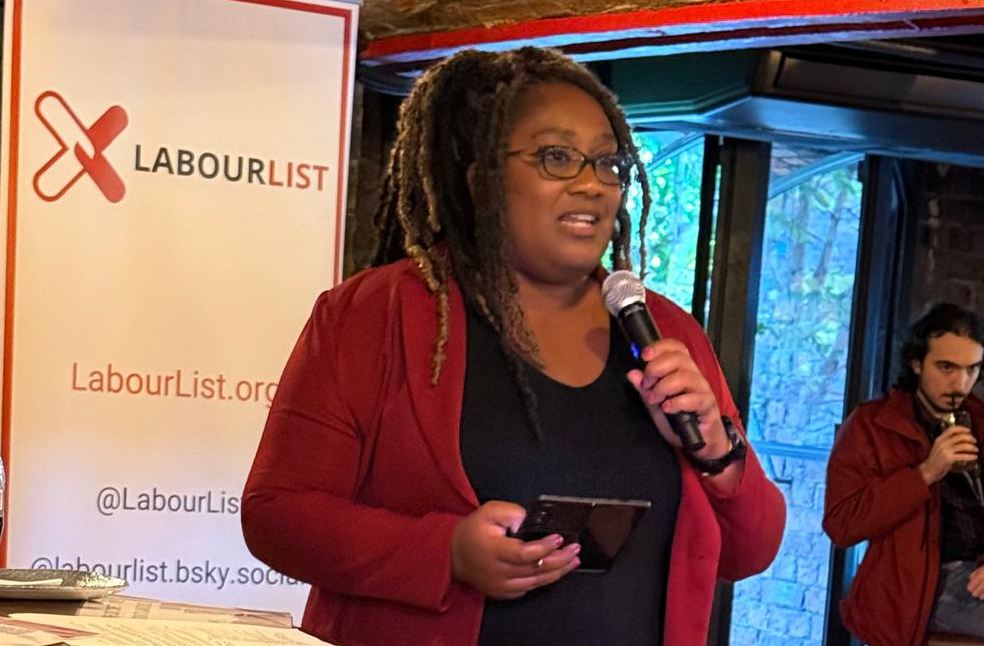
    London railway LFR Trial-Image From-X-MP
    Image Via: X@Bell Ribeiro-Addy | Cropped by BH

    The force noted that officers made several arrests during the deployments for offences including assault, theft, possession of an offensive weapon, breaches of criminal behaviour orders, and public order offences. Officers also located individuals wanted by courts and other police forces.

    However, BTP clarified that these arrests and other outcomes did not result directly from LFR alerts and therefore were not included in the LFR performance data.

    Throughout the pilot, BTP stressed that it refined how the technology was used in railway environments, including changes to deployment locations, operating procedures, equipment and watchlist construction.

    The force also noted that the growth of its watchlists had been deliberate and controlled, with the initial list kept more limited while BTP worked to ensure data quality, governance and safeguarding arrangements were robust.

    MOST READ | Is double-dipping unhygienic? Experts explain the risks

    STAR OF SECTOR 2025
    British Transport Police Facial Recognition Technology Live Facial Recognition London Facial Recognition London LFR Trial London Railway Stations Transport for London UK Police Watchlist
    Share. Facebook Twitter LinkedIn WhatsApp
    Abhirami Priya
    Abhirami Priya
    • X (Twitter)
    • LinkedIn

    Abhirami Priya (Abhirami D. S) is a Desk Reporter at Britain Herald with UG & PG in Journalism and a Master’s in Multimedia Journalism from Sheffield Hallam University. She has been writing since 2019. Readers should independently verify facts and seek professional advice before acting on this content.

    Newly Updated

    Tesla’s Full Self-Driving system approved in Croatia

    September 29, 2026

    Thai Airways faces flight disruption as Bangkok floods ease

    September 29, 2026

    India court overturns ban on Red Bull’s ‘energy drink’ label

    September 29, 2026
    STAR OF SECTOR 2025

    Business

    India directs captive coal plants to maximise power output

    Business September 26, 2026

    New Delhi: India has ordered 112 captive coal-fired power plants to operate at maximum capacity…

    Saudi missile interceptions raise fresh oil supply concerns

    September 25, 2026

    Europe August car sales gain as EV demand keeps growing

    September 24, 2026

    India’s green energy growth faces transmission challenges

    September 23, 2026
    Stay In Touch
    • Facebook
    • Twitter
    • LinkedIn
    • Instagram

    Curious

    Bolivia’s Yungas forests reveal new tiger cat species

    September 18, 2026

    Queensland woman gives birth to twins with different biological parents

    August 27, 2026

    Giant Python successfully treated with human cancer therapy

    August 21, 2026

    Forgotten history of dining tables and how we eat

    August 16, 2026

    Get the latest news around the globe

    Knowledge

    Merriam-Webster adds 1,400 new words to US dictionary

    Knowledge September 17, 2026

    New York: Merriam-Webster, America’s oldest dictionary publisher, has added 1,400 new words and meanings to…

    Could BRICS change how countries trade with each other?

    September 11, 2026

    Why migration is transforming cities around the world

    August 19, 2026

    Forgotten history of dining tables and how we eat

    August 16, 2026
    18-EA-387-TryEngineeringSummerInst_BannerAd_300x250_Robot
    About Us
    About Us

    Britain Herald is a UK rooted, digital first media brand focused on business, diaspora, leadership, innovation and international affairs. Built for the emerging authority economy, it values credible expertise, trusted institutions and recognised voices.

    Operated and Managed by WellMade Network, the portal is a sister concern of GCC Business News and Emirati Times.

    Email Us: News@BritainHerald.com
    Whatsapp: +971 5060 12456

    We Have

    London LFR trial scans 500,000 faces with one false match

    September 29, 2026

    Tesla’s Full Self-Driving system approved in Croatia

    September 29, 2026

    Thai Airways faces flight disruption as Bangkok floods ease

    September 29, 2026

    India court overturns ban on Red Bull’s ‘energy drink’ label

    September 29, 2026

    US-Canada trade war escalates as new import bans take effect

    September 29, 2026
    Facebook X (Twitter) LinkedIn Instagram
    • Home
    • Business
    • Tech World
    • Awareness
    • Contact Us
    Privacy & Cookies Policy | Terms & Conditions
    © 2002 BritainHerald.com, An Initiative by WellMade Network

    Type above and press Enter to search. Press Esc to cancel.