


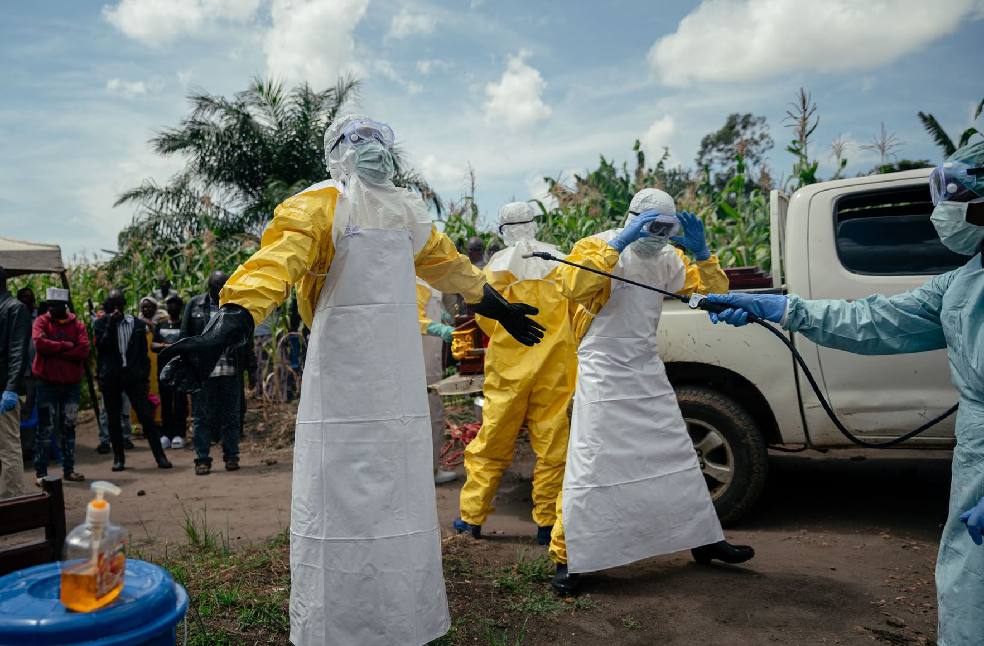
Bunia: Health workers in parts of the Democratic Republic of the Congo (DRC) have begun receiving the Ervebo vaccine as the country battles a fast-growing Ebola outbreak caused by the Bundibugyo virus.
The vaccination campaign began in Bunia, the capital of Ituri province, where the outbreak remains concentrated. The campaign is also being extended to North Kivu, where health authorities reported a sharp rise in cases. The effort is backed by the World Health Organization (WHO) and Doctors Without Borders (MSF).
About 50,000 health and other frontline workers are expected to receive Ervebo. The vaccine was developed and licensed for protection against the more common Zaire strain of Ebola. Its effectiveness against Bundibugyo virus has not been established in humans.
A further 20,000 recipients will take part in a clinical study lasting up to one year. The research will assess whether Ervebo provides protection against the strain responsible for the current outbreak. MSF and Epicentre launched the study in Bunia on September 19, with participants in Ituri and North Kivu expected to be followed for several months.
WHO experts noted that early evidence, including animal studies, indicates that Ervebo could offer some protection against Bundibugyo virus. However, WHO stressed that available evidence remains insufficient to establish its effectiveness against the strain in humans.
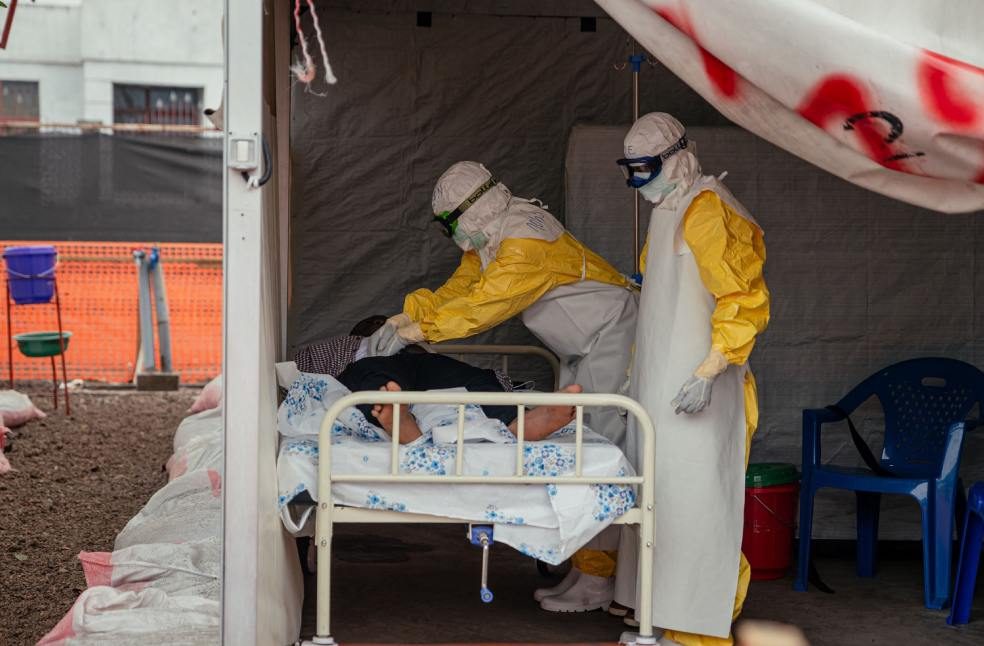
The DRC received an initial allocation of 70,000 Ervebo doses from the global Ebola vaccine stockpile in August. Of that total, 50,000 doses were designated for frontline and health workers while 20,000 were reserved for the clinical trial.
The vaccine is being provided under a compassionate-use programme, allowing a medical product to be used in a serious disease situation for a use that has not received specific approval.
The outbreak becomes the deadliest Ebola epidemic recorded in the DRC. Local authorities reported 7,541 confirmed cases and 3,639 deaths, with 1,823 people recovering. The outbreak also expanded beyond Ituri and continues to present major challenges for health teams working in affected communities.
WHO also reported encouraging signs that transmission may be declining in parts of Ituri. However, WHO warns that high population movement could allow further spread. MSF cautioned that there is still no clear evidence that the epidemic is under control.
Clinical research is continuing to identify vaccines and treatments specifically suited to Bundibugyo virus. For now, the Ervebo campaign is giving frontline workers access to a vaccine with established protection against another Ebola strain while researchers gather evidence on its possible role in the current outbreak.
RELATED POST | DRC reports decline in Ebola cases as outbreak passes peak
