


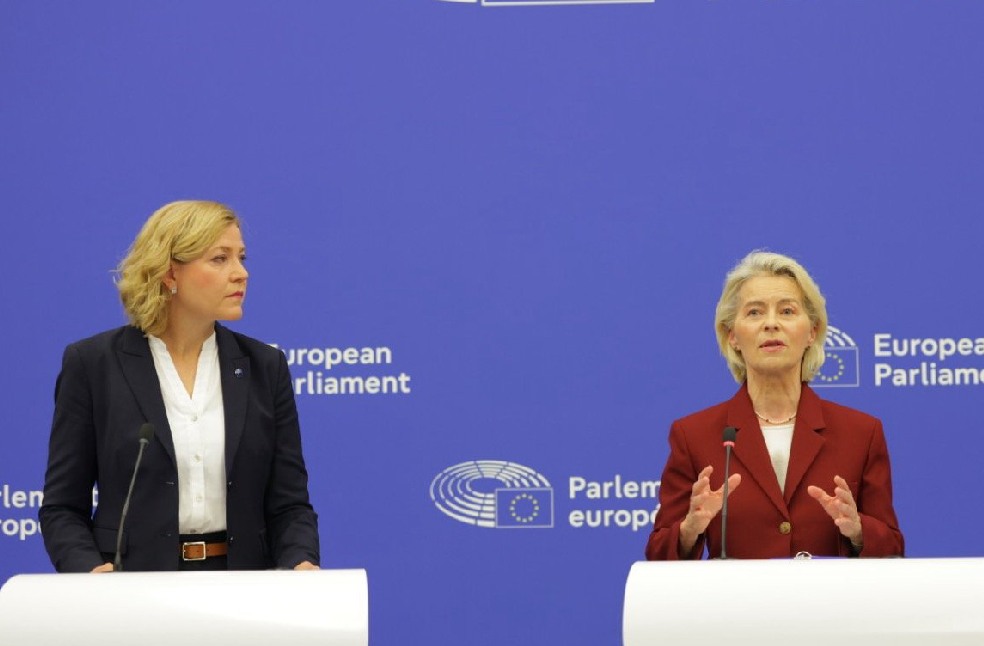
France: European Commission President Ursula von der Leyen has proposed banning children under 13 from social media as part of a wider plan to strengthen online safety for children.
The proposed EU Kids Act would also require online services to create safer accounts for children and introduce stronger parental controls. “Today, our children are engaging with some of the most sophisticated technology ever created, and it was not created with children’s well-being and development in mind,” von der Leyen said at a press conference.
The rules would apply to a broad range of online services, including social media platforms, video-sharing services, online video games, AI companions and chatbots used by children under 18. The proposal would prohibit features that the European Commission considers potentially harmful or addictive for children. These include infinite scrolling, reward-based engagement features, profiling-based recommendation feeds and unsolicited contact from strangers.
Every day our children are engaging with some of the most sophisticated technology ever created.
Technology that was not created with their wellbeing in mind.
We need to set clear boundaries in the digital world.
This is what our KIDS Act will do ↓ https://t.co/OfR5rYdwvT
— Ursula von der Leyen (@vonderleyen) September 17, 2026
AI companions and chatbots would have to be switched off by default for children. Online platforms would also be required to design algorithms with children’s safety in mind and provide accessible parental controls. Users would be given tools to block or mute other accounts.
The proposal follows similar efforts in countries including Australia, Britain, China, India and Turkey, as governments increasingly examine the impact of social media and other digital services on children. Australia’s experience enforcing its social media restrictions for children under 16 has also highlighted the practical challenges that could face other jurisdictions.
The proposed EU legislation will now need to be negotiated with EU member states and the European Parliament before it can become law. The initiative comes amid wider European concerns about children’s exposure to online content and the design of digital platforms, including services operated by major technology companies.
RELATED POST | EU plans new climate insurance scheme as weather risks rise
