


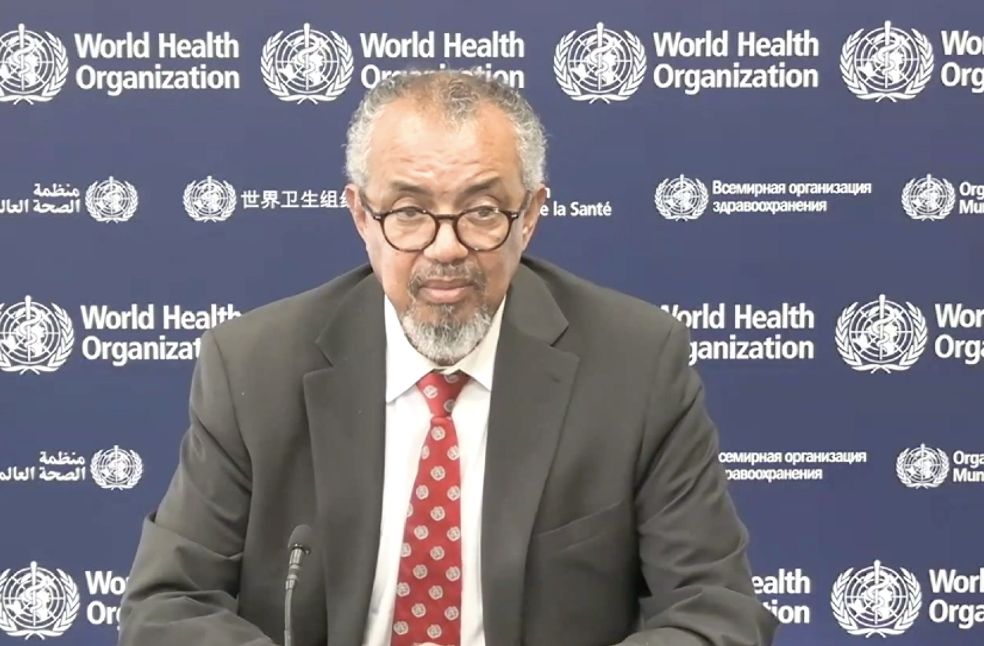
Kinshasa: The head of the World Health Organization has arrived in the Democratic Republic of the Congo as the country battles one of its most serious Ebola outbreaks in recent years. WHO Director-General Tedros Adhanom Ghebreyesus said the outbreak can still be brought under control despite the growing number of infections and deaths being reported across eastern parts of the country.
Tedros landed in Kinshasa before travelling to Ituri Province, the centre of the outbreak, where health authorities and aid organisations are struggling to contain the spread of the virus. Speaking after his arrival, he stressed that international cooperation and local community support would be crucial in stopping the outbreak. He also reiterated the WHO’s position that travel bans are not an effective solution and should not replace public health measures.
According to the latest figures, more than 1,000 confirmed and suspected Ebola cases have been recorded, while hundreds of deaths are under investigation. Health experts warn the true scale of the outbreak could be significantly larger because the virus may have been circulating undetected for weeks before authorities identified the first cases. The outbreak is linked to the rare Bundibugyo strain of Ebola, for which there is currently no approved vaccine or specific treatment.
To the people of DRC, especially to the people of Ituri
Jambo kwenu wakahaji wa Ituri
Mbote na bino, bato ya Ituri
My name is Tedros, and I am the Director-General of the World Health Organization (@WHO). But today, I am not writing to you as an official. I am writing to you… pic.twitter.com/RoXCWy50fk
— Tedros Adhanom Ghebreyesus (@DrTedros) May 28, 2026
The situation has been made even more difficult by ongoing conflict and insecurity in eastern DR Congo. Armed groups remain active in several affected areas, forcing many residents to flee their homes and making it harder for healthcare workers to reach vulnerable communities. Tedros issued a direct appeal for a ceasefire, saying conflict and displacement are creating additional obstacles for emergency medical teams responding to the crisis.
Neighbouring Uganda has already confirmed Ebola cases connected to the outbreak, prompting authorities to strengthen surveillance and border monitoring. Several countries in the region have increased screening measures to reduce the risk of cross-border transmission. Public health officials continue to focus on contact tracing, testing and safe burial practices to prevent further infections.
International aid efforts are also being expanded as humanitarian agencies rush medical supplies and personnel to the affected region. The WHO has delivered emergency health equipment to outbreak zones, while UNICEF and other partners are providing additional support. Despite the challenges posed by insecurity, limited healthcare resources and the absence of a vaccine, Tedros said he remains confident that the outbreak can be contained if response efforts are strengthened and communities work together to stop transmission.
ALSO READ | Suspected Ebola cases in DR Congo rise above 900
