



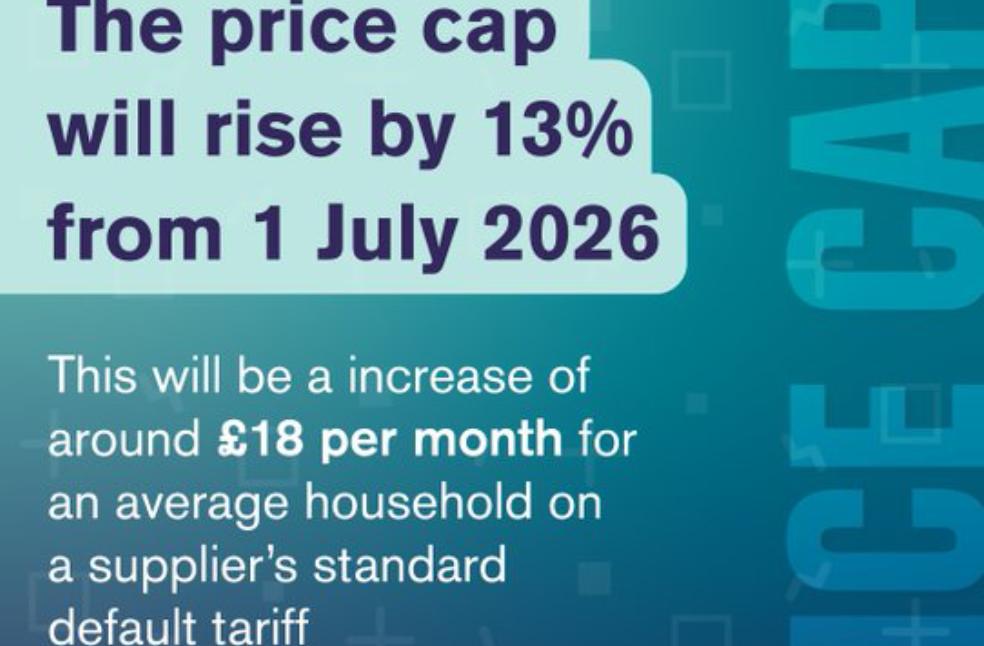
London: Household energy bills in the UK are set to increase by around 13 percent from July, after soaring wholesale gas costs triggered by disruptions linked to the US–Israel conflict with Iran pushed up global energy prices.
Regulator Ofgem confirmed that the energy price cap rise will add an average of $297 (£221) per year to household bills, bringing the typical annual cost to about $2,503 (£1,862) for gas and electricity combined.
The increase will hit millions of homes in England, Scotland and Wales on variable tariffs, while customers on fixed deals will remain temporarily protected until their contracts expire. Around 33 million households fall under the cap system.
From 1 July 2026, the average price cap unit rates and standing charges for energy are changing.
These are caps on unit rates plus the standing charge (not a cap on your total bill).
More: https://t.co/hdzPnqZZNG pic.twitter.com/og66io8ZL0
— Ofgem (@ofgem) May 27, 2026
Strait of Hormuz disruption drives price spike
Energy markets have been shaken by Iran’s reported disruption of the Strait of Hormuz, a critical shipping route responsible for roughly one-fifth of global oil and gas transport. The resulting spike in wholesale gas prices has fed directly into consumer energy costs.
Ofgem said wholesale energy accounts for around 40 percent of a typical bill, making households highly exposed to global price shocks. Gas prices are expected to rise by around 24 percent, while electricity costs increase by about 5 percent, with standing charges remaining largely stable.
Lower ‘typical use’ masks real cost pressure
Ofgem has revised its definition of typical household energy use, lowering it to 9,500 kWh of gas and 2,500 kWh of electricity annually, reflecting improved efficiency and reduced consumption in recent years.
However, the regulator acknowledged that this adjustment does not reduce underlying unit price increases, meaning households will still pay significantly more per unit of energy.
Government response and winter concerns
Energy Secretary Ed Miliband described the increase as ‘deeply unwelcome,’ attributing the rise to global instability outside the UK’s control. The government says it is preparing targeted support measures for vulnerable households if high prices persist into winter, when energy demand typically peaks. Energy suppliers have warned that bills could rise further later in the year if geopolitical tensions continue.
Rising pressure on households
Despite recent short-term falls in bills earlier this year, UK households are still paying around $806 (£600) more annually than before the major energy price shock of 2022–23. Millions of customers are also struggling with arrears owed to suppliers, adding further financial strain.
Energy experts say households have already reduced consumption significantly through behavioural changes such as lowering thermostat settings, limiting heating use, and improving insulation.
Energy-saving advice and support schemes
Energy officials and support organisations are urging households to continue energy-saving measures ahead of winter, including draught-proofing, shorter showers, and improving home efficiency. Community initiatives, such as local retrofit programmes, are also offering support ranging from insulation kits to solar panel installations for eligible households.
Energy UK warned that the UK’s reliance on gas leaves consumers vulnerable to international price shocks and called for stronger long-term protection measures.
MOST READ | 7 trapped in flooded Laos Cave as rescue teams race against time
