


West Bengal: Voting is underway across key Indian states in a crucial round of elections widely seen as a test of political momentum ahead of national contests, with fierce battles unfolding in West Bengal and Tamil Nadu.
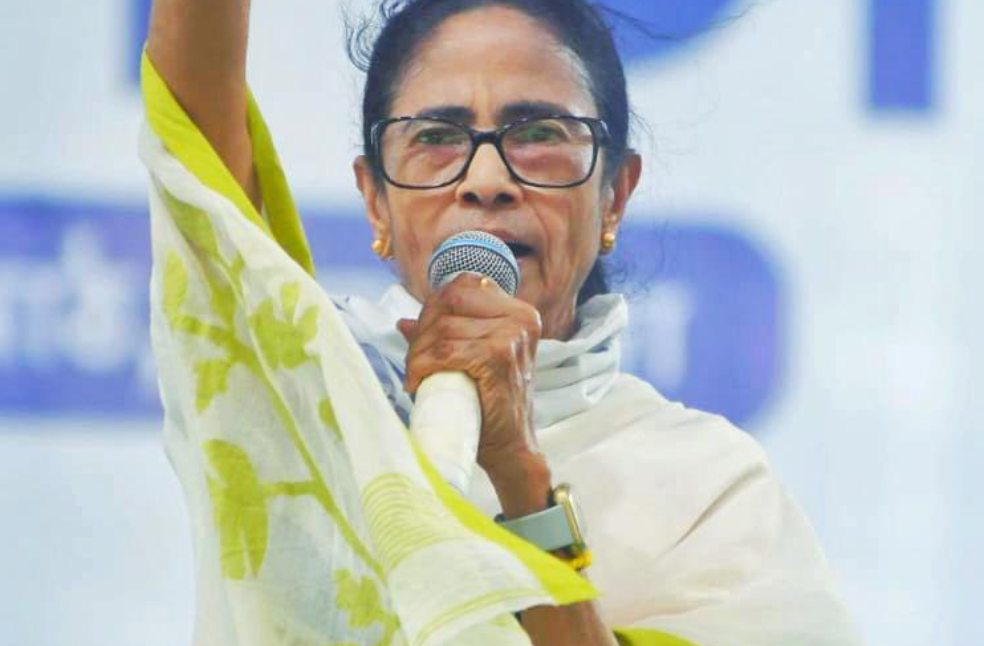
In West Bengal, polling began for the first phase across 152 of the state’s 294 constituencies, covering 16 districts and featuring 1,478 candidates. A second phase is scheduled for next week. The contest pits Prime Minister Narendra Modi’s Bharatiya Janata Party (BJP) against Chief Minister Mamata Banerjee’s Trinamool Congress (TMC), which is seeking a fourth consecutive term.
The election is unfolding amid heightened tensions over a sweeping revision of electoral rolls. Around nine million voters roughly 12 percent of the electorate, were removed following a Special Intensive Revision (SIR) exercise. Authorities say many were classified as absentee or deceased, while another 2.7 million cases remain under review.
পশ্চিমবঙ্গে বিধানসভা নির্বাচনের প্রথম দফার ভোট গ্রহণ আজ। আমি সমস্ত নাগরিককে পূর্ণ উদ্যমে গণতন্ত্রের এই উৎসবে অংশগ্রহণ করার আহ্বান জানাই। আমি বিশেষভাবে আমার তরুণ বন্ধুদের এবং পশ্চিমবঙ্গের মহিলাদের বিপুল সংখ্যায় ভোট দেবার জন্য অনুরোধ করছি।
— Narendra Modi (@narendramodi) April 23, 2026
Voter roll controversy fuels political tensions
The revision process has sparked widespread concern and legal challenges. While the Election Commission of India maintains the exercise aims to clean up voter lists, opposition parties and affected citizens have raised questions over exclusions, with some alleging valid voters were removed.
Tribunals are currently reviewing more than three million appeals. In a last-minute development, 139 voters were reinstated ahead of polling, according to reports.
Political rhetoric has further intensified the situation. Remarks by Modi referring to illegal Bangladeshi infiltrators have drawn criticism from the TMC, which alleges the term is being used to target minority communities. Officials, however, state that exclusions have affected voters across religious groups.
Heavy security deployment and strict restrictions
Security arrangements have been significantly scaled up, with around 240,000 central forces deployed across the state. Measures include bulletproof patrols, restrictions on movement, and a ban on bike rallies and certain two-wheeler usage in poll-bound areas.
Authorities have also imposed a 96-hour liquor ban, double the usual duration, with concerns over voter inducement. Officials reported a sharp spike in liquor sales before the restrictions and said investigations are ongoing.
Polling in this phase covers northern, central and southwestern regions of West Bengal, including districts such as Murshidabad, Uttar Dinajpur and Malda, all of which have significant minority populations.
The second phase on April 29 will cover 142 constituencies, including areas around Kolkata, traditionally considered a stronghold of the TMC.
Tamil nadu sees single-phase voting
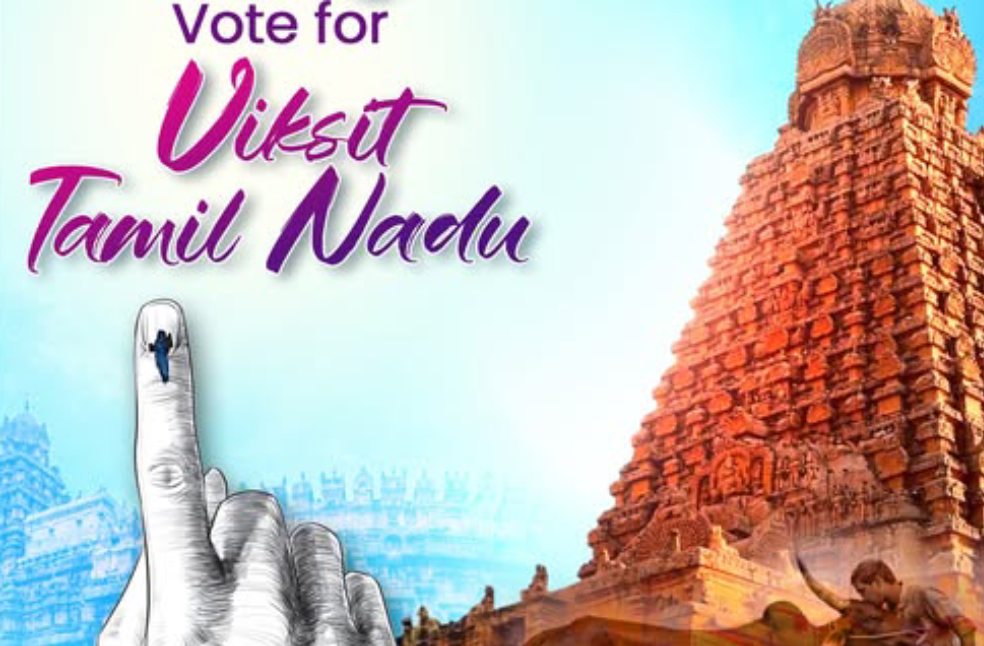
In Tamil Nadu, voting is being held in a single phase across all 234 constituencies, with over 57 million eligible voters. The state’s political landscape is dominated by regional parties, primarily the ruling Dravida Munnetra Kazhagam (DMK) led by Chief Minister M. K. Stalin, and the opposition All India Anna Dravida Munnetra Kazhagam (AIADMK), which is allied with the BJP.
This election has drawn additional attention with the entry of actor-turned-politician Vijay and his party, Tamilaga Vettri Kazhagam (TVK), raising the possibility of a three-cornered contest.
Early indicator of national political trends
The elections in West Bengal and Tamil Nadu are part of a broader cycle that has already seen voting in Kerala, Assam, and Puducherry. For the BJP, the contests represent a critical test of its ability to expand into regions where it has historically struggled, particularly in southern India. For opposition parties, the results will offer insight into whether a stronger challenge to the BJP’s dominance is taking shape.
Debates over constituency delimitation and regional representation have further sharpened the political discourse, especially in Tamil Nadu, where identity and federal balance remain central themes. With high voter turnout expected and tensions running high, the outcome of these elections is likely to carry significant implications for India’s political landscape in the months ahead.
POPULAR | 13 killed in Kerala firecracker factory blast ahead of Thrissur Pooram
