


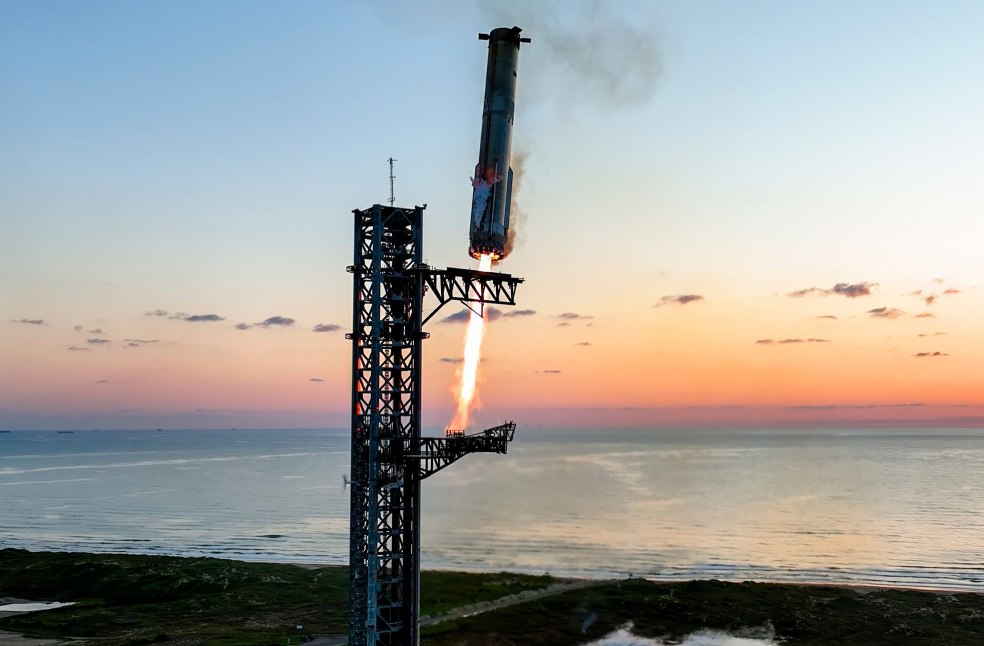
United States: Elon Musk has announced that SpaceX is shifting its primary focus toward building a ‘self-growing city’ on the Moon, a goal he believes could be achieved in less than a decade.
In a post on his social media platform X, Musk said the company still intends to pursue its long-standing ambition of establishing a city on Mars within five to seven years. However, he noted that the overriding priority is securing the future of civilisation, and the Moon is faster.
For those unaware, SpaceX has already shifted focus to building a self-growing city on the Moon, as we can potentially achieve that in less than 10 years, whereas Mars would take 20+ years.
The mission of SpaceX remains the same: extend consciousness and life as we know it to…
— Elon Musk (@elonmusk) February 8, 2026
Lunar focus gains momentum
Musk’s remarks align with a recent Wall Street Journal report stating that SpaceX has informed investors of its intention to prioritise lunar missions before attempting a crewed journey to Mars. The company is reportedly targeting March 2027 for an uncrewed lunar landing.
As recently as last year, Musk had said SpaceX aimed to send an uncrewed mission to Mars by the end of 2026. The revised timeline reflects a strategic shift as global competition intensifies, particularly between the United States and China, in the race to return humans to the Moon this decade. Humans have not set foot on the lunar surface since NASA’s Apollo 17 mission in 1972.
SpaceX, xAI deal and $1 trillion valuation
The announcement comes shortly after Musk revealed that SpaceX acquired artificial intelligence company xAI, which he also leads, in a deal valuing SpaceX at $1 trillion and xAI at $250 billion.
Supporters of the move argue that integrating AI capabilities could strengthen SpaceX’s ambitions to develop space-based data centres. Musk has previously suggested that such facilities would be more energy-efficient than terrestrial data centres, particularly as global demand for computing power surges with rapid AI development.
SpaceX is also reportedly considering a public offering later this year that could raise to $50 billion, potentially making it the largest IPO in history.
NASA’s role shrinking in revenue mix
Musk responded to a user on X ,stating that NASA will account for less than 5 percent of SpaceX’s revenue this year.
Although SpaceX remains a key contractor in NASA’s Artemis moon programme, holding a $4 billion contract to land astronauts on the lunar surface using its Starship spacecraft, the company’s revenue is increasingly driven by commercial ventures. Musk also shared SpaceX’s first Super Bowl advertisement, promoting its Starlink satellite internet service.
Tesla pivoting to AI and robotics
While redirecting SpaceX’s near-term goals toward the Moon, Musk is also steering Tesla in a new direction. After playing a pivotal role in building the global electric vehicle market, Tesla now plans to invest $20 billion this year to accelerate its shift toward autonomous driving technology and robotics.
As part of this pivot, Musk announced last month that Tesla would end production of two vehicle models at its California factory to make room for manufacturing its Optimus humanoid robots.
With ambitious plans spanning lunar cities, Mars colonisation, AI-powered space infrastructure, and humanoid robots, Musk appears to be reshaping the trajectory of both SpaceX and Tesla in pursuit of what he describes as securing the future of civilisation.
POPULAR | Canada unveils new plan to shield auto industry from US tariffs
