


Hyderabad: Indian Prime Minister Narendra Modi has called on citizens to adopt austerity measures, including reviving work-from-home practices, limiting foreign travel, reducing gold purchases and using public transport, as India grapples with rising global energy prices triggered by the prolonged Middle East crisis.
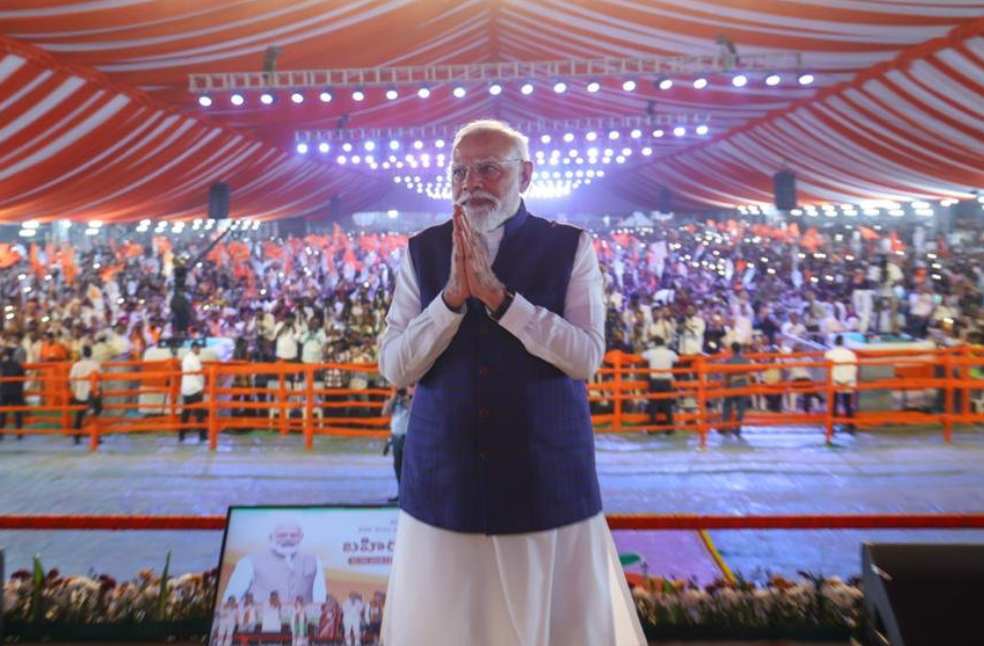
Addressing a public gathering in Hyderabad, Modi said responsible consumption and conservation were crucial at a time when India’s economy was under mounting pressure due to disruptions in global oil supplies.
Modi remarked that, “Patriotism is not only about the willingness to sacrifice one’s life on the border. In these times, it is about living responsibly and fulfilling our duties to the nation in our daily lives.”
The Prime Minister stressed the need to save foreign exchange reserves, warning that the continuing conflict involving the US, Israel and Iran had sharply increased India’s oil import burden. India imports nearly 90 percent of its crude oil requirements, making it highly vulnerable to global supply shocks.
मेरा हमेशा से यह आग्रह रहा है कि हम स्थानीय चीजें खरीदें। इसके लिए हर नागरिक, हर राजनीतिक दल, हर सरकार, हर समाज और हर संगठन को संकल्पबद्ध होना होगा। pic.twitter.com/yizkIXZEko
— Narendra Modi (@narendramodi) May 10, 2026
The closure of the Strait of Hormuz, a critical Gulf shipping route for more than two-and-a-half months has intensified concerns over fuel supply disruptions and soaring crude prices.
Work from home and public transport encouraged
In a move reminiscent of restrictions and behavioural changes seen during the Covid-19 pandemic, Modi urged companies to encourage employees to work from home wherever possible to reduce fuel consumption.
Modi also appealed to citizens to use metros and public transport systems more frequently and suggested carpooling as a way to cut down on petrol and diesel use. Farmers, meanwhile, were advised to reduce fertiliser usage by half with concerns over supply shortages and rising import costs. Analysts described the Prime Minister’s appeal as one of the strongest public warnings issued by the government since the crisis escalated in the Middle East.
Markets react sharply
The economic concerns quickly reflected in financial markets, with the benchmark Sensex index falling more than 1,000 points in early trade. Market experts said investor sentiment weakened with fears of prolonged economic disruption, inflationary pressure and a further weakening of the Indian rupee.
The rupee has already hit record lows in recent weeks, increasing the cost of imports and raising concerns about inflation across sectors. Industries dependent on fuel and imported raw materials, including glass, plastic and tile manufacturing are reportedly facing severe stress, with hundreds of thousands of jobs said to be at risk.
Fertiliser shortages have also triggered fears of lower agricultural output and rising food prices in the coming months.
Opposition attacks government
Opposition leaders criticised Modi’s remarks, accusing the central government of shifting the burden of the economic crisis onto ordinary citizens. Leader of Opposition Rahul Gandhi said the government’s suggestions reflected policy failures and poor economic planning.
The Congress party argued that the government should focus on structural solutions instead of asking citizens to reduce consumption and change lifestyles to offset economic pressure caused by external geopolitical tensions.
Economists warn that if the Middle East crisis continues and oil supply routes remain disrupted, India could face sustained inflation, slower economic growth and further pressure on public finances in the months ahead.
MOST READ | 3 hikers killed after Mount Dukono erupts during restricted climb
