


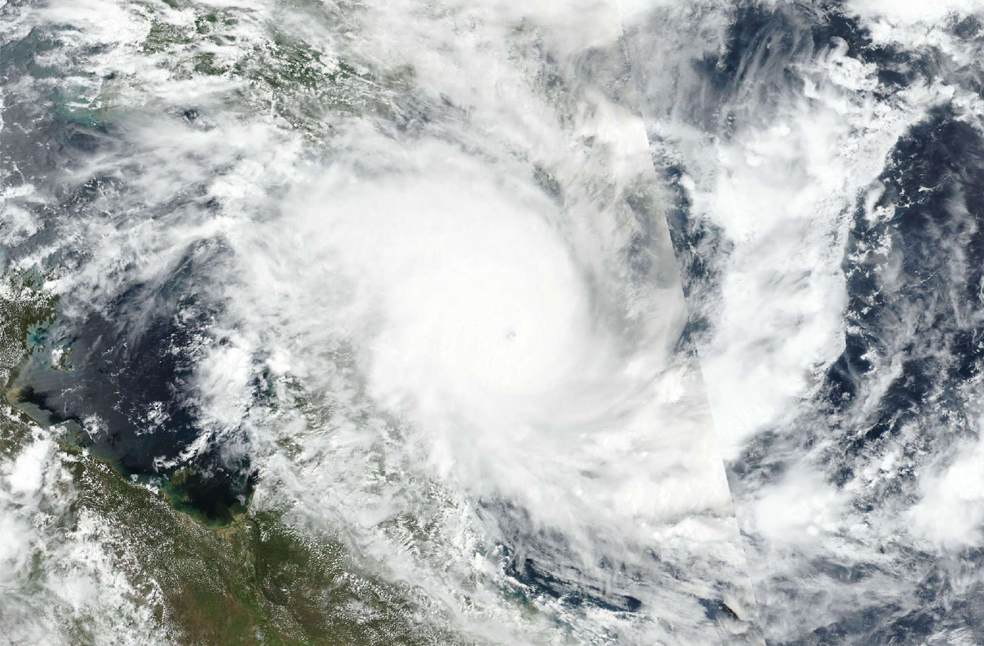
Queensland: Cyclone Narelle, which authorities warned could be among the worst storms in living memory, has proven less destructive than initially feared after landfall. However, concerns remain high as Narelle continues to pose a serious flood threat.
Narelle crossed the east coast of Cape York in Far North Queensland with powerful wind gusts reaching 220 km/h (137 mph). The system has since weakened from a Category 4 to a Category 3 cyclone, according to the Bureau of Meteorology, although the storm is still generating wind gusts of around 140 km/h.
Authorities praised residents for complying with safety directives and sheltering in place during Narelle. Focus is now shifting to the Northern Territory, where Narelle is expected to arrive on March 21. Meanwhile, parts of Far North Queensland could receive up to 500 mm of rainfall from Narelle, significantly increasing the risk of severe flooding.
View this post on Instagram
The town of Coen, home to around 350 people, had been expected to face the brunt of Narelle. While police reported no injuries or major infrastructure damage, residents described notable impacts.
Thousands of homes have been left without power due to Narelle, and communication services have been disrupted along parts of Cape York’s western coast, including the predominantly Indigenous town of Aurukun.
Queensland Premier David Crisafulli emphasised that despite the smaller populations in affected areas, all residents impacted by Narelle remain a priority. Crisafulli noted that the storm has brought some of the strongest winds experienced in the region in years, along with heavy rainfall during an already active wet season.
Queensland’s State Disaster Coordinator Chris Stream urged residents not to become complacent as Narelle passes, warning against any false sense of security during the cyclone’s eye.

The effects of the storm have also been felt further south. In Port Douglas, a gateway to the Great Barrier Reef and the Daintree Rainforest, beaches have been washed away despite being about 400 km south of where the storm made landfall.
In Cairns, around 100 km further south, some beaches have experienced severe erosion while others have seen sand build-up due to winds and tides driven by Narelle.
The cyclone is continuing its path across the Cape York Peninsula, with small and predominantly Indigenous communities expected to be affected later on March 20. It is then forecast to move across the Gulf of Carpentaria, where meteorologists warn that warm waters could cause Narelle to intensify again as it approaches the Northern Territory.
As a precaution, hundreds of residents from the remote community of Numbulwar have been evacuated to Darwin ahead of Narelle’s arrival. In Katherine, where flooding linked to the storm is expected, a field hospital is being set up to support existing health services.
ALSO READ | NHTSA expands Tesla investigation after fatal crash
