


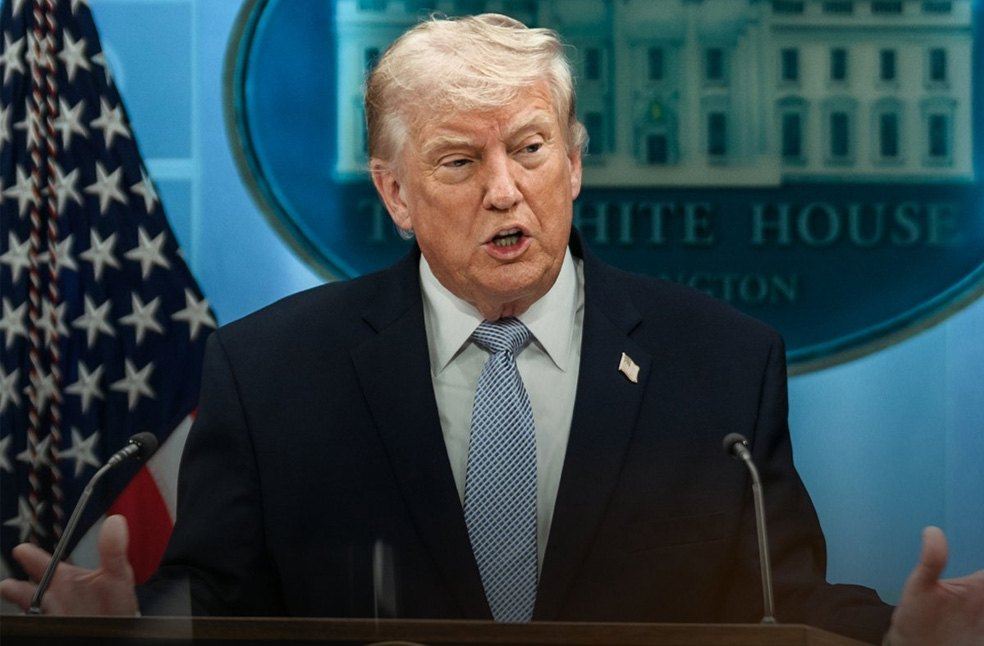
Washington: US President Donald Trump has announced the creation of a new task force, Super Intelligence Force, focused on artificial intelligence, naming Director of National Intelligence Jay Clayton to lead the initiative as Washington seeks to maintain its leadership in the rapidly evolving technology.
Trump stated that the ‘Super Intelligence Force’ will coordinate the US government’s engagement with the AI industry and the wider public. The task force will work with consumers, public interest groups, religious organisations, critical infrastructure providers and companies developing advanced AI systems.
The group will also include Federal Trade Commission Chair Andrew Ferguson, Undersecretary of Defence for Research and Engineering Emil Michael and Office of Personnel Management Director Scott Kupor. According to Trump, the task force will report directly to the president and White House Chief of Staff Susie Wiles.
“I am announcing the formation of the Super Intelligence Force (SIF). The Super Intelligence Force is tasked with coordinating the effort of the Federal Government to ensure that America continues to lead the World in Super Intelligence, which many say is bigger than the Industrial Revolution, and the Internet, and will protect the interests, and improve the lives, of all Americans.” – President DONALD J. TRUMP 🇺🇸
— The White House (@WhiteHouse) October 4, 2026
The announcement comes with growing debate in the US over how AI should be regulated and how its potential benefits should be balanced against emerging risks. Trump stated that his administration would establish a board to oversee AI safety, following an agreement signed by executives from major technology companies to promote responsible development of the technology.
Among the companies whose executives signed the September 29 pact were OpenAI, Anthropic, SpaceX and Google. The move comes as some leading figures in the technology sector call for stronger safeguards around increasingly powerful AI systems.
OpenAI CEO Sam Altman, in an interview published on October 4, remarked that the potential benefits of AI justified accepting some risks while maintaining public access to the technology. He argued that people should retain agency over how they use AI.
Trump, however, has previously dismissed calls for stronger government oversight and has largely supported an approach that leaves AI companies to regulate their own development.
The president has also introduced a terminology change, signing an executive order to refer to AI as ‘super intelligence.’ Trump had previously argued that the word ‘artificial’ made the technology sound ‘fake.’ The rebranding has drawn criticism from some experts, who stated the term could create confusion because ‘superintelligence’ is generally associated with hypothetical AI systems that surpass human intelligence across a broad range of capabilities.
Some technology leaders have already adopted the new terminology. Elon Musk highlighted on social media that his company would rename its AI platform SpaceXAI as SpaceXSI, describing SpaceX as a ‘super intelligence company.’
The creation of the task force comes as the Trump administration continues to expand its focus on AI and its implications for national security, government operations and the US technology sector.
MOST READ | Bolivia’s Yungas forests reveal new tiger cat species
