


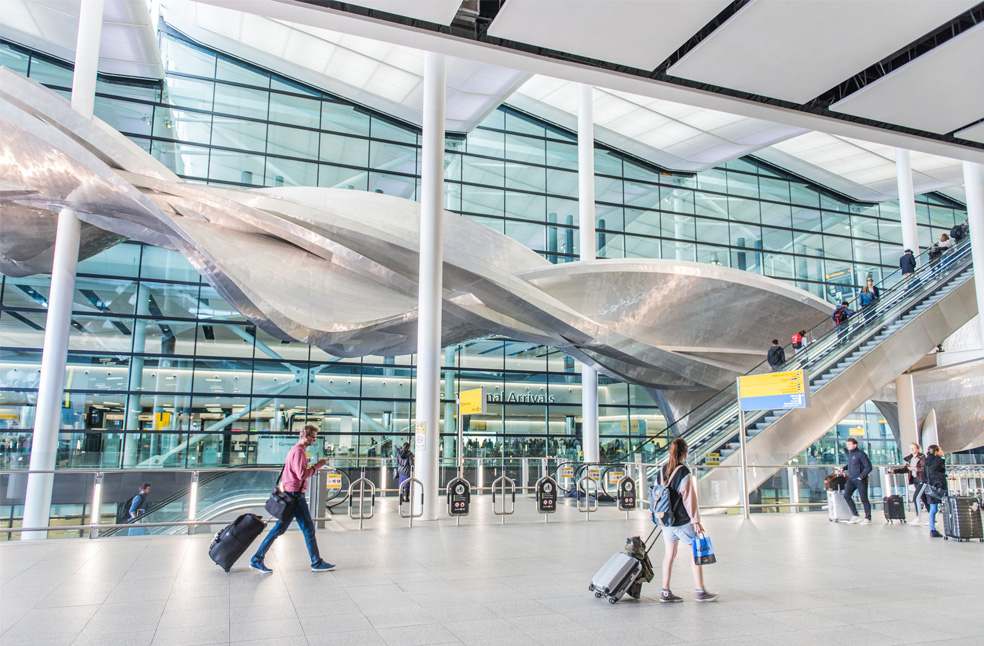
London: Passenger numbers at Heathrow Airport declined last month as tensions and conflict in the Middle East affected international travel demand. Around 6.7 million passengers travelled through Heathrow in April, marking a 5 percent decrease compared with the same month last year.
The airport stated that the decline reflected the impact of the Iran conflict and short-term changes in travel plans made by passengers during ongoing regional instability. Despite the overall drop in passenger traffic, the number of transfer travellers using Heathrow for connecting flights increased by 10 percent year-on-year in April.
Many passengers travelling onwards to Asia and Oceania chose Heathrow as a transit hub instead of Gulf airports such as Dubai International Airport and Hamad International Airport. The US-Israel conflict involving Iran has caused widespread disruption to global air travel, resulting in flight cancellations, delays, and longer travel times across several international routes.
Concerns are also growing over a potential fuel crisis linked to disruptions in Gulf tanker shipping through the Strait of Hormuz, a key global oil transit route through which more than one-fifth of the world’s oil supply typically passes.
The chief executive of Heathrow, Thomas Woldbye, said travel demand remains strong and current fuel supplies are stable. Woldbye added that although April passenger numbers were lower compared with the same month in 2025, it was still Heathrow’s busiest month of the year so far.
However, Heathrow confirmed it will reassess and update its passenger forecast for 2026 next month amid continuing uncertainty in the aviation market. The aviation industry is facing increasing concerns over jet fuel supply and rising costs.
According to the International Air Transport Association, jet fuel prices averaged about $181 per barrel in the week leading up to May 1, nearly double the average price recorded last year. The rise in fuel prices has largely been linked to disruptions affecting the Strait of Hormuz shipping route.
Fears over fuel shortages have also intensified after UK airlines successfully lobbied for more flexibility to cancel flights without losing valuable airport slots. At the same time, some airlines have reportedly started lowering prices on summer routes in an effort to encourage bookings and avoid weaker demand.
MOST READ | Alibaba to integrate Qwen AI with Taobao marketplace
