


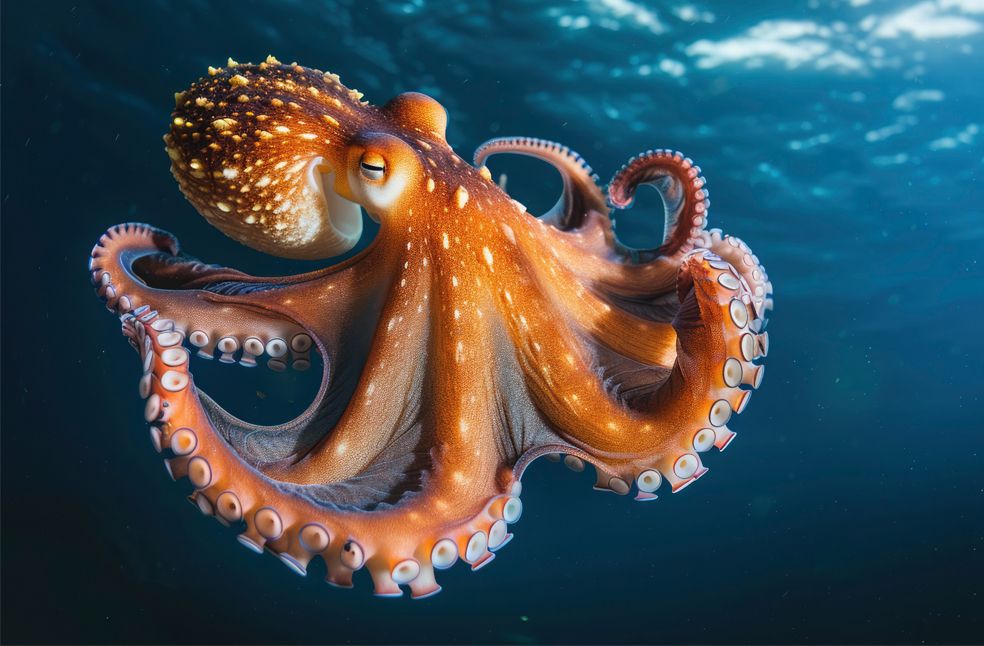
Cornwall, UK: The Wildlife Trusts have declared 2025 ‘the year of the octopus’ in their annual review of Britain’s seas, following record-breaking sightings and catches of one of the world’s most intelligent invertebrates along England’s south coast.
An unusually mild winter, followed by an exceptionally warm spring, created near-perfect breeding conditions for the common or Mediterranean octopus (Octopus vulgaris). As a result, unprecedented numbers of octopuses took up residence in coastal waters stretching from Penzance in Cornwall to south Devon.
Matt Slater, Marine Conservation Officer at Cornwall Wildlife Trust, said that the scale of the increase was extraordinary. Local fishers reported catches around 13 times higher than what would normally be expected in Cornish waters.
When figures were combined, an estimated 233,000 octopuses were caught in UK waters during 2025, a dramatic surge compared with typical years. Although the common octopus is native to UK seas, it is usually present only in very small numbers and is rarely encountered.

Large population increases, known as blooms, occur when environmental conditions align, particularly when mild winters are followed by warm spring breeding seasons.
These conditions improve larval survival rates. Slater noted that the boom may also have been supported by the abundance of spider crabs recorded along the south coast in recent years, providing a rich food source.
Historical records from the Marine Biological Association show that the last octopus bloom on this scale was recorded in 1950, with the only earlier comparable event dating back to 1900. The sheer number of octopuses in 2025 meant they were easily visible in shallow coastal waters for the first time in recent history.
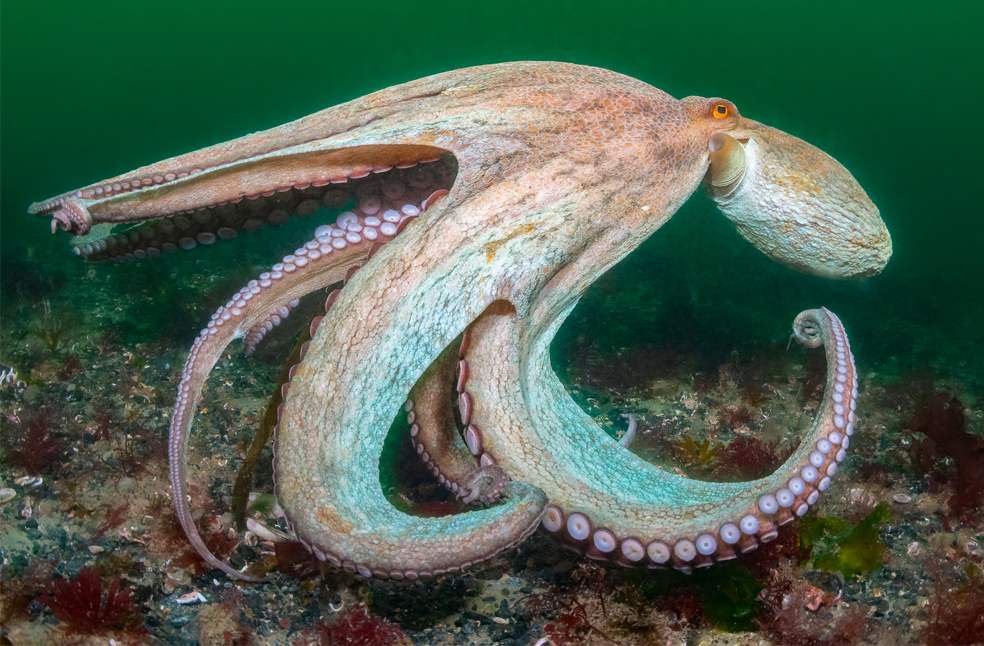
Divers captured remarkable footage showing unusual behaviour. Octopuses, normally solitary creatures, were seen gathering in groups, ‘walking’ across the seabed on the tips of their limbs, and even interacting with divers’ equipment. One octopus was filmed grabbing hold of an underwater camera.
2026 Octopus bloom expected
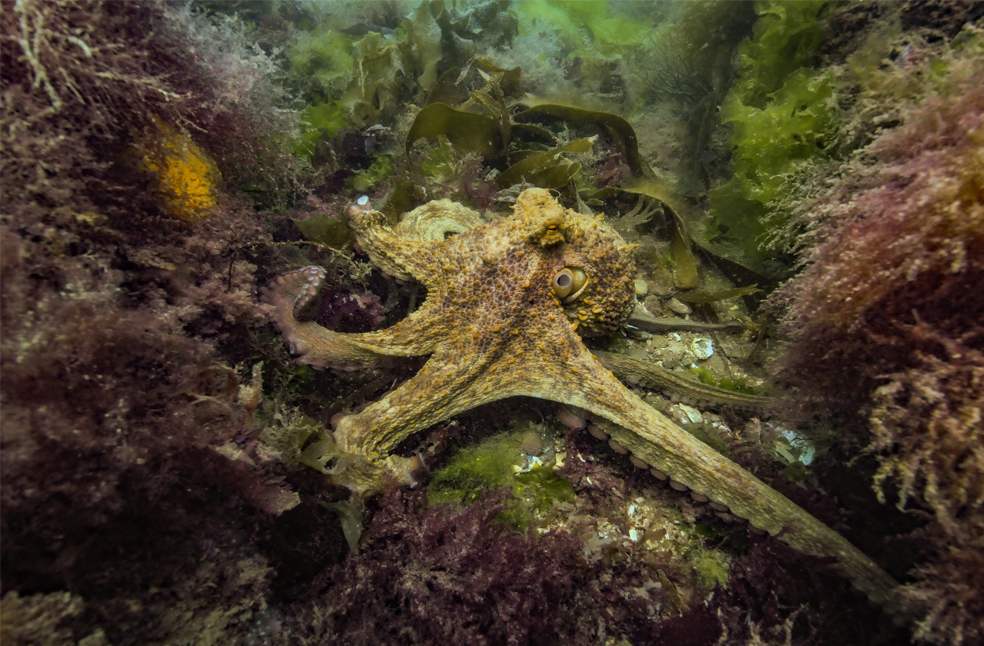
Slater described his own experience diving off the Lizard peninsula, where he encountered five octopuses on a single dive. The officer explained that there are two octopus species found in UK waters: the curled octopus, which is relatively small and grows to around the size of a football, and the common octopus, which can reach up to 1.5 metres in width and was responsible for the majority of sightings this year.
Looking ahead, Slater said that another mild winter going into 2026 raises the possibility of a second consecutive bloom. Historically, when such conditions occur, octopus population booms have sometimes repeated over two years. However, he cautioned that past evidence suggests these events do not last long. “The sea keeps giving us surprises at the moment.”
The octopus boom was one of several notable highlights recorded by the Wildlife Trusts in 2025. Other ‘surprises, successes and joyful moments’ included a record number of grey seals observed by Cumbria Wildlife Trust, particularly at South Walney, and unprecedented numbers of puffins recorded on Skomer Island off the coast of Wales, a site renowned for its seabird colonies.
Wildlife was also documented appearing in unexpected locations. Through Shoresearch, the Wildlife Trusts’ National Citizen Science Survey Programme, a volunteer recorded the first-ever sighting of the sea slug Capellinia fustifera in Yorkshire.
The tiny 12mm mollusc, which resembles a gnarled root vegetable, is normally found in the south-west of England. In another first, a variable blenny, a Mediterranean fish species, was discovered off the coast of Sussex, where populations had previously been confined to the West Country.
Despite these encouraging signs of marine life expansion, the year was not without serious environmental challenges. Ruth Williams, head of marine conservation at the Wildlife Trusts, noted that 2025 was ‘bookended by environmental disasters.’
These included a North Sea tanker collision in March and, in November, the release of tonnes of plastic biobeads off the Sussex coast. Wildlife Trusts staff and volunteers have been making extensive efforts throughout the year to protect, clean and restore affected shorelines.
ALSO READ | Denmark says goodbye to letters; PostNord stops mail service
