



Wellington: Heavy rain and strong winds caused widespread disruption across New Zealand’s North Island, halting flights, trains, and ferries, forcing road closures, and leaving tens of thousands without electricity.
Domestic media reported that some flights resumed at Wellington Airport later in the afternoon, though cancellations remained extensive after authorities said most morning services had been disrupted.
Air New Zealand said that it had paused operations at Wellington, Napier, and Palmerston North airports and hoped to resume services once weather conditions improved.
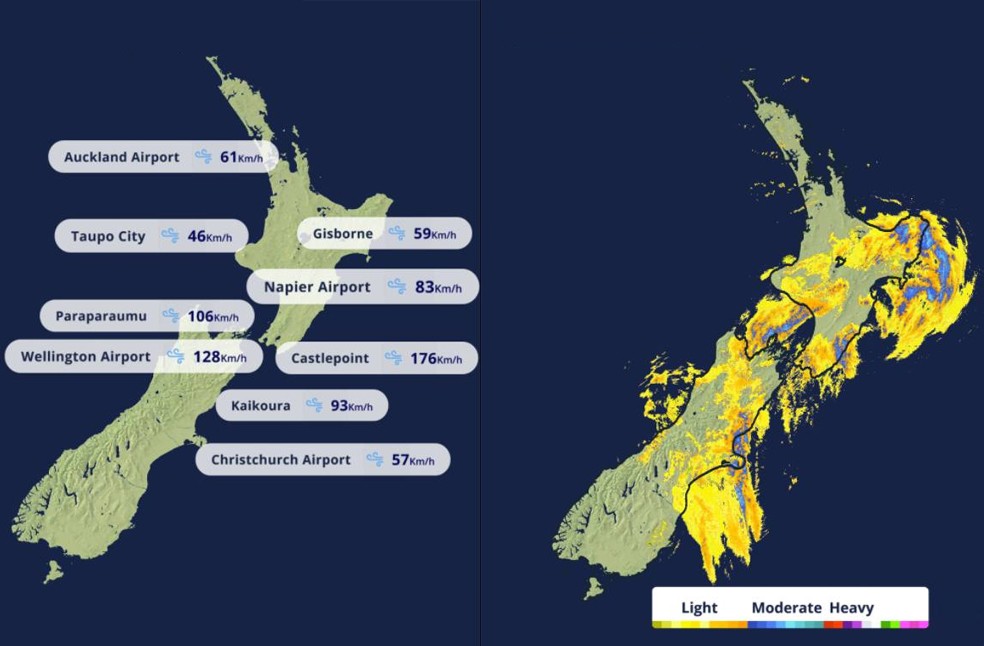
Here's a snapshot of Warnings and Watches currently in place
While some Warnings and Watches may expire tonight, impacts have been widespread and may linger beyond the expiry time
Full details can be found at https://t.co/os2FgIcKqk pic.twitter.com/Ur5E5JeJfI
— MetService NZ (@MetService) February 16, 2026
Online images from New Zealand showed flooded semi-rural communities, inundated homes, fallen trees crushing vehicles, and collapsed sections of roadway after floodwaters subsided.
Surge in emergency calls
Emergency services faced a surge in callouts overnight. Ken Cooper, Assistant National Commander, said that the Wellington region accounted for more than half of the 852 emergency calls received. “We had a very busy night, and our firefighters are continuing to respond to calls,” Cooper added.
Authorities reported that more than 30,000 properties were without power, including about 10,000 customers in Wellington. Motorists were urged to stay off the roads, and several schools were closed as crews worked to address widespread damage.
The national weather bureau forecast that the storm would bring further heavy rain as it moved toward the east coast of the South Island on February 17, warning of continued disruption.
Meanwhile, raw sewage discharged earlier this month after the failure of Wellington’s main wastewater treatment plant during a storm was washed back onto the city’s south coast by the weekend system, an incident some residents dubbed a ‘poonami’ on social media.
The severe weather is linked to a low-pressure system east of the North Island that has battered several regions since the weekend with torrential rain and gale-force winds. A man was found dead on February 14 inside a submerged vehicle on a highway.
The latest storm in New Zealand follows last month’s tragedy at Mount Maunganui on the North Island’s east coast, where six people died in a landslide triggered by heavy rain. Soil and debris collapsed onto a site crowded with families during the summer holidays.
MOST READ | SpaceX launches 12th long-duration crew to ISS for mission
