


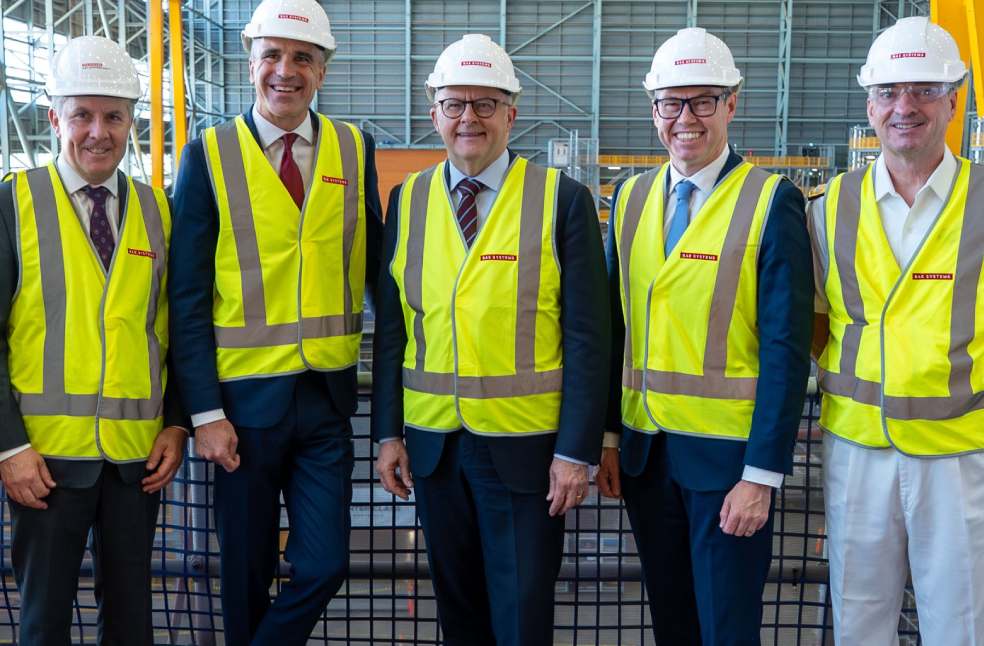
Canberra: Australia will spend at least $30 billion to build a construction yard in South Australia to support the future production of nuclear-powered submarines under the AUKUS security pact, despite lingering uncertainty over the trilateral agreement.
Prime Minister Anthony Albanese said the federal government has committed an initial $3.9 billion as a ‘down payment’ for the submarine construction yard in Osborne, in Adelaide’s north. The facility will form the backbone of Australia’s plan to domestically build nuclear-powered submarines in partnership with the United States and the United Kingdom.
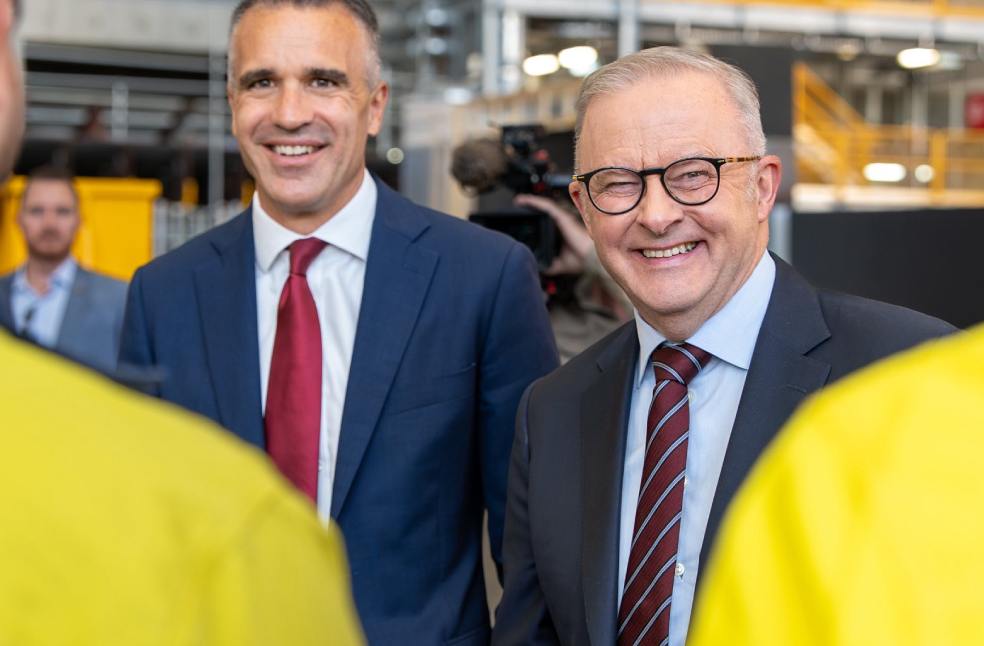
The government estimates the project will create around 10,000 jobs in design and construction, alongside training opportunities for up to 1,000 apprentices annually at an on-site facility.
The scale of the shipyard underscores the project’s ambition. Plans include a 420-metre fabrication hall, which requires enough steel to build 17 Eiffel Towers and more than 710,000 cubic metres of structural concrete.
Uncertainty has lingered over the future of AUKUS following the United States’ recent announcement of a review of the agreement’s terms. However, Albanese dismissed concerns, insisting the project serves the strategic interests of all three partner nations.
The $30 billion estimate was provided by Australian Naval Infrastructure, the government-appointed body overseeing delivery of the facility. The new yard will also include capabilities for testing and commissioning submarines once construction is complete, though timelines remain unspecified.
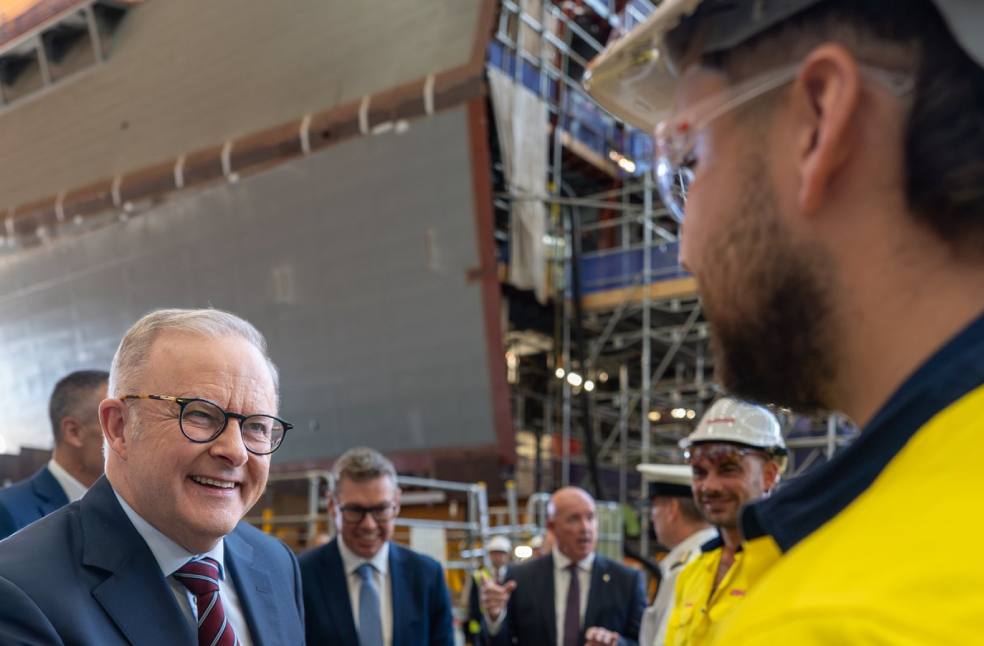
South Australia has emerged as a growing defence hub, with major military manufacturing projects underway. Existing submarine facilities at Osborne currently support the Collins-class and Hunter-class programmes, while the state recently opened the nation’s first missile factory at Port Wakefield.
State Premier Peter Malinauskas said the scale of skilled employment tied to the project is unprecedented for the region, highlighting the long-term economic impact expected from the decades-long infrastructure investment.
The announcement comes weeks ahead of the South Australian state election, where recent polling shows Labour holding a strong lead over the opposition.
TRENDING | Cyclone death toll rises to 38 after devastating strike on Madagascar
