


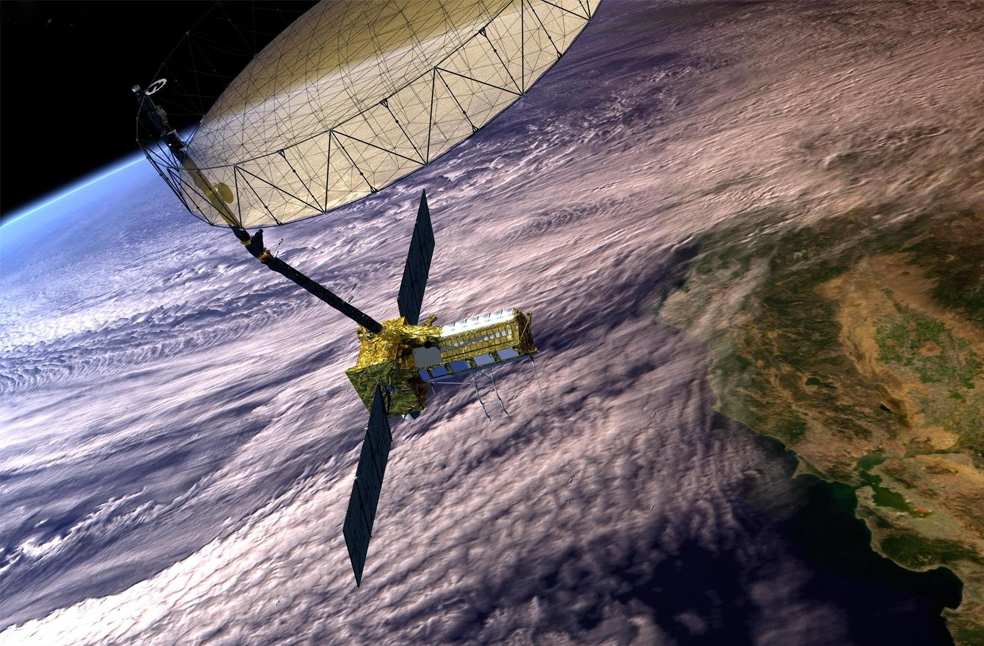
Sriharikota, India: A groundbreaking Earth-observation satellite, NISAR, jointly developed by the Indian Space Research Organisation (ISRO) and NASA, is set to launch on July 30 at 17:40 IST (12:10 GMT) from the Satish Dhawan Space Centre in southern India.
The 2,392kg NASA-ISRO Synthetic Aperture Radar satellite is expected to transform global disaster management and climate monitoring by detecting even minute changes in Earth’s surface.
Described by NASA as its ‘most sophisticated radar ever built,’ NISAR will use both L-band (NASA) and S-band (ISRO) radar frequencies, a first-of-its-kind configuration in space, to measure Earth’s shifts, from glacial melt and land subsidence to forest fires and infrastructure developments.
NISAR: Revealing Earth's changing surface 🌏
Launching soon, NISAR will give us a detailed view of how Earth’s land and ice surfaces are shifting over time, helping us understand what’s changing, where, and why. Watch to learn more ⬇️ pic.twitter.com/0mAtV3jAK9
— NASA JPL (@NASAJPL) July 28, 2025
It will orbit the Earth in a sun-synchronous polar orbit, revisiting the same location every 12 days to map surface changes down to centimetre-level accuracy.
Former NASA scientist Mila Mitra stated that the satellite’s repeated scans will produce high-resolution datasets for tracking both abrupt and subtle planetary changes.
NASA’s Earth Sciences Director Karen St Germain, present in India for the launch, emphasized that NISAR would help identify early signs of natural hazards like earthquakes, volcanoes, and landslides, as well as monitor human-driven developments such as construction and agricultural expansion.
The $1.5 billion (₹12,495 crore) collaboration, more than a decade in the making, reflects strong bilateral ties and shared scientific ambition. NASA’s contribution includes the advanced radar systems, while ISRO has provided the payload integration, the rocket, and the launch site.
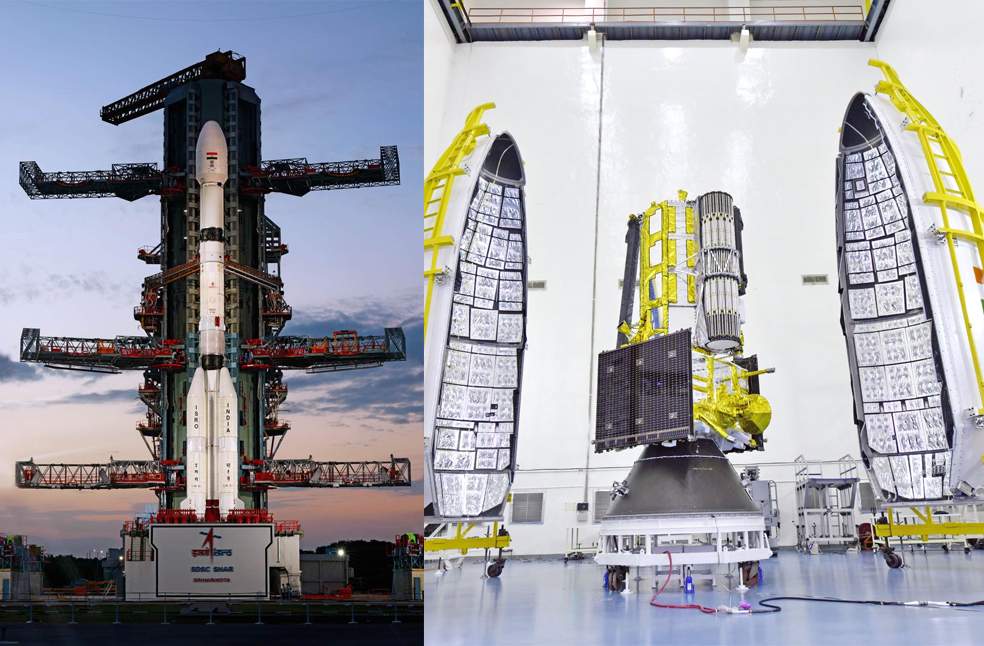
ISRO Chairman V. Narayanan referred to NISAR as a ‘life-saving satellite’ that demonstrates India’s growing leadership in global space research. Meanwhile, Indian Science Minister Dr. Jitendra Singh praised the mission as a landmark in India-US cooperation, calling it ‘India’s scientific handshake with the world.’
The launch follows the AX-4 mission, which marked the first time an Indian astronaut, Shubhanshu Shukla, visited the International Space Station.
India’s space ambitions continue to surge, with recent milestones including a historic lunar landing near the Moon’s south pole, the Sun-studying Aditya-L1 mission, and plans for the Gaganyaan human spaceflight in 2027, a space station by 2035, and a crewed Moon mission by 2040.
Once deployed, NISAR will undergo a 90-day system test phase before beginning full-scale data collection.
MOST READ | Cut liver cancer risk by 60 percent with vaccines, lifestyle fixes
