



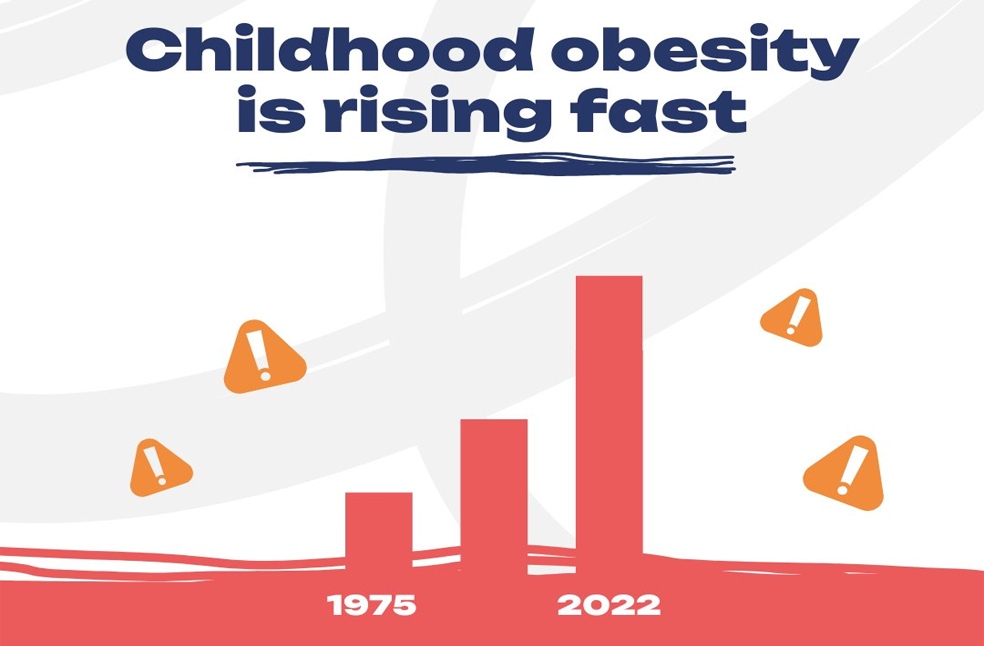
Geneva: An international study has cautioned that without urgent and far-reaching intervention, more than 220 million children worldwide could be living with obesity by 2040.
The report was released to mark World Obesity Day, highlighting the urgent need for global action to tackle rising childhood obesity rates. The latest projections from the World Obesity Federation indicate that around 180 million children were obese in 2025.
However, the 2026 World Obesity Atlas forecasts that by 2040, approximately 227 million young people aged 5 to 19 will have obesity, while over half a billion in the same age group are expected to be overweight.
Obesity isn’t just about individuals – it’s driven by systems.
Food systems. Inequality. Healthcare barriers. Unhealthy environments. Stigma.
This #WorldObesityDay, we’re acting on the drivers of obesity – for all 8 billion of us.
👉 https://t.co/0Jyf6xAKxG
#8BillionReasons pic.twitter.com/ddjHHriQUk— World Obesity Day (@WorldObesityDay) March 3, 2026
The report estimates that at least 120 million school-aged children could show early signs of chronic diseases linked to elevated body mass index (BMI) by 2040. BMI is a widely used measure to assess weight status: a BMI of 30 or above is classified as obese, while a BMI above 25 is considered overweight.
Johanna Ralston, Chief Executive of the World Obesity Federation, stated that the accelerating rise in childhood obesity reflects a global failure to recognise and address the condition as a serious disease. Ralston warned that it is unjust to leave a generation facing obesity and the chronic, and in some cases fatal, non-communicable diseases that often accompany it.
The report highlights country-specific data, revealing that 27 million children aged 5 to 19 in the United States have high BMI levels, second only to China with 62 million and India with 41 million. In the US, this translates to two in five children being either overweight or obese.
In the United Kingdom, about 3.8 million children are classified as having high BMI, a record level, placing the UK among the worst-performing nations in Europe. The number of overweight and obese children in the UK is roughly double that of France and Italy.
Looking ahead, the projections suggest that by 2040, around 370,000 UK children aged 5 to 19 could develop early signs of cardiovascular disease, while approximately 271,000 are expected to show signs of hypertension.
Significant regional inequalities were also identified. The 10 countries where more than half of school-aged children are overweight or obese are located in the Western Pacific region or the Americas. Meanwhile, the fastest growth in obesity rates is largely occurring in low- and middle-income countries.
The federation calls for stronger action to build healthier environments for children. Recommended measures include introducing or expanding sugar taxes, enforcing tighter limits on junk food advertising, and implementing policies that encourage children to adopt more active lifestyles.
Global health experts have endorsed the report’s findings. Dr. Kremlin Wickramasinghe, Regional Adviser for nutrition, physical activity, and obesity at the World Health Organization Europe, described childhood obesity as a ‘failure of environments.’
Wickramasinghe advocated for mandatory, rather than voluntary, marketing restrictions and front-of-pack nutrition labelling, arguing that many governments, including those in Europe, continue to allow the food industry to target children without sufficient regulation. The Adviser stressed the need for political will to confront industry influence and implement meaningful reforms.
Katharine Jenner, Executive Director of the Obesity Health Alliance, said that childhood obesity is not unavoidable. Jenner added that the projected rise in early signs of heart disease and hypertension should serve as a stark warning about the long-term health consequences of continued government inaction.
Responding to the findings, a spokesperson for the Department of Health and Social Care noted that measures are being introduced to curb junk food advertising on television before 9 pm and online at all times.
The initiative is expected to remove up to 7.2 billion calories per year from children’s diets. The government is also granting local authorities stronger powers to prevent fast food outlets from opening near schools as part of broader efforts to tackle childhood obesity.
ALSO READ | 28% of breast cancer burden tied to lifestyle; Study
