


Stockholm: What began as a simple feature to promote a flight price comparison website has grown into Flightradar24, one of the world’s most widely used platforms for tracking aircraft in real time.
Swedish entrepreneurs Mikael Robertsson and Olov Lindberg initially created a webpage showing live air traffic to attract more visitors to their online flight comparison portal. The platform is now used worldwide to monitor aviation activity, especially during disruptions or dramatic developments in the skies.
Robertsson recalled that the flight-tracking feature quickly surpassed the popularity of the original price comparison tool. One of the platform’s first major traffic surges occurred during the 2010 Eyjafjallajökull eruption in Iceland, when a massive volcanic ash cloud forced the closure of airspace across Europe.
The eruption led to the shutdown of more than 300 airports and grounded over 100,000 flights, prompting millions of people to visit Flightradar24 to observe the impact on air travel in real time. At the height of the event, the platform recorded about four million visitors within a few hours.

According to Fredrik Lindahl, the Chief Executive of Flightradar24, such events regularly cause spikes in the platform’s traffic. Over the years, users have turned to the service during major aviation-related incidents, including the disappearance of Malaysia Airlines Flight 370 in 2014 and the dramatic drop in global flights during the COVID-19 pandemic in 2020, which severely disrupted the travel industry.
Sometimes a single aircraft journey can attract widespread interest. When Russian opposition leader Alexei Navalny was flown to Berlin in 2020 for treatment following a suspected poisoning, and again when he returned to Russia in 2021, thousands of people tracked the flights live through the platform.
Middle East tensions
In recent days, the platform has again experienced increased attention as escalating tensions in the Middle East disrupted aviation routes. Following airstrikes launched by the United States and Israel on Iran, and Iran’s retaliatory missile attacks across the region, several countries quickly closed their airspace.
The closures caused widespread travel disruption, affecting hundreds of thousands of passengers, and forced airlines to reroute flights. On Flightradar24’s live map, the effects were immediately visible.
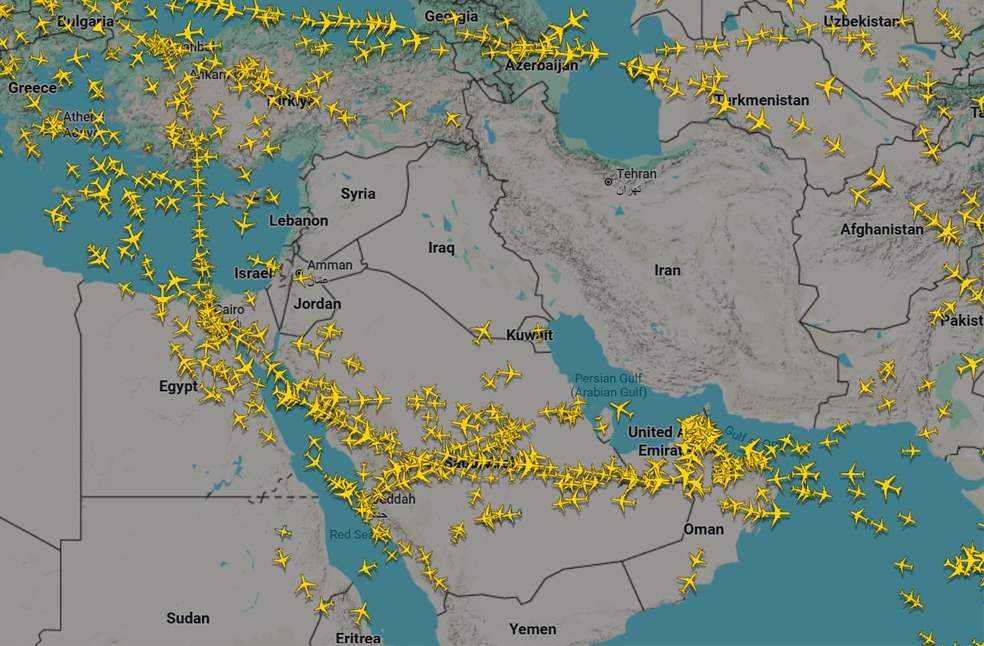
With large sections of Middle Eastern airspace closed, aircraft began using two main corridors: one route north of Iran passing through the Caucasus but below the closed airspace over Ukraine, and another southern route passing through Egypt, Saudi Arabia, and Oman.
The platform’s single biggest surge occurred in 2022 when millions of people tracked the aircraft carrying the coffin of Queen Elizabeth II from Edinburgh to RAF Northolt. Around 4.8 million users followed the short journey live.
Flightradar24 gathers flight data through a vast network of around 58,000 radio receivers worldwide, including about a dozen located in Antarctica. Each aircraft broadcasts data such as its callsign, location, speed, altitude, and direction through onboard transmitters, which are detected by these receivers and displayed on the platform’s interactive map.
The system began modestly, with Robertsson and Lindberg installing just two receivers at their homes after discovering that small monitoring devices available in the United Kingdom could capture aircraft signals. Robertsson said that the concept initially seemed almost unbelievable, noting that the idea of tracking aircraft with a small device once sounded unrealistic.
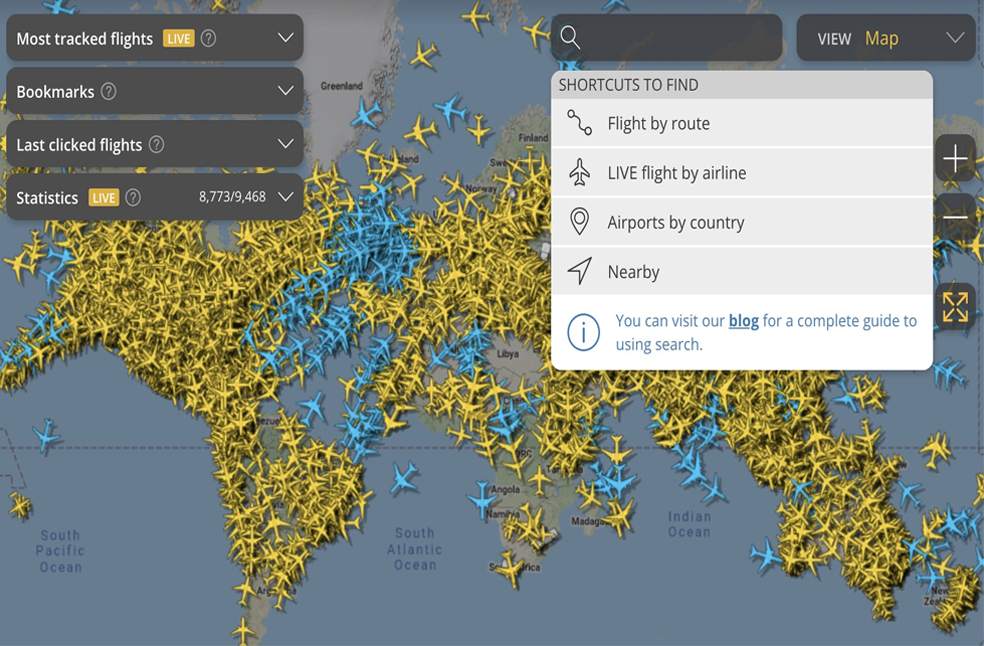
By early 2010, the site had grown to around 40,000 daily users, even before the volcanic eruption drove global interest in airspace monitoring. Traffic has spiked again during the latest Middle East conflict. Robertsson noted that usage more than doubled compared with normal levels.
Flightradar24 has since developed a business model around its global audience. Around 70 percent of the company’s revenue comes from subscriptions to premium tiers that provide more detailed aviation data for dedicated users. The company also earns income from advertising and commercial packages sold to aviation industry clients.
The platform relies heavily on aviation enthusiasts who host receivers as part of its crowdsourced tracking network. Lindahl emphasised that maintaining a strong free service is essential to encourage participation from people around the world who help collect flight data.
In September 2025, the company sold a 35 percent stake to the London-based venture capital firm Sprints Capital. Today, Flightradar24 has more than 1.5 million paying subscribers and typically attracts about 60 million free users each month, a figure that can rise significantly during major aviation events.
MOST READ | GLP-1 treatment shows promise in curbing addiction
