


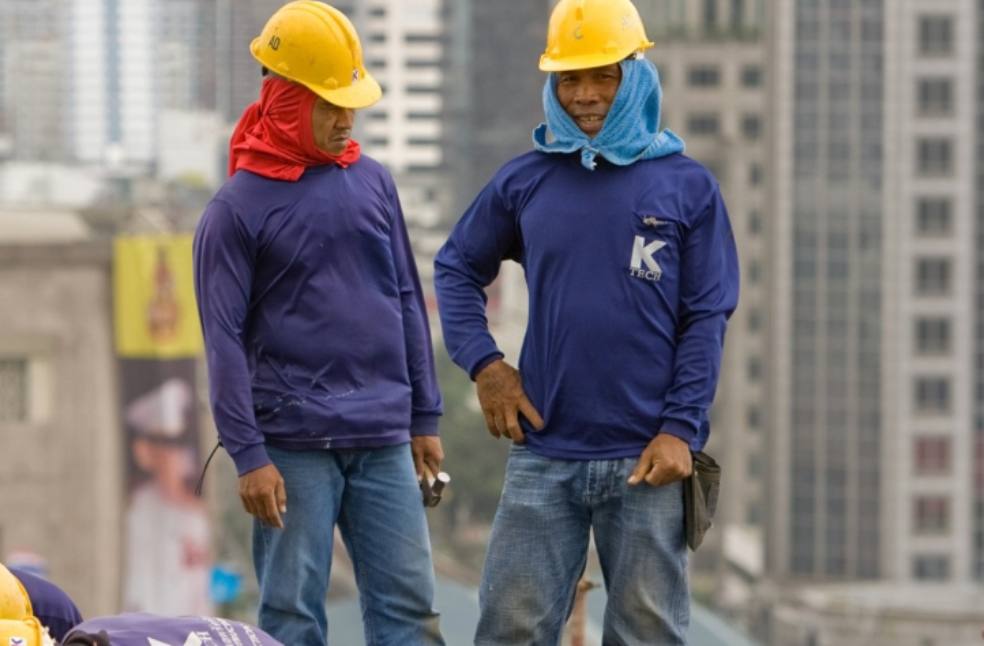
Geneva: A joint report from the World Health Organization (WHO) and the World Meteorological Organization (WMO) has warned that workers across the globe urgently need better protection from extreme heat as climate change drives more frequent and intense heatwaves.
The report highlights that millions of workers are regularly exposed to heat stress, which poses serious health risks and reduces productivity. It urges governments, employers, and employees to collaborate on adaptation strategies to safeguard both public health and economic output.
Although the WHO has previously cautioned about the dangers of extreme heat, this is its first report on workplace heat stress since 1969. Rüdiger Krech, WHO’s director of environment, climate and health, called the findings a ‘wake-up call.’ Krech remarked that, “It is not just discomfort. It is a real health risk. If your body temperature stays above 38 degrees celsius for too long, you are at risk of severe heat-related stress, stroke, kidney failure, and dehydration.”
🌡️ Heat is already hurting billions.
Outdoor & manual workers in agriculture, construction & beyond face rising temperatures that slash productivity & threaten lives.
The new WHO/@WMO report shares practical, evidence-based solutions 👉https://t.co/8xcaFbBigy #ClimateAction pic.twitter.com/pAIZkqxrJk
— World Health Organization (WHO) (@WHO) August 22, 2025
Heatwaves hitting record levels
The WMO notes that the past decade has seen the warmest temperatures on record, with 2024 declared the hottest year ever. Europe now regularly experiences temperatures above 40 degrees celsius, while in Africa and the Middle East they can reach 50 degrees celsius. In July, Mediterranean surface temperatures hit a record 26.68 degrees celsius.
The UK’s Met Office has also said that this summer is on track to be among the warmest since records began in 1884.
Impact on workers and productivity
Heatwaves not only threaten health but also damage economies. According to the report, productivity drops by 2 percent for every degree Celsius above 20 degrees Celsius. Accidents also rise significantly during heatwaves. In Switzerland, workplace accidents increased by 7 percent once temperatures climbed over 30 degrees celsius during the 2023 heatwave, largely due to fatigue, poor concentration, and disrupted sleep.
Construction and agricultural workers are among the most vulnerable. Italy recently introduced an emergency decree allowing work to be halted during peak heat hours, while Swiss cantons paused construction work in 2023, a move welcomed by unions.
Schools and vulnerable groups also at risk
The report stresses that beyond workplaces, the elderly, children, and the chronically ill face heightened risks. In Germany, schools can declare ‘Hitzefrei’ (heat-free days), though soaring summer temperatures have made such breaks more common and harder to implement.
Some Swiss schools have advised teachers to take pupils to swimming pools, but educators say long-term solutions are needed, including improved ventilation and air conditioning in school buildings. Dagmar Rösler, head of the Swiss teachers’ association, remarked that, “The goal is to make sure children can learn in a comfortable environment, and teachers can work in bearable conditions.”
Adaptation will require investment
The WHO/WMO report calls for coordinated adaptation measures involving governments, employers, local councils, and education authorities. Suggestions include heat-adapted uniforms, better building designs, and revised working schedules.
Despite the growing risks, many governments, especially in Europe, are prioritising defence spending over climate adaptation. The WHO warns that this could be a dangerous oversight as heatwaves become an increasingly normal feature of working and learning life.
MOST READ | Car bomb in Cali and drone strike in Medellin leave dozens dead
