


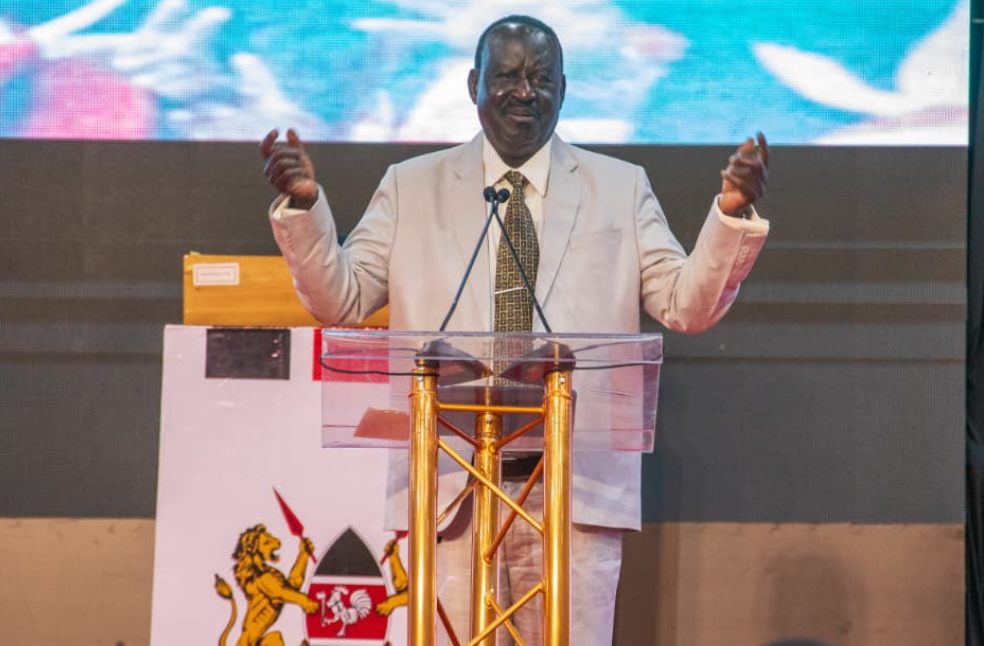
Nairobi: Raila Odinga has died at the age of 80 while receiving medical treatment at a hospital in India.
Indian police have said that Odinga was walking with family members and a personal doctor when the veteran politician suddenly collapsed and was rushed to a nearby hospital, where medical staff declared death on arrival.
In recent weeks, speculation about Odinga’s health has circulated, though close associates and relatives have dismissed claims suggesting a critical condition. Condolences have poured in from across the African continent, including from Ethiopian Prime Minister Abiy Ahmed and other regional leaders.
A defining figure in Kenya’s modern political history, Raila Odinga has contested the presidency five times without success, consistently asserting that electoral victories were unjustly denied. Following the disputed 2017 elections, Kenya’s Supreme Court annulled Uhuru Kenyatta’s victory, a rare judicial decision in Africa, validating Odinga’s claims of electoral irregularities.
The 2007 presidential election, marked by allegations of manipulation, triggered Kenya’s deadliest post-election violence. More than 1,200 people lost their lives, and about 600,000 others were displaced nationwide.
A peace agreement, facilitated by former United Nations Secretary-General Kofi Annan, led to the formation of a coalition government in which Raila Odinga assumed the position of prime minister.
Beyond politics, Raila Odinga’s legacy stands firmly rooted in the struggle for democracy and human rights. As Kenya’s longest-serving political detainee, Odinga endured imprisonment from 1982 to 1988 and again from 1989 to 1991 under the leadership of Daniel arap Moi.
The first detention followed accusations of involvement in the failed 1982 coup, an event that propelled Odinga onto the national stage and defined a lifetime devoted to the pursuit of justice, multiparty democracy, and freedom of expression.
ALSO READ | UK reports sharp surge in cyber-attacks over past year
