


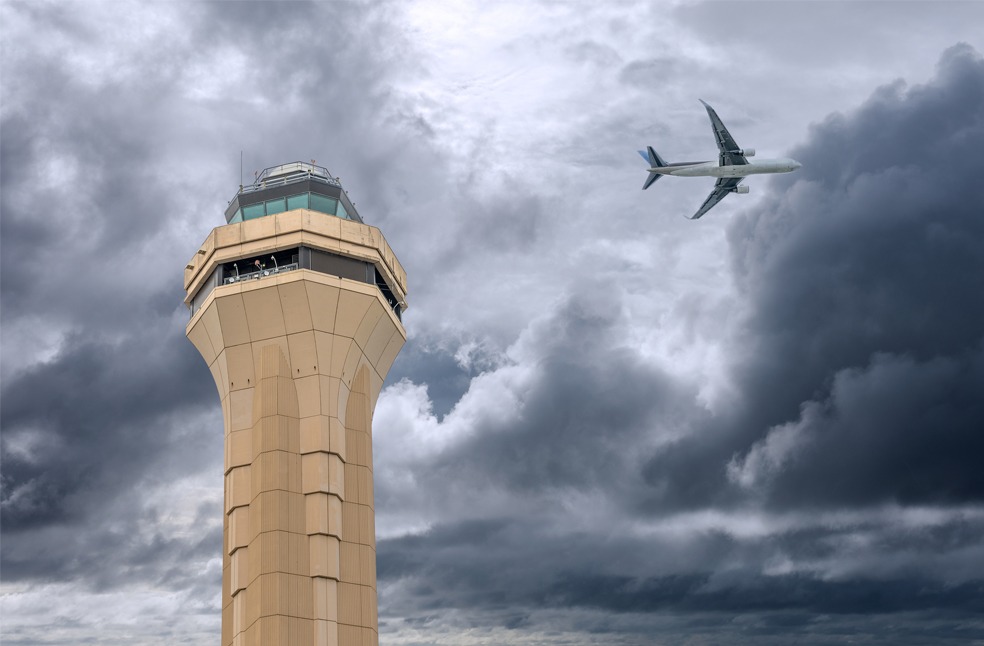
Washington: Flight delays persisted across the United States for a second consecutive day as the federal government shutdown entered its seventh day, causing severe staffing shortages in air traffic control, the Federal Aviation Administration (FAA) reported.
More than 3,000 flights were delayed nationwide, affecting major airports such as Houston, Nashville, Dallas, Chicago O’Hare, and Newark, according to flight tracking data.
The FAA said that it is reducing the number of arrivals per hour at Chicago O’Hare due to staffing issues, resulting in average flight delays of 41 minutes. Additional staffing challenges were reported at the Atlanta Air Route Traffic Control Center.
Due to a recent lapse in funding, we know there are many questions about flight delays and staffing shortages across the system.
For real-time updates at U.S. airports, including staffing and weather, visit https://t.co/9HQhAFK90u.
— The FAA ✈️ (@FAANews) October 7, 2025
Newark airport saw arriving flights held for up to 30 minutes, and Washington Reagan National Airport was expected to face new slowdowns due to low staffing levels. Nashville air traffic control is confronting significant shortages and will curtail operations later on Tuesday, with approach control responsibilities being transferred to Memphis Center.
Both political parties have pointed fingers over the ongoing flight delays. White House Press Secretary Karoline Leavitt blamed Democrats for the aviation slowdowns, while California Governor Gavin Newsom, a Democrat, held President Donald Trump responsible. Severe weather conditions across the country have compounded delays at multiple airports.
During the shutdown, roughly 13,000 air traffic controllers and approximately 50,000 Transportation Security Administration (TSA) officers continue to work without pay, which continues to exacerbate flight delays.. Controllers are scheduled to receive a partial paycheck on October 14 for hours worked before the shutdown.
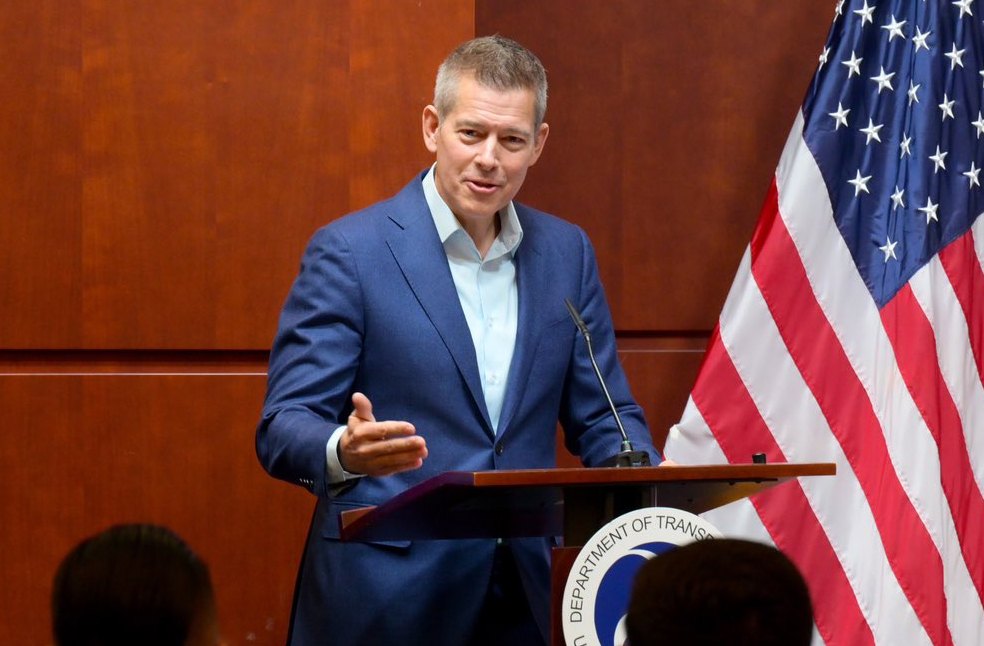
Transportation Secretary Sean Duffy said that the FAA observed a slight increase in sick leave among controllers, and staffing has been reduced by up to 50 percent in some regions since the shutdown began. “If we don’t have controllers, we’re going to make sure the airspace is safe. So what we do is we’ll slow traffic,” Duffy remarked.
The current shutdown echoes the 2019 government shutdown, which lasted 35 days and also caused flight delays. During that period, absences among controllers and TSA officers increased due to missed paychecks, causing longer checkpoint wait times and forcing authorities to slow air traffic in New York, pressuring lawmakers to resolve the standoff.
The US has faced chronic air traffic control shortages for over a decade. Many controllers were already working mandatory overtime and six-day weeks before the shutdown. The FAA estimates it remains approximately 3,500 air traffic controllers short of its target staffing levels, prolonging flight delays and highlighting long-standing systemic challenges in managing the nation’s airspace efficiently.
ALSO READ | Operation Echosteep: Met Police crack iPhone-smuggling ring
