


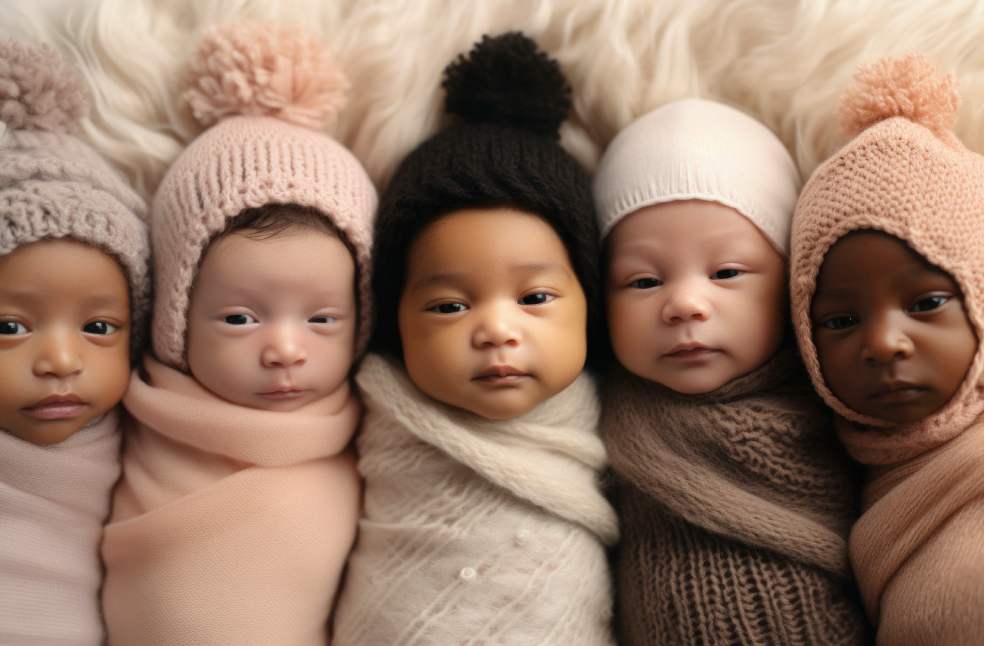
London: Eight babies have been born in the UK using DNA from three people, in a groundbreaking medical advance aimed at preventing mitochondrial disease, a severe and often fatal inherited condition that affects energy production in the body.
The procedure, developed over a decade ago by scientists at Newcastle University and the Newcastle upon Tyne Hospitals NHS Foundation Trust, is now yielding successful results, with children born free of the disease and meeting developmental milestones.
Mitochondrial disease, passed down only through mothers, can result in heart failure, brain damage, seizures, muscle weakness, and death in infants. The three-person IVF method, legalised in the UK since 2015, combines the DNA from a mother and father with healthy mitochondria from a donor egg.
One mother in a statement issued through the Newcastle Fertility Centre stated that, “After years of uncertainty this treatment gave us hope, and then it gave us our baby.”
Known as mitochondrial donation treatment (MDT), the process involves fertilising both the mother’s and a donor’s eggs with the father’s sperm. The nuclear DNA from the donor embryo is replaced with the parents’ DNA, resulting in an embryo that has the desired nuclear genetic traits from the parents but healthy mitochondria from the donor.
This mitochondrial DNA makes up around 0.1 percnet of the baby’s total DNA but is vital to ensure healthy cell function. Since the change is inherited, any female children will pass the donor’s mitochondrial DNA to their children.
Promising early results
Out of 22 families who have undergone the procedure, eight babies — four boys and four girls, including one set of twins — have been born, with one pregnancy ongoing.
Google DeepMind | Cropped by BH
While minor health issues were reported in two cases, including epilepsy and an irregular heartbeat, doctors say they are unrelated to mitochondrial disorders. In five cases, no trace of defective mitochondria was found. In the remaining three, traces were below the threshold known to cause disease.
A step forward in reproductive medicine
The UK became the first country in the world to legalise the use of mitochondrial donation following a landmark parliamentary vote in 2015. Despite initial concerns around genetic modification and designer babies, the technique was deemed safe and ethically acceptable, particularly because it offers families a way to break the cycle of devastating illness.
For families like the Kittos, the breakthrough offers hope for future generations. Kat Kitto’s daughter Poppy, 14, lives with mitochondrial disease and requires round-the-clock care. Her eldest daughter, Lily, 16, may one day be able to use the technique to ensure her children are free from the condition.
Lily remarked that, “It’s the future generations who can now have that outlook of a normal life.” Experts stress that continued research is essential to refine the technique and fully understand its implications. Prof. Mary Herbert of Newcastle and Monash Universities stated that, “The findings give grounds for optimism. But we must continue to study the limitations to improve outcomes.”
The Newcastle Fertility Centre anticipates that 20 to 30 babies could be born each year through this method, providing real hope to families affected by mitochondrial disease around the world.
MOST READ | Teen vaping falls in Australia after vape ban; Study shows
