


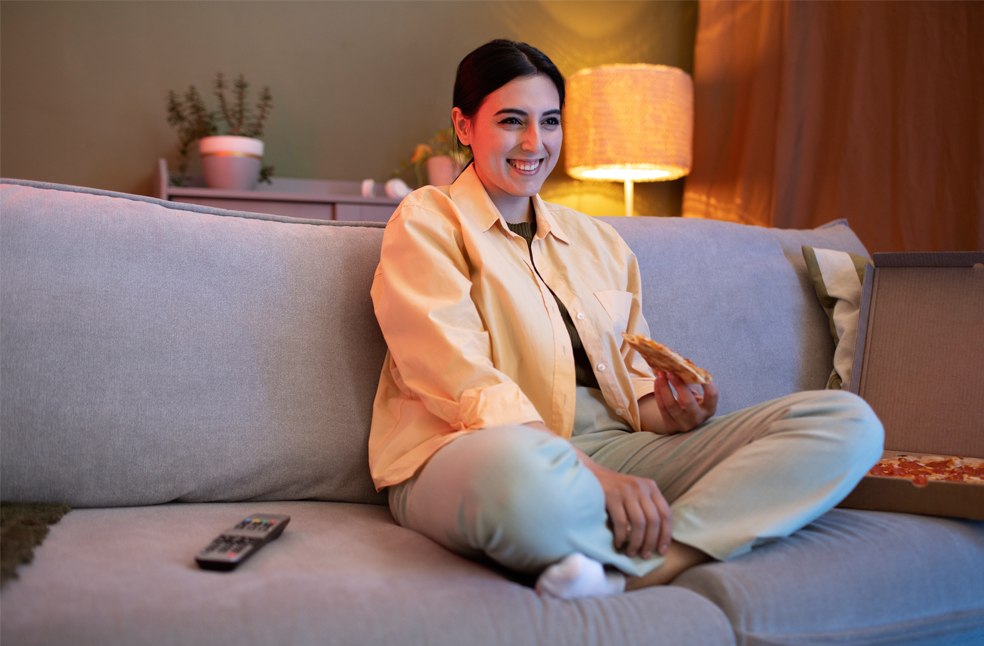
London: Television sets have overtaken laptops, tablets, and smartphones as the most common device for watching YouTube at home in the UK, cementing the platform’s status as a staple of the living room.
According to data from a Barb Audiences review, more than half of all YouTube viewing via a domestic Wi-Fi connection now takes place on traditional TV sets, making television the top-ranking device for YouTube consumption across all age groups.
Although YouTube viewing remains particularly strong among children, where it has long been popular and has raised concerns about its dominance in children’s television and the type of content promoted by its algorithm, TV sets have gradually become the preferred device across older demographics.
Televisions became the first-choice device for over-55s in October 2023, for viewers aged 35 to 54 in April 2024, and for 16- to 34-year-olds in December 2024.
Despite YouTube’s rapid growth, the Barb data indicates that traditional television remains resilient. In December 2025, live TV still accounted for 45 percent of all identified viewing on TV sets. Live viewing last year was boosted by major sporting events such as the Women’s Euro 2025 final, as well as entertainment programmes including BBC One’s Celebrity Traitors and Channel 4’s Gogglebox.
Justin Sampson, Barb’s chief executive, said that discussions about television often rely on a binary assumption that live viewing has collapsed, younger audiences have disappeared, and digital platforms have replaced programmes. Instead, Sampson described the shift as a ‘rebalancing,’ emphasising that live viewing continues to represent a significant share of overall consumption, even among younger viewers.
The chief added that YouTube defies simple categorization, existing neither purely as television nor as something entirely separate, but noted that the TV set is now the primary way the platform is watched in UK homes.
Founded 21 years ago, YouTube has evolved into a dominant platform hosting podcasts, short-form videos, and content from traditional broadcasters. Its influence has become so pronounced that media regulator Ofcom has urged ‘endangered’ public service broadcasters, including the BBC and ITV, to distribute more of their content on the platform.
In response, the BBC has announced plans to produce tailor-made programming specifically for YouTube. While the corporation has previously uploaded clips and trailers from its shows, it will now create original content designed for the platform.
YouTube’s cultural impact is also receiving institutional recognition. The Victoria and Albert Museum in London has incorporated an early version of YouTube’s ‘watch page’ into an exhibition. The display features the first video ever uploaded to the site, Me at the zoo, filmed by co-founder Jawed Karim. The museum described the page as ‘a vital piece of internet history.’
Visitors will be able to view the page as internet users would have seen it 20 years ago, including the 19-second clip of Karim at the San Diego Zoo discussing elephants. Since it was posted in April 2005, the video has amassed more than 380 million views.
Neal Mohan, YouTube’s Chief Executive, said that the clip marked a transformative moment, creating a new way for people to share their stories with the world.
POPULAR | YouTube restores services after global disruption
