


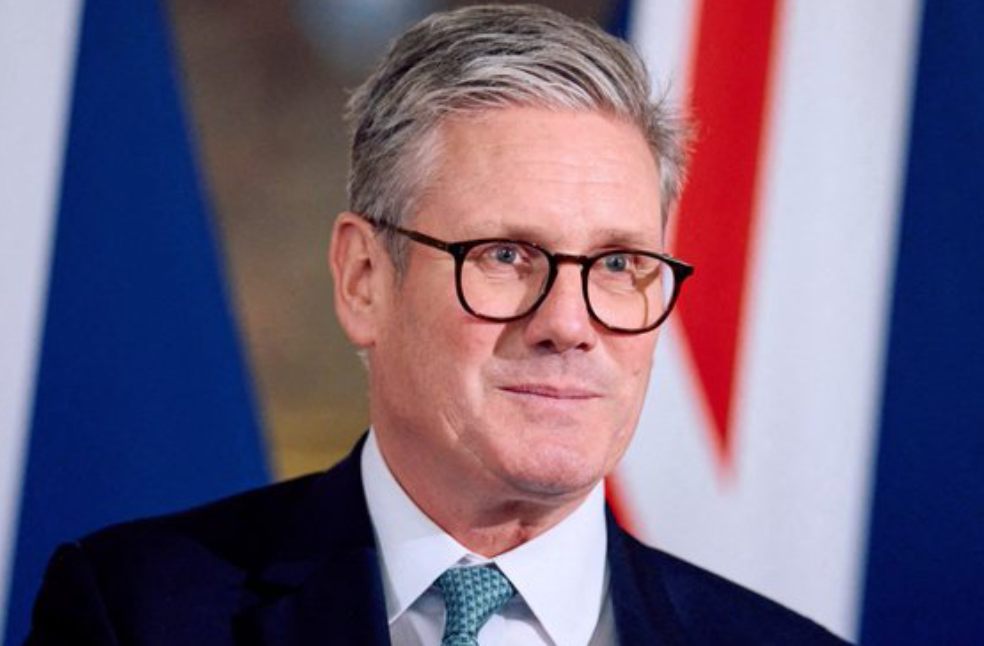
United Kingdom: The UK Prime Minister Keir Starmer is set to announce the purchase of at least 12 F-35A fighter jets capable of carrying tactical nuclear weapons.
The announcement will be made at the NATO summit in The Hague, marking what Downing Street calls the ‘biggest strengthening of the UK’s nuclear posture in a generation.’ The acquisition will enable the Royal Air Force to carry nuclear weapons by air for the first time since the Cold War, significantly expanding the UK’s current deterrent, which is solely reliant on submarine-launched Trident missiles.
Prime Minister Starmer stated that, “In an era of radical uncertainty, we can no longer take peace for granted, which is why my government is investing in our national security. These F-35 dual-capable aircraft will herald a new era for our world-leading Royal Air Force and deter hostile threats that threaten the UK and our Allies.”
In an era of global uncertainty, we can no longer take peace for granted.
My government is investing in our national security by purchasing 12 new F-35A fighter jets, supporting thousands of high-skilled jobs and opportunities for working people.
Secure at home, strong abroad.
— Keir Starmer (@Keir_Starmer) June 25, 2025
The F-35A, manufactured by US defence contractor Lockheed Martin, is a conventional takeoff and landing aircraft equipped to carry both conventional and nuclear weapons, including the US B61 nuclear bomb. While the UK currently operates the F-35B, which is not configured for nuclear delivery, the introduction of the F-35A will align the country with seven other NATO members, including Germany and Italy, who already host dual-capable aircraft.
The aircraft will be stationed at RAF Marham in Norfolk, with the deal expected to support an estimated 20,000 jobs across the UK. Britain supplies about 15 percent of the F-35 global supply chain, according to officials.
NATO Secretary-General Mark Rutte welcomed the move, calling it ‘yet another robust British contribution to NATO,’ and reinforcing the alliance’s unified front amid growing global tensions.
The purchase comes as NATO leaders prepare to approve a significant increase in defence spending targets from 2 percent to 5 percent of GDP with calls for burden-sharing and heightened threats from Russia. The UK has already pledged to meet the target and is also investing in new attack submarines and munitions factories.
The defence overhaul follows mounting pressure from the United States, particularly under President Donald Trump, who criticised European nations for underfunding their militaries and has openly questioned NATO’s mutual defence obligations.
Meanwhile, other European powers are also ramping up their military capabilities. The move by the UK signals a new era in NATO’s nuclear deterrence capabilities, with a clear message: the alliance is prepared to counter emerging threats with both modern technology and renewed commitment.
MOST READ | Brazil’s former president to face Supreme Court over alleged coup plot
