


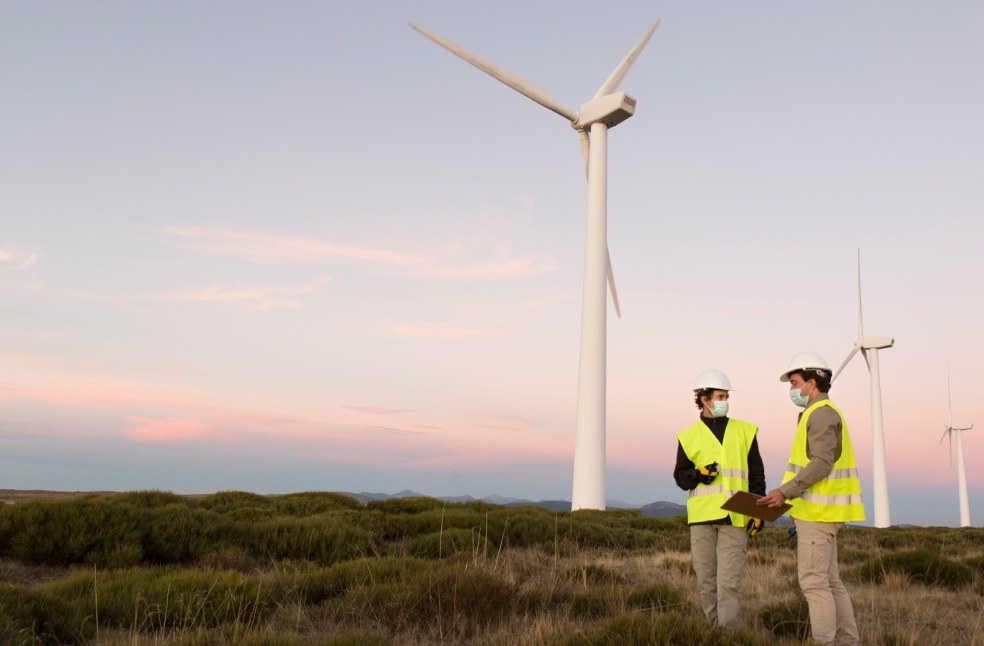
London: The United Kingdom is set to support a vast new fleet of offshore wind projects in the North Sea as part of a joint initiative with eight European countries, including Norway, Germany and the Netherlands.
The government says the agreement will strengthen energy security and help the UK move away from what it described as the ‘fossil fuel rollercoaster’. For the first time, some new offshore wind farms will be directly connected to multiple countries through undersea interconnectors, cables that allow electricity to flow between national grids. Supporters argue this will help reduce energy prices across the region.
However, the plan could prove controversial. Critics warn that wind farm operators may be able to sell electricity to whichever country offers the highest price, potentially driving up costs for UK consumers during periods of high demand.
Energy Secretary Ed Miliband is expected to sign the declaration at a summit on the future of the North Sea in Hamburg, committing participating countries to complete the scheme by 2050.
Jane Cooper, deputy CEO of industry body RenewableUK, welcomed the deal, saying it would drive down costs for billpayers, while significantly improving energy security across the UK and the wider North Sea region.
But shadow energy secretary Claire Coutinho criticised the government’s approach, stating that, “We cannot escape the fact that the rush to build wind farms at breakneck speed is pushing up everybody’s energy bills.”

Interconnectors and energy security
The UK is already linked to European electricity grids through 10 undersea interconnectors, but directly connecting wind farms to multiple countries would mark a global first. Most energy economists agree that expanding cross-border connections could reduce costs and improve the resilience of power supplies.
National Grid recently suggested that such arrangements could reduce constraint payments, which are compensation paid when wind farms are forced to stop generating power due to network congestion. Another report found UK consumers had saved $2.18 billion (£1.6 billion) since 2023, thanks to the nine existing interconnectors.
National Grid also noted that interconnectors help stabilise prices by allowing surplus electricity generated in other countries during off-peak hours to be sold cheaply to the UK.
Concerns raised by Norway’s experience
Interconnectors have proved controversial in Norway, where concerns emerged that exporting electricity could reduce domestic supply and push up prices for local consumers. In response, the Norwegian government introduced new rules to restrict exports when domestic supply is under pressure and refused permission for a proposed new interconnector to Scotland.
Security and geopolitical context
NATO and the European Commission are also taking part in the Hamburg summit, which is expected to include commitments to strengthen security around offshore energy infrastructure amid growing concerns about sabotage and unsafe maritime activity.
The agreement also signals Europe’s continued commitment to wind power, despite criticism from US President Donald Trump, who recently renewed his attacks on what he called ‘windmills’ during a speech at the World Economic Forum in Davos.
Targets and global position
North Sea countries pledged three years ago to develop 300 gigawatts (GW) of offshore wind capacity. Under the new agreement, 100GW will be built jointly, with 20GW expected to be underway by 2030.
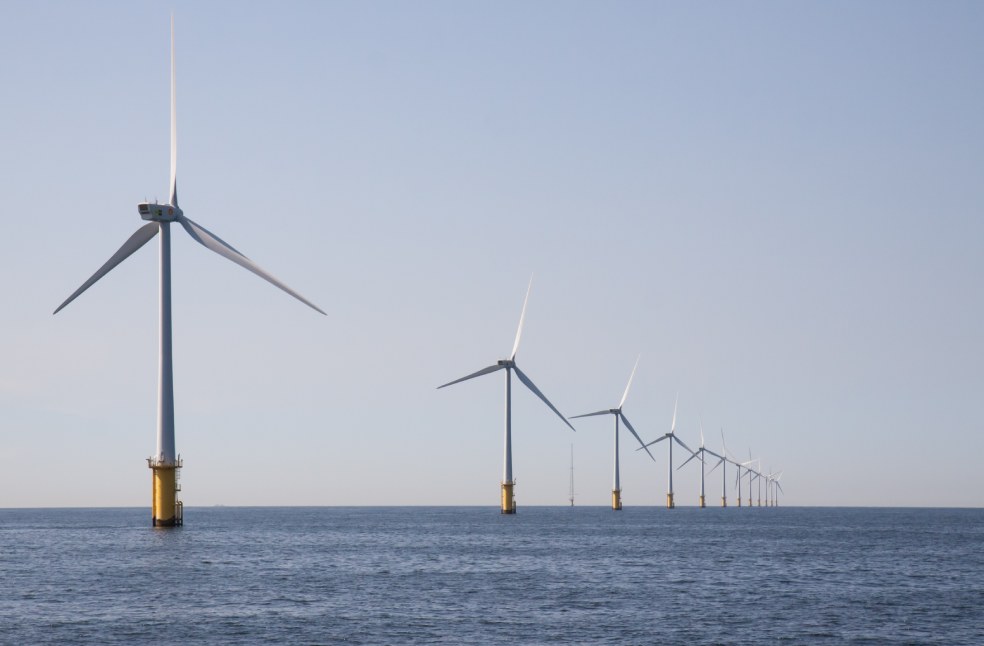
China currently leads the world in offshore wind, with 43GW of the world’s 83GW of installed capacity. The UK ranks second with nearly 16GW already operational. The government has awarded contracts for a further 20GW, including 8.4GW agreed in a record-breaking bidding round earlier this month.
Political reaction
The government has faced criticism from the Conservatives, who argue it is locking in high offshore wind prices. Reform UK has also repeatedly attacked the cost of net-zero policies.
However, the Liberal Democrats and Greens continue to back the expansion of renewable energy, citing the need to tackle climate change and support green job creation. The SNP and Plaid Cymru also support offshore wind growth but argue that Scotland and Wales should have greater control over their own energy resources.
TRENDING | Myanmar votes in final round of controversial election
