


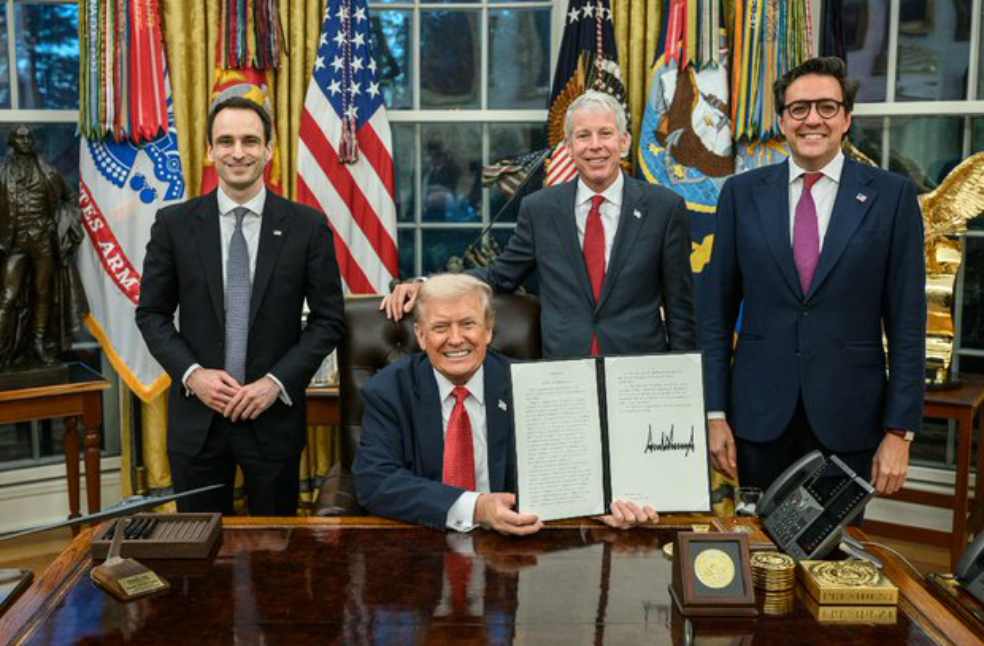
Washington: United States President Donald Trump has unveiled a sweeping Genesis Mission national initiative aimed at harnessing artificial intelligence (AI) to accelerate scientific breakthroughs across key strategic sectors.
Trump signed an executive order establishing ‘The Genesis Mission’, the latest step in his administration’s push to spur AI development through deregulation, infrastructure investment and public-private collaboration.
The directive orders US Energy Secretary Chris Wright to unite scientists and technologies across the country’s 17 national laboratories into a single cooperative research ecosystem. Under the initiative, US supercomputers and vast data repositories will be interconnected to form what officials describe as a ‘closed-loop AI experimentation platform’, designed to dramatically speed up scientific discovery.
Comparing the effort to the historic Apollo programme that put the first man on the moon, the White House said the mission will target some of the ‘greatest scientific challenges of our time,’ including nuclear fusion, semiconductor innovation, critical materials, medicine and space exploration.
Michael Kratsios, the White House’s chief science adviser, said the initiative marks a paradigm shift in scientific research. Kratsios stated that, “The Genesis Mission connects world-class scientific data with the most advanced American AI to unlock breakthroughs in medicine, energy, materials science, and beyond.”
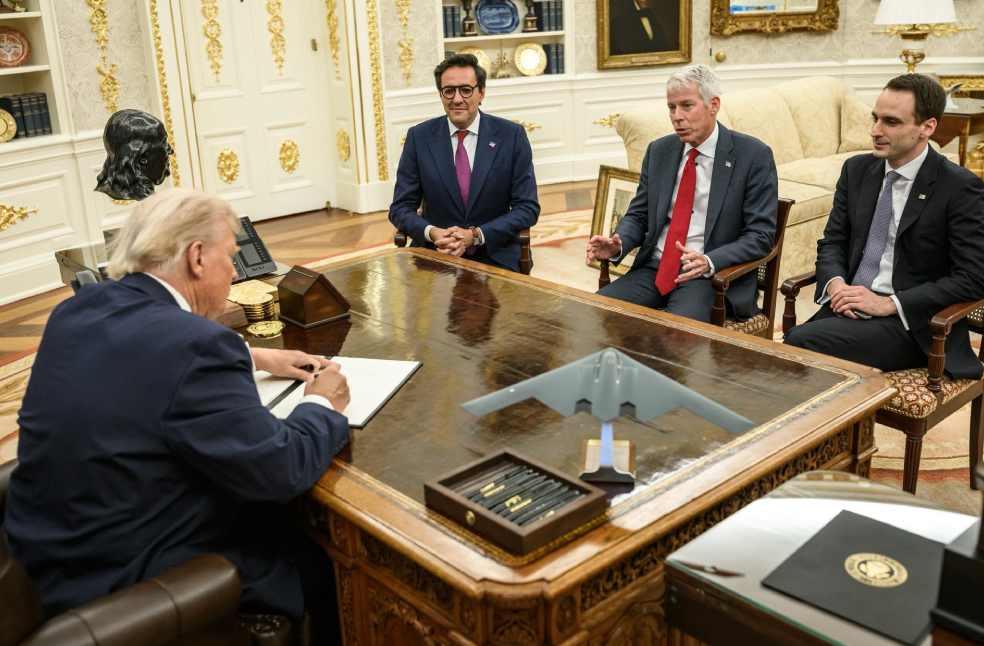
Tech giants are already signing on. Chipmaker Nvidia and AI startup Anthropic confirmed their participation, saying they will work with the Trump administration to integrate national computing and AI resources. In a social media statement, Nvidia said the programme will connect America’s leading supercomputers, AI systems and next-generation quantum machines into the most complex scientific instrument ever built – accelerating breakthroughs in energy, discovery and national security.
Since returning to the White House, Trump has made deregulation of AI a core pillar of his economic agenda. Last week, he called on Congress to pass legislation creating a single national standard for AI, criticising individual US states for introducing their own regulatory frameworks.
Benjamin H Bratton, an AI expert at the University of California, San Diego, welcomed the initiative as a step toward broader access to emerging technologies.
Bratton said AI diffusion benefits those historically excluded from technological influence, noting that, “Those locked out of positions of artificially scarce social agency have the most to gain. I support diffusion, not any particular administration.”
TRENDING | 7 arrested as Philippine flood control corruption probe widens
