


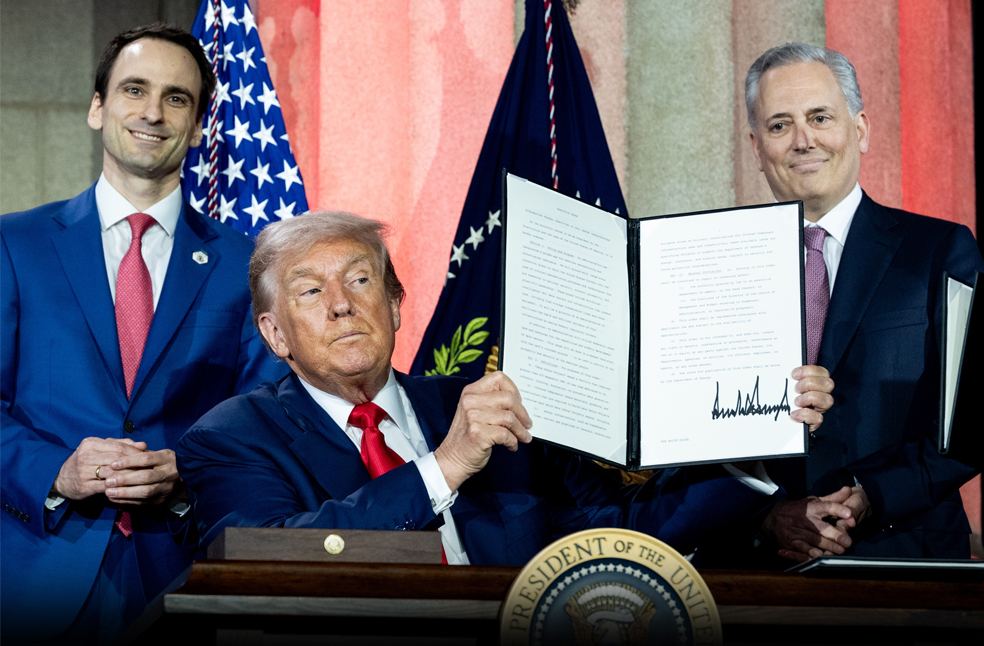
Washington DC: The Trump administration has unveiled a sweeping AI Action Plan, outlining a national roadmap to accelerate artificial intelligence, pledging to enhance US innovation while eliminating what it calls ‘bureaucratic red tape’ and ‘ideological bias.’
The 28-page AI Action Plan outlines over 90 policy actions that administration officials say can be executed within the next year, marking a major policy push toward rapidly advancing AI capabilities across sectors.
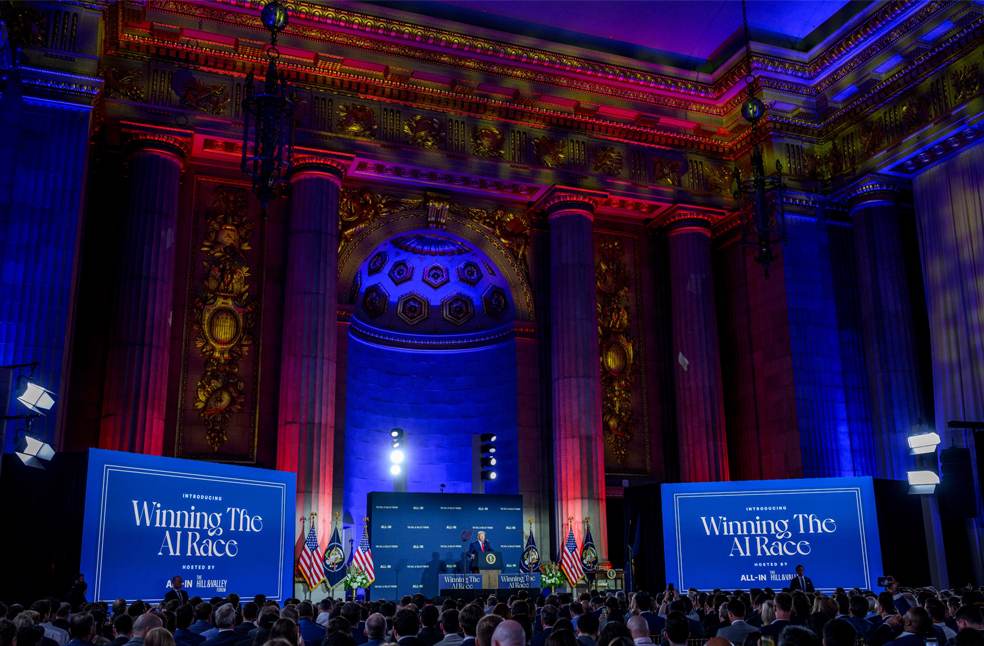
David Sacks, dubbed the administration’s crypto czar, told reporters that, “We believe we’re in an AI race, and we want the United States to win that race.”
President Donald J. Trump is igniting the AI revolution in America 🇺🇸🇺🇸
"Today, I will sign a sweeping Executive Order to fast-track federal permitting, streamline reviews, and do everything possible to expedite construction of all major AI Infrastructure projects." pic.twitter.com/l7MQIotaIz
— The White House (@WhiteHouse) July 24, 2025
Trump signs executive orders
The AI action plan includes efforts to expand data center infrastructure and promote American technology, but it has faced criticism from opponents who say it reflects an ideological agenda from the White House rather than a balanced regulatory framework.
As part of the roadmap, the administration is calling on federal agencies to review and repeal policies that hinder AI advancement and to actively support its integration in both government and private sector settings.
President Donald Trump has signed three related executive orders. One will encourage the international export of US-developed AI technologies, while another will focus on eliminating what the administration describes as ‘woke or ideologically biased AI systems.”
In a statement, the White House declared that, “American development of AI systems must be free from ideological bias or engineered social agendas. With the right government policies, the United States can solidify its position as the leader in AI and secure a brighter future for all Americans.”

Sacks further explained that the AI action plan also aims to prevent AI misuse or theft by hostile actors and to monitor for emerging and unforeseen risks, “The plan is partially focused on preventing AI technology from being ‘misused or stolen by malicious actors’ and will ‘monitor for emerging and unforeseen risks from AI.’”
The administration is also promoting AI as a strategic measure to maintain an edge over China. “AI is a revolutionary technology that’s going to have profound ramifications for both the economy and national security. It’s just very important that America continues to be the dominant power in AI,” Sacks added.
However, critics argue that the plan heavily favors Big Tech and lacks protections for the public.
Sarah Myers West, co-executive director of the AI Now Institute, remarked that, “The White House AI Action Plan was written by and for tech billionaires, and will not serve the interests of the broader public.”
“[T]he administration’s stance prioritizes corporate interests over the needs of everyday people who are all already being affected by AI,” Myers added.
In contrast to this new roadmap, in 2023, President Joe Biden signed an executive order that introduced safety and security standards for the use of federal AI.
Trump rescinded that order on his first day in office in January, swiftly replacing it with a directive focused on accelerated AI development, the removal of ideological bias, and the development of today’s AI action plan.
Officials stated that the newly released plan was informed by over 10,000 public comments gathered during its development.
However, Jim Secreto, former Deputy Chief of Staff to Biden’s Commerce Secretary Gina Raimondo, criticized the reversal of Biden-era protections and highlighted that, “Accelerating innovation is essential, but dismantling responsible guardrails risks turning America’s AI revolution into a reckless gamble.”
Secreto also expressed concern over Trump’s AI export strategy and emphasized that, “Promoting aggressive AI exports without reasonable controls strengthens China’s hand.”
This concern followed Trump’s decision last month to allow US tech giant Nvidia to resume sales of its high-end H20 AI chips to China, reversing his administration’s previous ban.
The AI Action Plan also became a major point of contention in recent negotiations over Trump’s budget bill, passed by Congress earlier this month. The bill originally included a ten-year moratorium that would prevent states from regulating AI, but lawmakers ultimately removed that provision.
ALSO READ | UK plans stricter Screen Time rules to protect children online
