


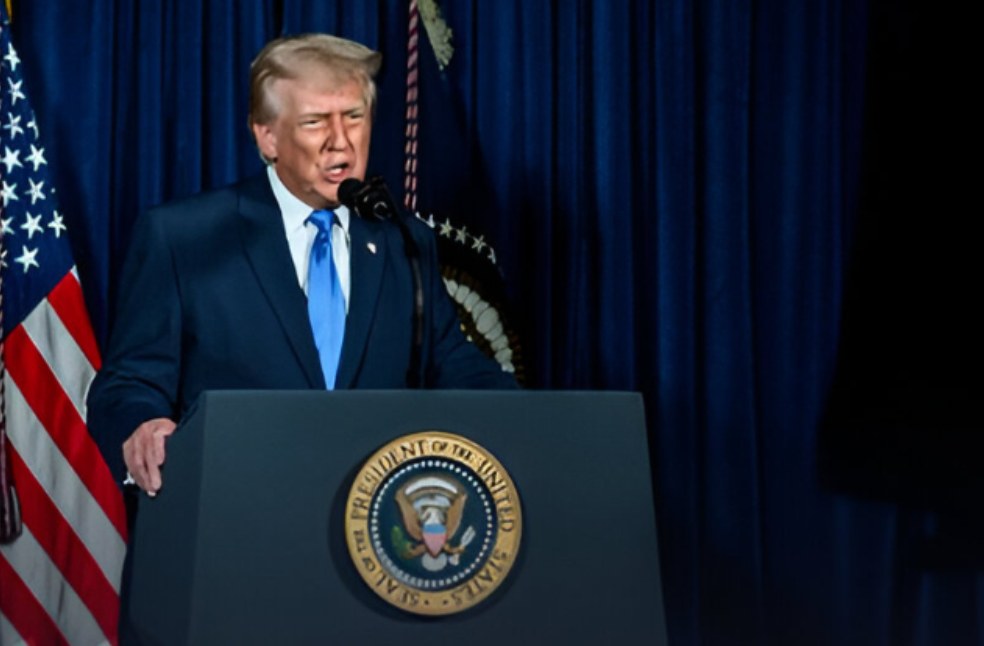
Washington: US President Donald Trump has signed an executive order that would prevent individual states from enforcing their own artificial intelligence (AI) regulations, setting the stage for a national framework that consolidates oversight under federal authority.
Trump said the decision was designed to eliminate regulatory fragmentation across the country. Trump stated that, “We want to have one central source of approval.” White House AI adviser David Sacks said the executive order gives the administration tools to push back against what it considers the most ‘onerous’ state-level rules, while noting that the federal government will not challenge regulations related specifically to children’s safety.
🇺🇸 President Donald J. Trump acted to keep America LEADING in AI—removing unnecessary red tape, ending inconsistent state regulations, and strengthening America’s national security. pic.twitter.com/qTIfR94jUt
— The White House (@WhiteHouse) December 12, 2025
The move is widely seen as a victory for the US technology sector, whose leaders have repeatedly urged Washington to adopt nationwide AI legislation. Major companies argue that a patchwork of state laws could slow innovation, create compliance hurdles and weaken America’s ability to compete with China in the global AI race.
California, Colorado and New York have already introduced their own AI regulations. California Governor Gavin Newsom, among Trump’s most outspoken political critics, condemned the order, accusing the president of attempting to protect industry interests at the expense of public safety.
Newsom remarked that, “Today, President Trump continued his ongoing grift in the White House, attempting to enrich himself and his associates, with a new executive order seeking to preempt state laws protecting Americans from unregulated AI technology.”
Earlier this year, Newsom signed a first-of-its-kind bill requiring major AI developers to disclose their risk mitigation plans for advanced AI models. Newsom has argued that such measures provide a blueprint for federal lawmakers.
Advocacy groups also voiced alarm. Julie Scelfo of Mothers Against Media Addiction said preventing states from establishing their own guardrails undermines states’ basic rights to protect their residents, especially in the absence of strong federal oversight.
TRENDING | Trump unveils $1mn ‘Gold Card’ visa scheme for fast US residency
