


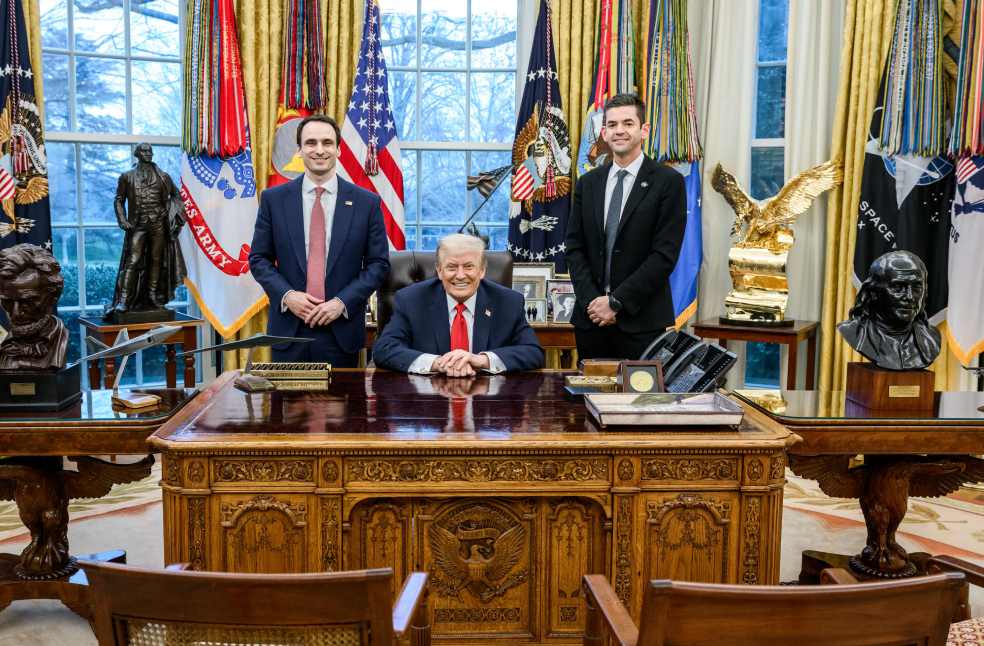
Washington: Trump moon landing plans have taken centre stage after President Donald Trump has issued a wide-ranging executive order outlining the United States’ renewed commitment to returning humans to the moon by 2028.
The order, titled Ensuring American Space Superiority, marks the first major space policy move of Trump’s second term and has been signed just hours after private astronaut Jared Isaacman was sworn in as NASA’s 15th administrator.
The executive order has directed the Pentagon and US intelligence agencies to develop a comprehensive space security strategy aimed at defending American interests from emerging weapon threats. It has also called for increased efficiency among private contractors and the demonstration of missile defence technologies under the administration’s Golden Dome programme.
As part of the restructuring, national space policy coordination has been placed under the supervision of Trump’s chief science adviser, Michael Kratsios.
While the move appeared to eliminate the National Space Council, an administration official has clarified that the body will continue under the White House Office of Technology Policy, with the president serving as chair instead of the vice president.

The 2028 target mirrors a similar directive issued during Trump’s first term, when a 2024 lunar return was proposed. That timeline later proved unworkable due to development and testing delays involving NASA’s Space Launch System and SpaceX’s Starship spacecraft. NASA’s lunar schedule had already been adjusted to 2028 under former president Barack Obama.
A successful 2028 mission would serve as the first step in NASA’s Artemis programme, which aims to establish a sustained human presence on the moon. The order has also reinforced plans to create the initial elements of a permanent lunar outpost by 2030, including long-term infrastructure powered by nuclear energy.
The renewed focus on the moon comes amid competition with China, which has set a 2030 target for its first crewed lunar landing. While Trump has previously spoken about sending missions to Mars, lawmakers in Congress have pushed NASA leadership to prioritise lunar objectives, citing the billions of dollars already invested.
At the same time, NASA has faced significant pressure from broader government efficiency measures. The agency’s workforce has been reduced by 20 percent, and proposals have sought to cut its 2026 budget by around 25 percent from its usual $25 billion (£19.7bn), placing multiple scientific programmes at risk.
Isaacman has indicated that NASA should pursue both lunar and Mars missions, while maintaining the moon as the immediate priority to stay ahead in the global space race.
MOST READ | AI giants offer free plans in India to win millions of users
