


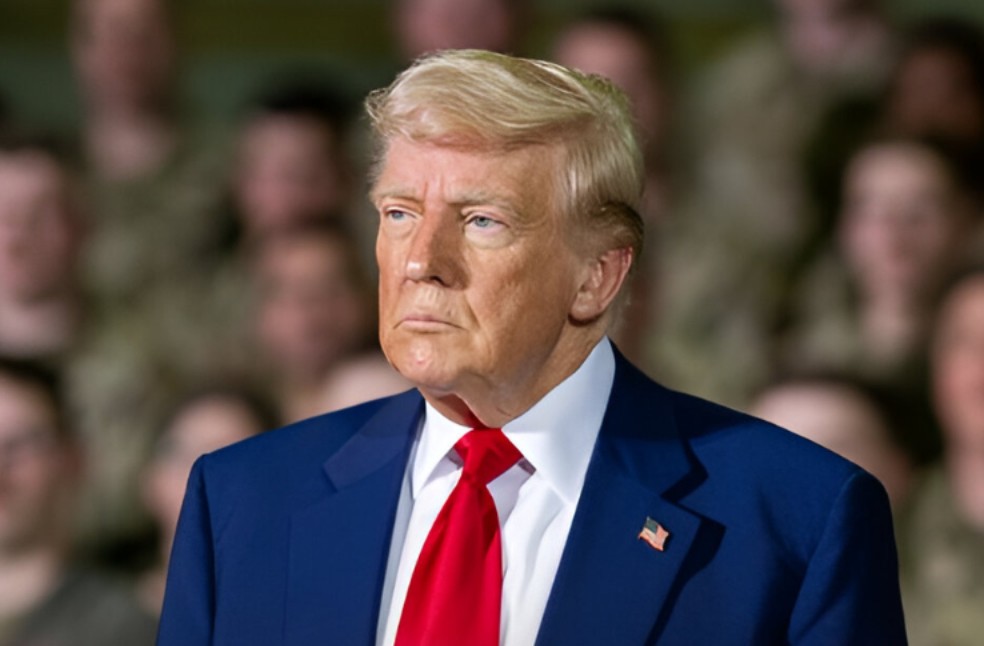
United States: US President Donald Trump has called on the nation’s military leadership to resume testing of nuclear weapons.
This move would mark a dramatic reversal of more than three decades of American policy. Trump said the decision comes in response to the ongoing nuclear testing programmes of other major powers, including Russia and China, emphasising the need for the US to maintain parity.
Trump wrote online just before meeting Chinese President Xi Jinping in South Korea, stating that, “Because of other countries’ testing programmes, I have instructed the Department of War to start testing our Nuclear Weapons on an equal basis.”
President Trump Participates in a Bilateral Meeting with President Xi https://t.co/xTjXtARzpQ
— The White House (@WhiteHouse) October 30, 2025
The United States, which holds the largest nuclear arsenal in the world, has not conducted any nuclear weapons tests since 1992. The last test, codenamed Divider, was carried out underground at the Nevada Test Site. A moratorium on testing was introduced by former President George Bush as the Cold War drew to a close.
Trump acknowledged the ‘tremendous destructive power’ of nuclear weapons in his post, but said he had no choice but to modernise and upgrade the US arsenal, noting that China’s nuclear programme will be even within 5 years.
The timing of Trump’s remarks raised eyebrows, coming just hours before his scheduled face-to-face meeting with President Xi, the first since 2019 in South Korea. His statement also followed his recent denunciation of Russia for testing a nuclear-powered missile reportedly capable of unlimited range.
Trump’s post did not specify how or when new tests would be conducted but claimed that the process would begin immediately. According to the National Museum of Nuclear Science and History, the Nevada Test Site, located 65 miles north of Las Vegas remains under government control and could be reactivated if deemed necessary.
The United States has conducted 1,054 nuclear weapons tests to date, more than any other nation, followed by Russia and China. If implemented, the move would signal a major policy shift and could heighten global tensions amid renewed competition between nuclear powers.
TRENDING | Amazon to cut upto 30,000 corporate jobs in major cost-cutting drive
