


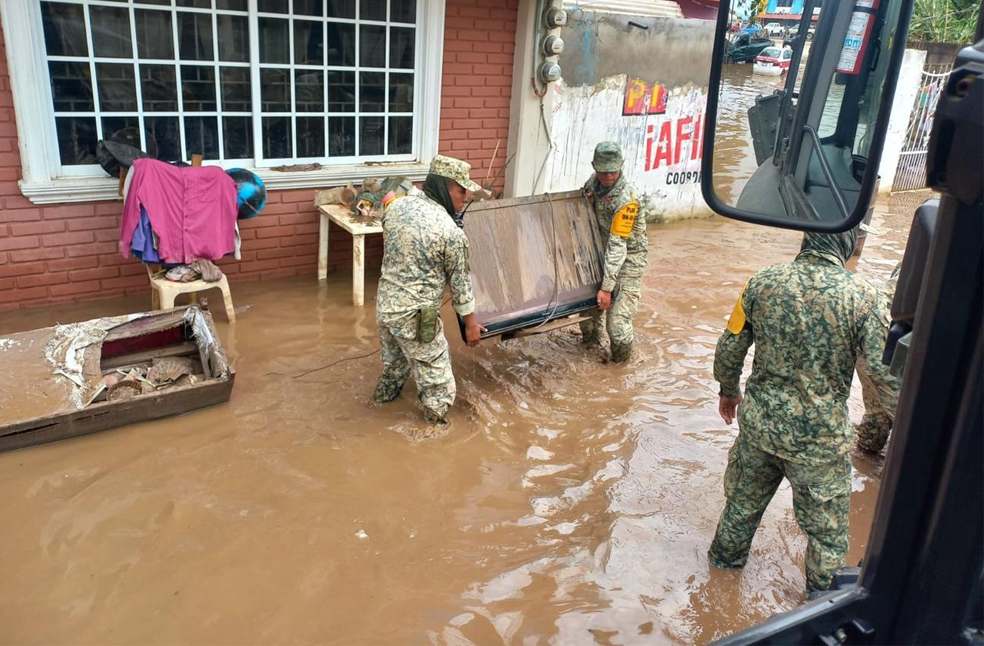
Mexico City: The Mexican government announced on Monday that at least 64 people have died and 65 others remain missing after a week of torrential rains swept across the country, causing widespread flooding and landslides in parts of the Gulf Coast and central states.
The severe weather was triggered by an unnamed tropical depression, which struck near the end of Mexico’s rainy season, battering already saturated land and causing rivers to burst their banks.
Forecasters had been monitoring two Pacific hurricanes and several tropical storms, but the heavy downpours from the depression came unexpectedly, intensifying over regions that had endured months of rainfall.
En compañía de integrantes del gobierno federal, visitamos Querétaro e Hidalgo, donde nos comprometimos a apoyar a todas y todos.
A través de videollamada en Palacio Nacional dimos seguimiento con el Comité Nacional de Emergencias a las acciones en los cinco estados afectados… pic.twitter.com/asRVODJrCi
— Claudia Sheinbaum Pardo (@Claudiashein) October 14, 2025
“This intense rain was not expected to be of such magnitude,” President Claudia Sheinbaum said during a press briefing, acknowledging the unprecedented scale of the disaster.
According to Admiral Raymundo Morales, Mexico’s Navy Secretary, the catastrophic flooding occurred when warm and cold air fronts converged over rivers that were already full and mountain ranges weakened by torrential rains. This combination led to massive runoff, flash floods, and mudslides that engulfed entire communities.
The President Sheinbaum confirmed that approximately 100,000 homes were damaged or destroyed by the floods. The President added that she will meet with officials from the Finance Ministry to discuss reconstruction and relief funding, and that she intends to visit the most severely affected regions personally.
Laura Velazquez, the National Coordinator of Civil Protection, identified Veracruz and Hidalgo as the states most severely impacted. In Veracruz, authorities reported 29 deaths and 18 missing persons, while Hidalgo recorded 21 deaths and 43 missing. Other affected states also reported property damage, infrastructure collapse, and displacement of residents.
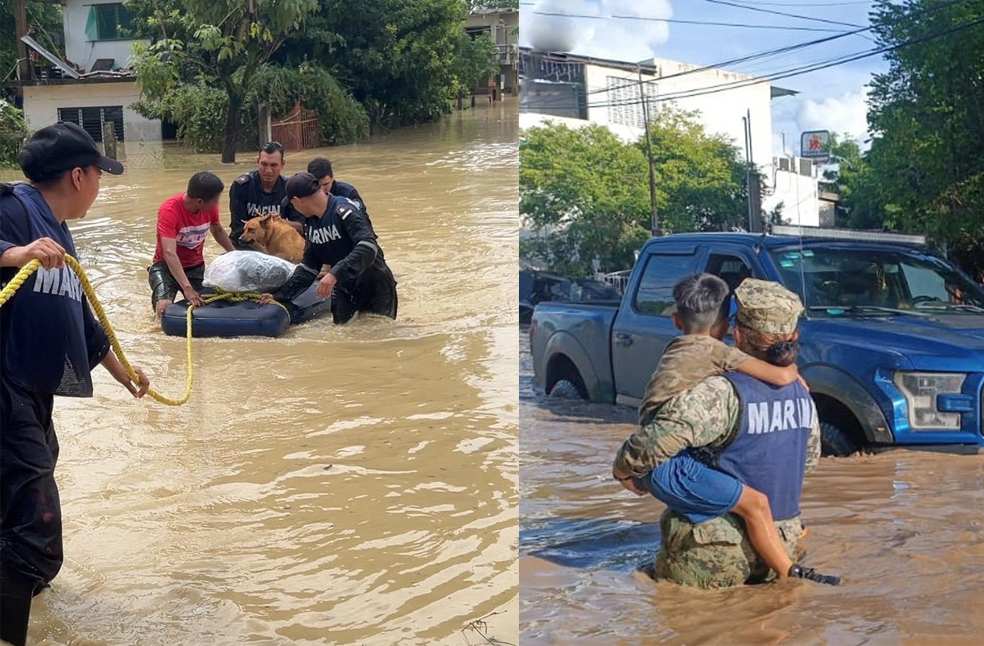
The torrential rains destroyed critical infrastructure, including bridges, and left streets filled with thick mud and debris. Videos and images shared on social media depicted emergency responders wading through waist-deep floodwaters to rescue stranded families and deliver food and medical supplies to isolated communities.
Thousands of personnel have been mobilized nationwide to assist with evacuations, search and rescue efforts, cleanup operations, and to monitor high-risk zones prone to further landslides and flooding.
Electricity outages affected towns across five states, but officials confirmed that power has now been largely restored. The government has also initiated preventive health measures to control mosquito-borne diseases, particularly dengue fever, which tends to spread rapidly in areas with stagnant water following floods.
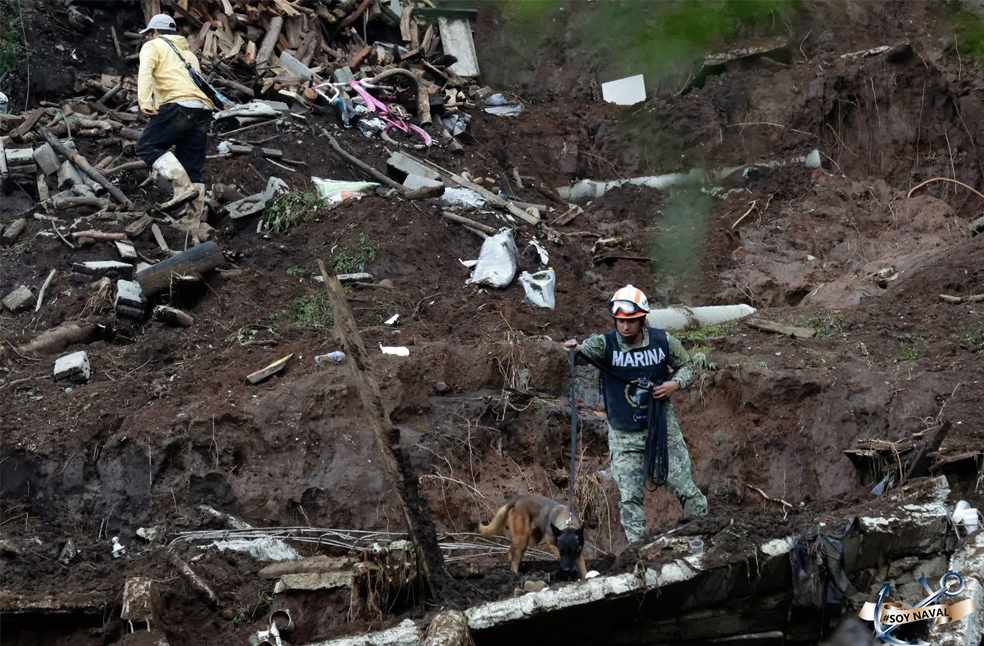
Authorities emphasized that ongoing operations will focus on rebuilding destroyed infrastructure, restoring essential services, and ensuring that affected residents receive medical care and temporary shelter.
As recovery efforts continue, the disaster underscores the growing challenge of managing extreme weather patterns in Mexico, particularly during the final phase of the rainy season, when saturated soil, swollen rivers, and unstable mountain slopes heighten the risk of flooding.
The government’s coordinated emergency response remains underway as Mexico confronts the aftermath of one of the most destructive torrential rains in recent years.
ALSO READ | Dieselgate Scandal: Five automakers on trial in UK Court
