


Close Menu

    Get the latest news around the globe

    Editor's Pick

    Beijing experiences coldest December in history

    English Post Office prepare for a barrage of old £20 and £50 notes as deadline nears

    Proper hypertension treatment could prevent 76mn deaths by 2050; WHO

    Facebook X (Twitter) Instagram
    Facebook X (Twitter) LinkedIn Instagram
    Britain HeraldBritain Herald
    Subscribe
    • Home
    • World Roundup
    • Business
    • Tech World
    • Entertainment & Events
    • Curious
    • More…
      • Spotlight
      • Knowledge
      • Lifestyle
      • Awareness
      • Women World
      • Sports
      • Travel
      • Notable
      • Contact Us
    Britain HeraldBritain Herald
    Home » Tiny Antarctic zooplankton discovered to lock away carbon
    Science

    Tiny Antarctic zooplankton discovered to lock away carbon

    New study reveals microscopic animals’ role in slowing global warming through deep-sea fat burning.
    Trainee ReporterBy Trainee ReporterJuly 5, 2025
    Facebook Twitter LinkedIn WhatsApp
    Tiny Antarctic zooplankton discovered to lock away carbon
    Image Via: Instagram@Prof. Daniel Mayor | Cropped by BH

    Antarctica: Researchers have discovered that zooplankton, minute marine animals like copepods, krill and salps undertake a remarkable seasonal migration in Antarctic waters, during which they lock away millions of tonnes of carbon deep in the ocean.

    A tiny, often-overlooked ocean creature commonly sold as fish food has been found to play a vital role in protecting the Earth from climate change, according to new research.

    Dr. Guang Yang from the Chinese Academy of Sciences stated that, “These animals are unsung heroes. This forces a rethink about how much carbon the Southern Ocean can store.”
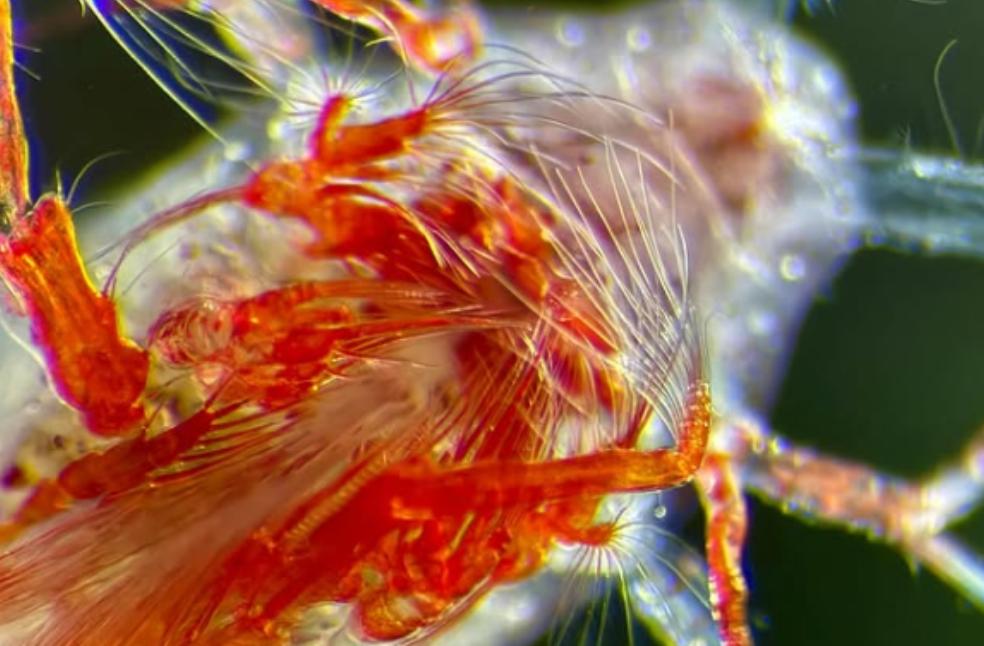
    Antarctic zooplankton
    Image Via: Instagram@Prof. Daniel Mayor | Cropped by BH

    Each year in spring, zooplankton gorge on phytoplankton at the ocean surface, storing carbon as fat. Then, as winter approaches, they sink hundreds of metres to depths between 500m and 2km, where they go dormant and slowly burn this fat. This deep-sea fat metabolism traps the carbon for decades or even centuries, preventing it from warming the atmosphere.

    This seasonal vertical migration pump sequesters around 65 million tonnes of carbon annually roughly the same as the yearly emissions of 55 million diesel cars, according to the US Environmental Protection Agency’s carbon calculator.

    Prof. Daniel Mayor from the University of Exeter explained that, “Without this natural process, our planet’s atmosphere would be significantly warmer. The fat inside their bodies acts like a carbon battery pack that slowly releases CO₂ deep down, where it’s kept out of the atmosphere for a very long time.”

    Scientists had previously known that zooplankton played a role in carbon storage through their sinking waste, but this new research quantifies the much larger contribution made during their epic vertical migrations.

    Data from nearly a century of observations was analysed by the international research team, including scientists from the British Antarctic Survey. They also carried out new fieldwork onboard the polar research vessel Sir David Attenborough, using red light to study the animals in near-total darkness and freezing conditions to avoid disturbing their behaviour.
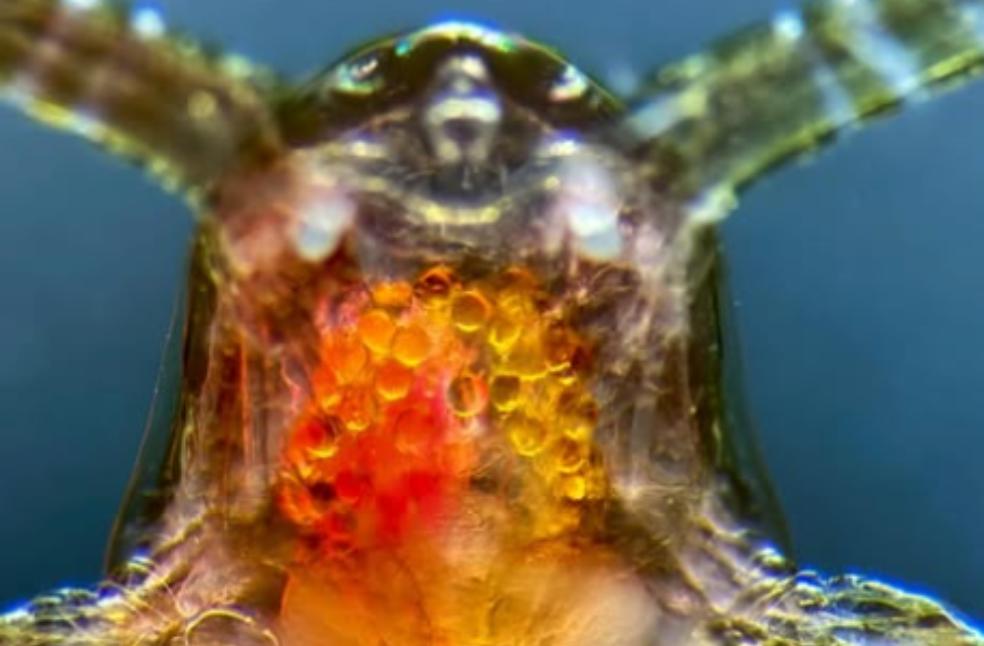
    Antarctic zooplankton lock away Carbon
    Image Via: Instagram@Prof. Daniel Mayor | Cropped by BH

    However, researchers warn that this critical natural process is under threat. Climate change, warming seas, and increasing krill harvesting, nearly half a million tonnes were caught in 2020 alone could reduce zooplankton populations and undermine their carbon sequestration ability.

    Prof. Daniel Mayor from the University of Exeter remarked that, “If this biological pump didn’t exist, atmospheric CO₂ levels would be roughly twice what they are now. The oceans are doing a pretty good job of mopping up CO₂, but we risk damaging that system.”

    Environmentalists have called for more regulation of krill fishing, particularly in sensitive Antarctic waters. The study’s authors also urge that their findings be integrated into global climate models to ensure accurate forecasts of future warming.

    Co-author Dr. Jennifer Freer noted that, “Compared to whales and penguins, these creatures might not be glamorous. But they’re essential. Without them, we’d be in much deeper trouble.”

    MOST READ | Teen pilot detained in Antarctica after flight plan violation

    STAR OF SECTOR 2025
    Antarctic Copepods Carbon Sequestration in Oceans Copepods Carbon Pump Deep Ocean Carbon Storage Fat Metabolism in Zooplankton Krill Harvesting Impact Seasonal Vertical Migration Zooplankton Migration
    Share. Facebook Twitter LinkedIn WhatsApp
    Avatar
    Trainee Reporter

    The news/article published above has been sourced, compiled, and corroborated by a Trainee Reporter at Britain Herald. If you have any queries or complaints about the published material, please get in touch with us at BritainHerald@Gmail.Com

    Newly Updated

    Vibe coding recognised as Collins Dictionary’s Word of the Year

    November 6, 2025

    US to cut 10% of flights as government shutdown deepens

    November 6, 2025

    Pope Leo rules out title ‘Co-Redemptrix’ for Mary

    November 6, 2025
    STAR OF SECTOR 2025

    Business

    Amazon challenges Perplexity over ‘agentic’ shopping bot

    Tech World November 5, 2025

    San Francisco: Amazon has filed a lawsuit against Perplexity AI, accusing the fast-growing AI startup…

    Shein faces French backlash; Bans all sex dolls globally

    November 4, 2025

    Starbucks sells majority stake in China business in $4bn deal

    November 4, 2025

    Meta reports record revenue; Profit hit by $15.9bn tax charge

    October 30, 2025
    Stay In Touch
    • Facebook
    • Twitter
    • LinkedIn
    • Instagram

    Curious

    Zodiacal Light: How to spot the subtle pre-dawn sky glow

    September 29, 2025

    Rare ‘blood moon’ lunar eclipse to light up UK skies

    September 7, 2025

    Massive ice calving at Perito Moreno Glacier sparks concern

    May 16, 2025

    Glowing Spiral appears in night sky; Linked to SpaceX Falcon 9 Rocket

    March 25, 2025

    Get the latest news around the globe

    Knowledge

    World Tsunami Awareness Day 2025 calls for global preparedness

    Awareness November 5, 2025

    World Tsunami Awareness Day 2025 strengthens the acute need to build disaster-resilient communities through the…

    Work Anywhere: How remote work is redefining offices

    October 25, 2025

    Voices of tomorrow: How Gen Z is rewriting the global narrative

    October 19, 2025

    World Mental Health Day 2025 spotlights psychological care in crises

    October 10, 2025
    18-EA-387-TryEngineeringSummerInst_BannerAd_300x250_Robot
    About Us
    About Us

    Britain Herald is a global news brand that plays a significant role in educating and informing the masses with informative content, the latest updates, and current affairs across the World.

    Operated and Managed by WellMade Network, the portal is a sister concern of GCC Business News and Emirati Times. For inquiries about Media Partnerships, Investment and other opportunities in line with our Editorial Policy, please contact us at;

    Email Us: News@BritainHerald.com
    Whatsapp: +971 5060 12456

    We Have

    Vibe coding recognised as Collins Dictionary’s Word of the Year

    November 6, 2025

    US to cut 10% of flights as government shutdown deepens

    November 6, 2025

    Pope Leo rules out title ‘Co-Redemptrix’ for Mary

    November 6, 2025

    Amazon challenges Perplexity over ‘agentic’ shopping bot

    November 5, 2025
    Facebook X (Twitter) LinkedIn Instagram
    • Home
    • Business
    • Tech World
    • Awareness
    • Contact Us
    Privacy & Cookies Policy | Terms & Conditions
    © 2002 BritainHerald.com, An Initiative by WellMade Network

    Type above and press Enter to search. Press Esc to cancel.