


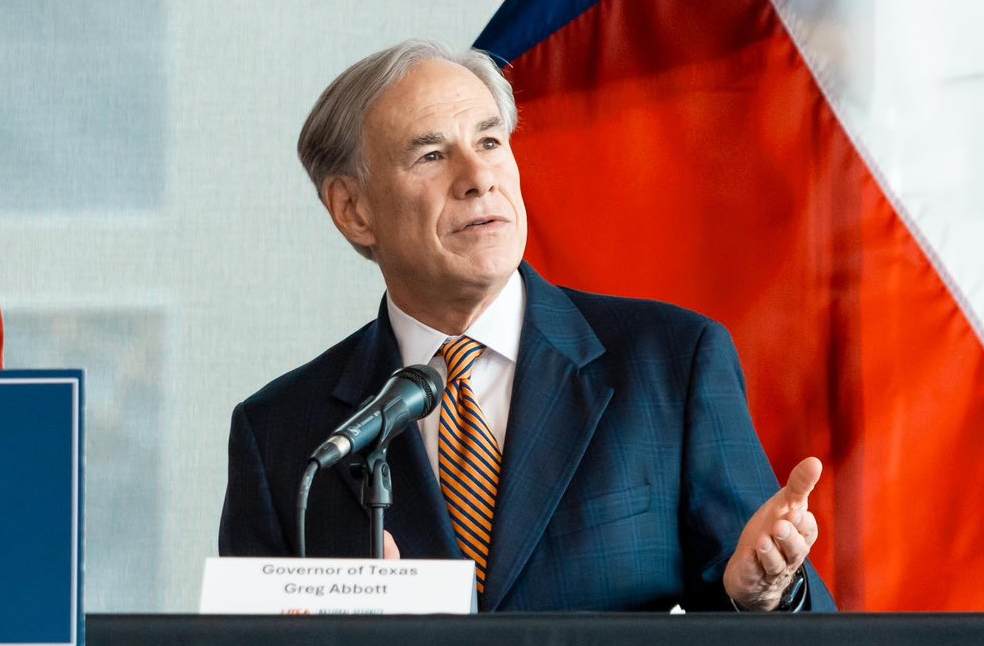
Texas: Texas Governor Greg Abbott has filed a lawsuit with the state’s Supreme Court to remove Democratic lawmaker Gene Wu from office, following a dramatic walkout by over 50 Democrats seeking to block a Republican-led redistricting plan.
Labelling Wu the ‘ringleader’ of what he called an attempt to ‘hijack’ state government, Abbott said their coordinated absence from the Texas House amounts to abandonment of office and warrants their removal. The lawsuit invokes a rarely used legal mechanism, writ of quo warranto, to challenge Wu’s right to hold public office.
The walkout, which left the 150-member House without the two-thirds quorum required to hold a vote, was aimed at preventing the passage of a new congressional map. The proposed changes would add five Republican-leaning seats to Texas’s congressional delegation, reinforcing GOP strength in Washington.
While Wu and his Democratic colleagues argue their actions fulfil their constitutional duty to oppose unjust laws, Abbott insists their refusal to participate in the legislative process must have consequences. The lawsuit stated that, “Most people who repeatedly fail to show up for work get fired. Public servants must be held to the same standard.”

KATRIN BOLOVTSOVA@Pexels | Cropped by BH
Abbott has also ordered the arrest of the absent Democrats to force their return to the statehouse. US President Donald Trump, speaking at a White House event, said the FBI may have to assist in tracking down the lawmakers.
Meanwhile, Texas Attorney General Ken Paxton has indicated that legal action could extend beyond Wu. Ken Paxton is pursuing a parallel process to declare all absent Democratic seats vacant, though he acknowledged the difficulty of filing separate lawsuits in potentially Democratic-leaning counties.
Democrats, however, remain defiant. Gene Wu, chairman of the Texas House Democratic Caucus stated that, “Denying quorum is not an abandonment of office, it is a form of protest. This is an abuse of power aimed at silencing dissent.”
In a broader context, both parties across the US are weighing redistricting strategies ahead of the 2026 midterms. While Republicans are pushing forward in states like Ohio, Florida, and Missouri, Democrats in California, Wisconsin, and New York are exploring legal and legislative paths to redraw their maps.
With national stakes and potential implications for control of Congress and possibly Trump’s political future, this Texas legal battle could set a precedent for how far partisan fights over redistricting can go.
POPULAR | HHS to cancel $500 mn in mRNA vaccine funding
