


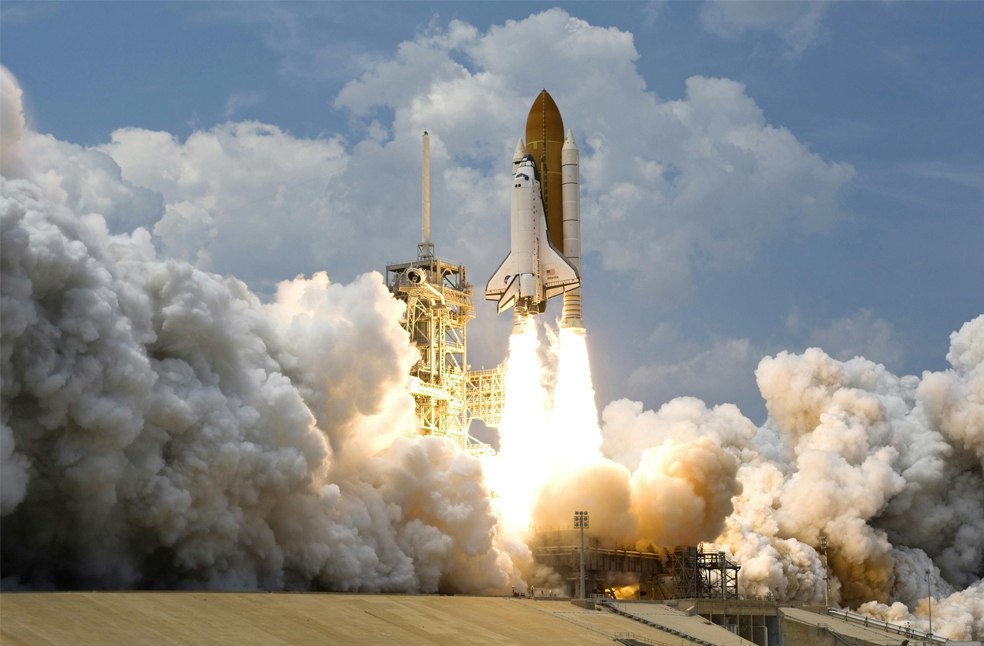
London: Scientists are urging the establishment of an international framework to tackle air pollution caused by the space industry, as emissions from rocket launches and satellite mega-constellations continue to rise.
A team led by Prof Eloise Marais at University College London (UCL) has been monitoring space activity since 2020. Their latest data shows 259 rocket launches in 2024 and 223 in 2023, consuming over 153,000 tonnes of fuel.
Prof Marais warned that, “More pollutants are being released into the atmosphere from rockets and satellites than ever before. Humans have never added this much air pollution to the upper atmosphere. If left unregulated, it may have serious impacts on Earth’s climate.”
The research highlights that launches for mega-constellation communication satellites, including Starlink, OneWeb, and Thousand Sails, have caused a threefold increase in emissions of climate-altering soot and carbon dioxide.

While the absolute amount of CO2 and soot is smaller than from other industries, particles released in the upper atmosphere linger far longer, producing up to 500 times greater warming impact than the same amount of soot from aviation or ground sources.
Prof Marais added that the propellant used for mega-constellation launches now surpasses the total propellant used for all other missions combined. Future deployments, such as the Amazon Kuiper mega-constellation, are expected to use European Space Agency rockets propelled by solid rocket fuel, producing ozone-damaging chlorine compounds, which could further alter the mix of pollutants.
Dr Connor Barker from UCL noted that many more mega-constellations are planned in the coming decades, which could significantly affect the climate and undermine progress made by the Montreal Protocol in repairing the ozone layer.
The most dramatic change is the sheer number of objects launched and in orbit. In the late 1960s and 2016, 100–200 objects were launched annually, whereas now thousands are sent into orbit each year, most with limited lifespans.
This growth is visible to the naked eye, as satellites appear as small bright dots moving slowly across the night sky, particularly noticeable during events such as the Perseids meteor peak.
Prof Stuart Martin, chair of trustees at the UK National Space Centre, explained that current international law treats space like the high seas: the country that launches an object owns it, and only its national laws apply. This legal framework complicates efforts to clean up space debris.
Already, many satellites are re-entering the atmosphere, vaporizing into tiny, sometimes chemically reactive metal particles. The UCL team tracked 2,539 objects re-entering in 2024 and 2,016 in 2023, totaling 13,500 tonnes of material from satellites and discarded rocket parts.
These findings underscore the urgent need for international regulation to manage space-related air pollution and mitigate the long-term impacts on Earth’s atmosphere and climate, particularly as the space industry continues to expand rapidly.
ALSO READ | Russia mandates state-run MAX app on all mobiles, tablets
