



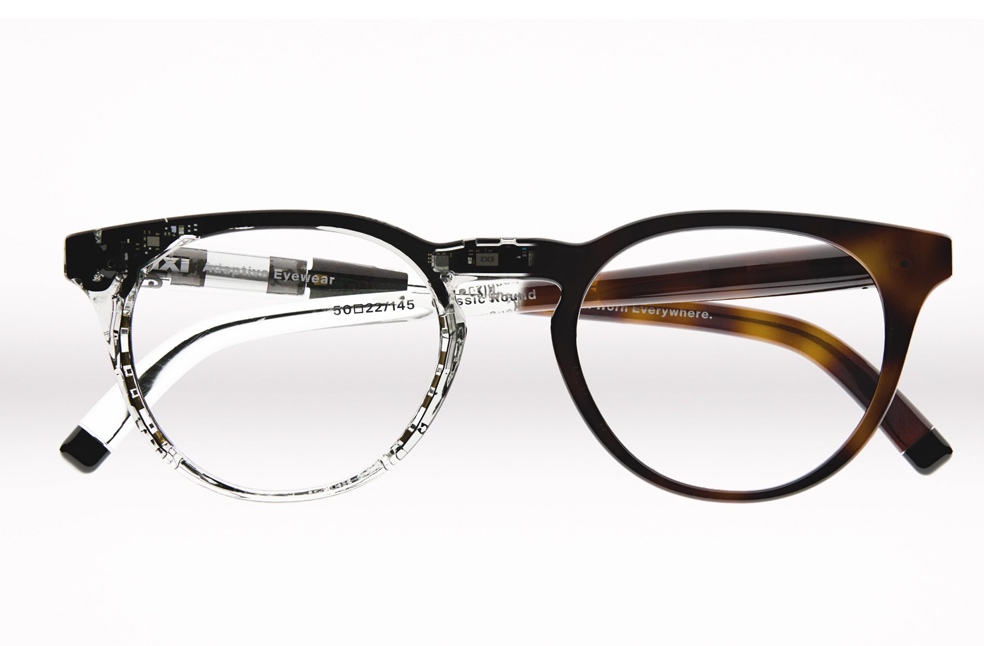
Helsinki / London: They may look like a regular pair of glasses, but Finnish tech firm IXI is reimagining eyewear with its autofocus smart glasses, which pack advanced liquid crystal lens technology into a familiar frame.
Niko Eiden, Chief Executive and Co-founder of IXI, demonstrates the innovation by holding up the glasses, whose lenses contain liquid crystals that can adjust their vision-correcting power on demand.
“This one pair could correct the vision of someone who normally uses different pairs of glasses for seeing near or far.” The technology hinges on an electric field that rotates the liquid crystals. “These liquid crystals… we can rotate them with an electrical field. It’s totally, freely tuneable,” explains Eiden.
View this post on Instagram
The glasses are also equipped with an eye tracker, allowing them to adapt in real time to what the wearer needs, whether reading up close or viewing distant objects. However, Eiden acknowledges the challenge of consumer acceptance, citing past failures like Google Glass. “We need to make our products look like existing eyewear, Most people don’t want to look like cyborgs.”
IXI’s sleek-looking frames house a small battery that lasts up to two days and can be recharged overnight, though Eiden declined to confirm a retail launch date or price point, only smiling when asked if £1,000 was accurate.
The growing demand for such tech is being driven by conditions like presbyopia, an age-related difficulty in focusing on close objects, and myopia, or short-sightedness, both on the rise globally.
Traditional solutions such as bifocals or varifocals force users to shift their gaze to specific lens regions for clarity. In contrast, autofocus lenses promise seamless, automatic adaptation to changing visual needs, even as a user’s eyesight evolves.
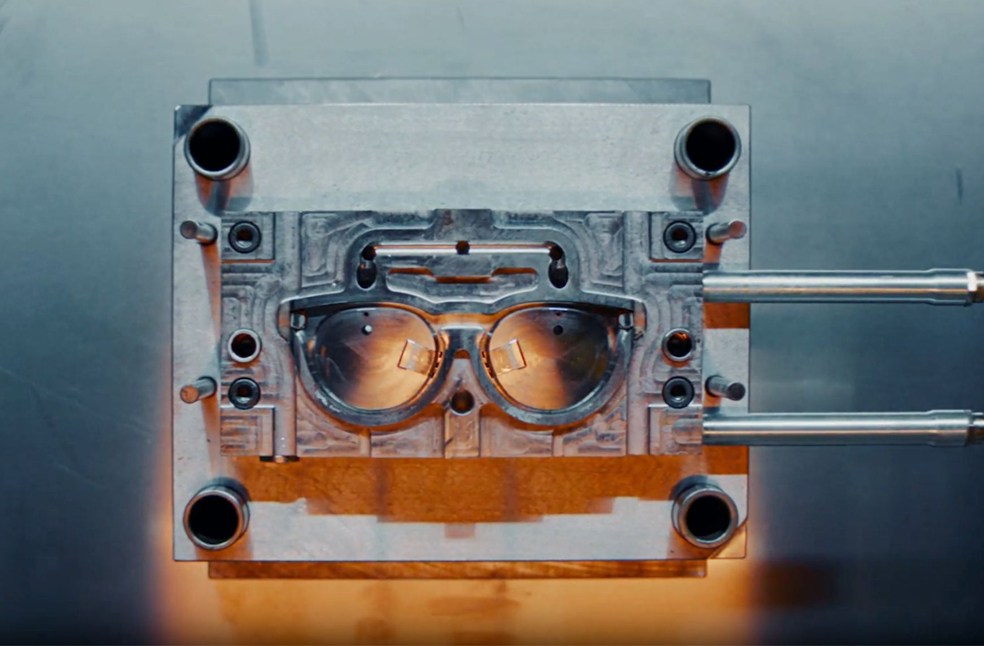
Still, the development process hasn’t been flawless. “The first lenses that we produced were horrible,” Eiden admits. Early prototypes were ‘hazy’ with poor edge quality. But improved versions have shown promise in trials where participants shift from reading a page to observing distant objects. The glasses are designed to smoothly adjust focus based on eye movements.
However, the eye tracker cannot determine exactly what a wearer is looking at, though it can infer certain activities. “Reading is in principle detectable because of the nature of eye movements associated with it,” Eiden explains.
Product director Emilia Helin points out that the frames need to fit well to function properly, given how closely the glasses respond to eye behavior. “We have some flexibility but not full flexibility,” the Director says.
The electronics inside limit how much the frame can be adjusted, so the company has developed a small range of styles designed to suit a variety of faces. Experts believe autofocus lenses may offer real advantages for users frustrated with traditional multifocal glasses.

Professor Chi-Ho To of Hong Kong Polytechnic University shares a similar concern: “What if the vision correction went wrong or was delayed slightly while [I] was, say, performing surgery on someone?” Still, Prof adds, “I think in terms of general use, having something that allows autofocusing is a good idea.”
Eiden notes that the first-generation lenses won’t adjust across the entire lens area, so users can glance over the dynamic region if needed. “One can always glance over the dynamic area,” he says. But he admits that fully self-adjusting lenses would raise higher safety stakes: “If wholly self-adjusting lenses emerge, then safety will become a much more serious business.”
This isn’t the first foray into adaptable lenses. In 2013, UK-based firm Adlens released manually adjustable glasses using a dial to compress a fluid-filled membrane, changing the lens curvature. Those specs were priced around $1,250 (£920) and “were well received by consumers” but not by opticians, which “strangled sales,” according to current Adlens CEO Rob Stevens.
Adlens founder Professor Joshua Silver, who no longer works with the company, developed the concept in 1985. His fluid-filled adjustable lenses could be tuned and permanently set to the user’s prescription. His technology has brought vision correction to about 100,000 people in 20 countries. Now leading a new project called Vision, Silver is seeking investment to expand the reach of affordable adjustable eyewear.
Yet, he remains skeptical about high-end smart specs. “Wouldn’t [people] just go and buy reading glasses, which would more or less do the same thing for them?” Silver asks.
Meanwhile, the field of vision-correcting tech is evolving beyond just clarity, some innovations are targeting myopia progression in children. Prof Chi-Ho To has developed lenses containing a honeycomb-like ring. The center of the lens allows normal light focus, while the ring creates slightly defocused peripheral light, which appears to slow abnormal eye growth. This method is reported to reduce myopia progression by 60 percent and is now in use in more than 30 countries.
British firm SightGlass offers a similar but gentler approach by reducing visual contrast, which may likewise influence eye development.
Looking ahead, Prof To has an even more ambitious goal: not just slowing but reversing myopia. “There is growing evidence that you can do it,” he says, teasing a future where smart glasses could restore vision rather than correct it.
ALSO READ | Researchers develop dual method to prevent Chemo hair loss
