


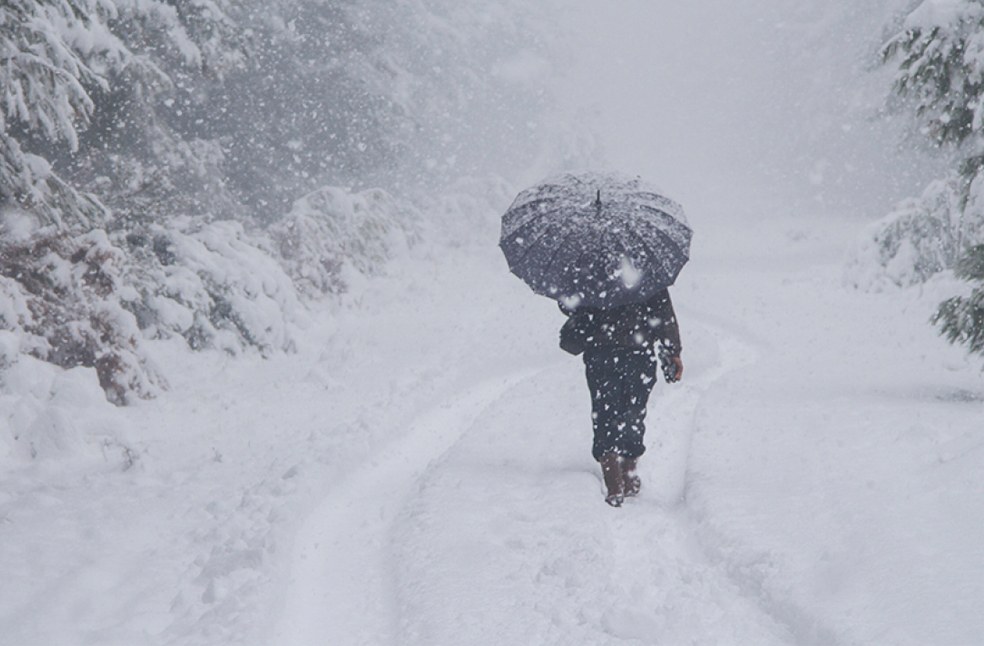
New York: A dangerous and far-reaching winter storm is bearing down on large parts of the United States, with at least 16 states and Washington DC declaring emergencies as authorities warn of potentially life-threatening conditions.
The massive system is expected to bring snow, sleet, freezing rain, and unusually cold temperatures to the south, Midwest, and east coast over the weekend.
The winter storm began taking shape across the Rocky Mountains and Great Plains and is forecast to surge through the southern and midwestern regions, intensify along the East Coast on January 24, and reach as far north as Maine by January 25. Meteorologists estimate that at least 230 million people could be affected.
PUBLIC SERVICE ANNOUNCEMENT:
As the Midwest, Southern, and Eastern parts of the United States anticipate a major winter weather event it is important to prepare and take precautions.
I am in contact with the state and local officials in the path of the storm. Federal emergency… pic.twitter.com/OF3m3QFUzq
— Secretary Kristi Noem (@Sec_Noem) January 24, 2026
Governors issued emergency declarations in advance, both to warn residents of mortal danger and to free up financial resources to manage the unfolding crisis. By early Friday, states of emergency had been declared in Texas, Louisiana, Mississippi, Alabama, Georgia, South Carolina, and North Carolina.
Missouri, Tennessee, Virginia, Maryland, and Pennsylvania followed, with New York adding itself later on Jan 22 morning. Arkansas, Kansas, and Kentucky also issued emergency declarations, while Washington DC Mayor Muriel Bowser declared a state of emergency for the district.
As the winter storm approached, Donald Trump posted on his social media platform that, “Record Cold Wave expected to hit 40 States. Rarely seen anything like it before. Could the Environmental Insurrectionists please explain – WHATEVER HAPPENED TO GLOBAL WARMING???”
Climate experts counter that the climate crisis is driving increased instability in weather patterns, including disruptions to the polar vortex that allow Arctic air to push further south more frequently and persistently. Although global temperatures continue to rise, such disruptions are contributing to more extreme weather events.
Trump, a long-time climate crisis skeptic, is pulling the US back from domestic climate action and international agreements aimed at curbing human-caused global heating, while continuing to circulate inaccurate claims.
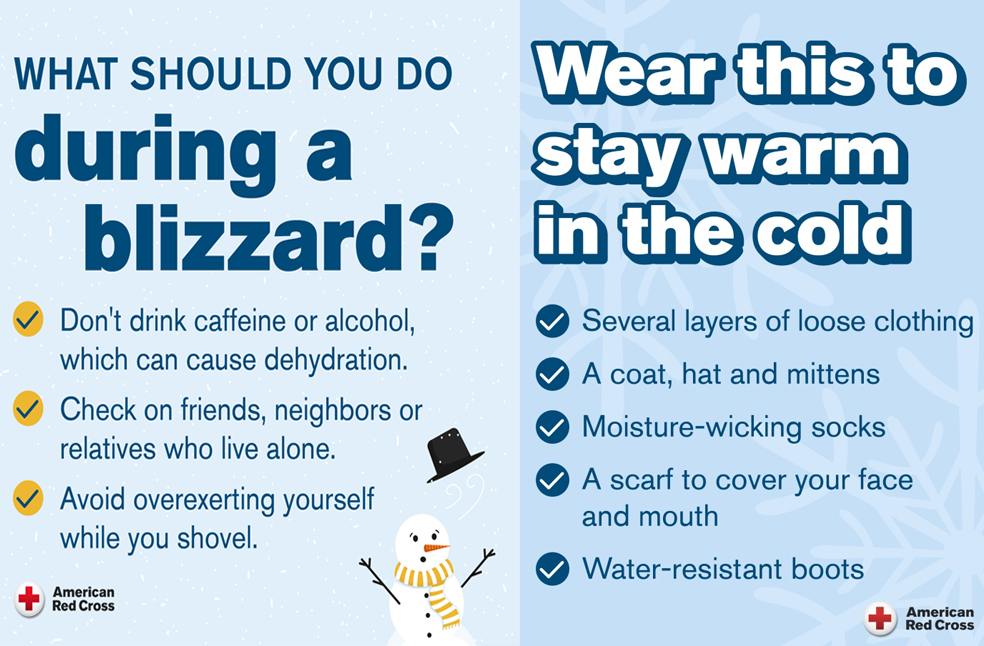
The American Red Cross highlighted the link between climate change and extreme winter events, stating that while winters are becoming warmer and shorter overall, a warmer atmosphere holds more moisture, increasing the likelihood of heavier snowfall.
Across several states, residents rushed to stock up on essentials, with lines forming at stores as people bought bottled water, food, toilet paper, blankets, generators, and ice melt. Local media outlets shared images of empty shelves, while the Red Cross urged people to prepare for dangerous conditions and possible disruptions.
Meteorologists warned that large areas could experience significant snowfall, sleet, and especially freezing rain, which may coat roads and infrastructure in thick layers of ice. Such conditions could make roads deadly, bring down power lines, and hamper snow-clearing efforts. Officials in southern states, where prolonged cold is uncommon, warned residents to expect extended power outages.
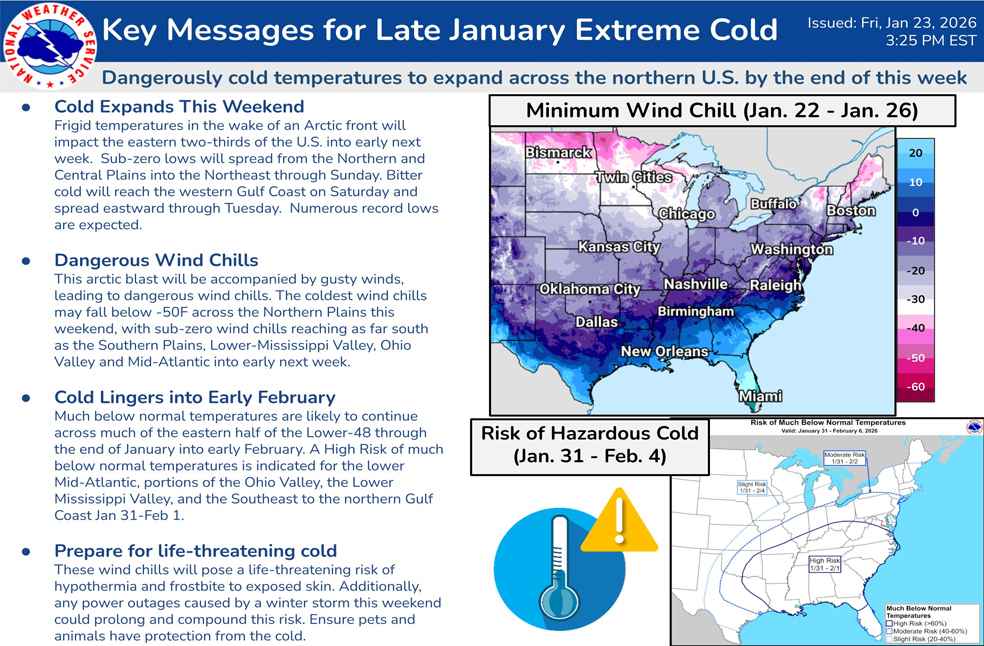
Temperatures are forecast to plunge well below freezing across much of the south and in northern regions accustomed to harsh winter storms. The National Weather Service noted that snowfall totals exceeding 12 inches are likely across the Ohio Valley, mid-Atlantic, and northeast.
More than 100 million people across the US are expected to face below-freezing temperatures through at least next January 28. The Federal Emergency Management Agency (FEMA) has also adjusted staffing plans in response to the winter storm.
FEMA has reportedly drafted plans to eliminate thousands of positions this year and has faced repeated criticism from the White House during Trump’s second administration. FEMA stated that reports mischaracterised its CORE programme, explaining that these term-limited positions are designed to fluctuate based on disaster activity, operational needs, and available funding.
The agency confirmed that its National Response Coordination Center had been activated in response to the historic winter storm and urged media outlets to focus on public safety rather than what it described as manufactured drama.
Travel disruption is already widespread. According to FlightAware, US airlines have canceled about 1,400 domestic flights scheduled for January 24. Delta Air Lines urged passengers to reschedule travel, warning of cancellations across the Ohio and Tennessee valleys, including Nashville and Raleigh–Durham, and possible additional schedule adjustments for Atlanta and north-eastern regions.
Delta had already canceled flights at several airports in five states, cautioning that slow operations could trigger further delays and complicate rebooking during one of the busiest winter travel periods.
Airlines advised passengers to closely monitor flight status through mobile apps and airline websites for the fastest rebooking options. At Charlotte Douglas International Airport in North Carolina, snow-removal equipment was being urgently tested ahead of the winter storm.
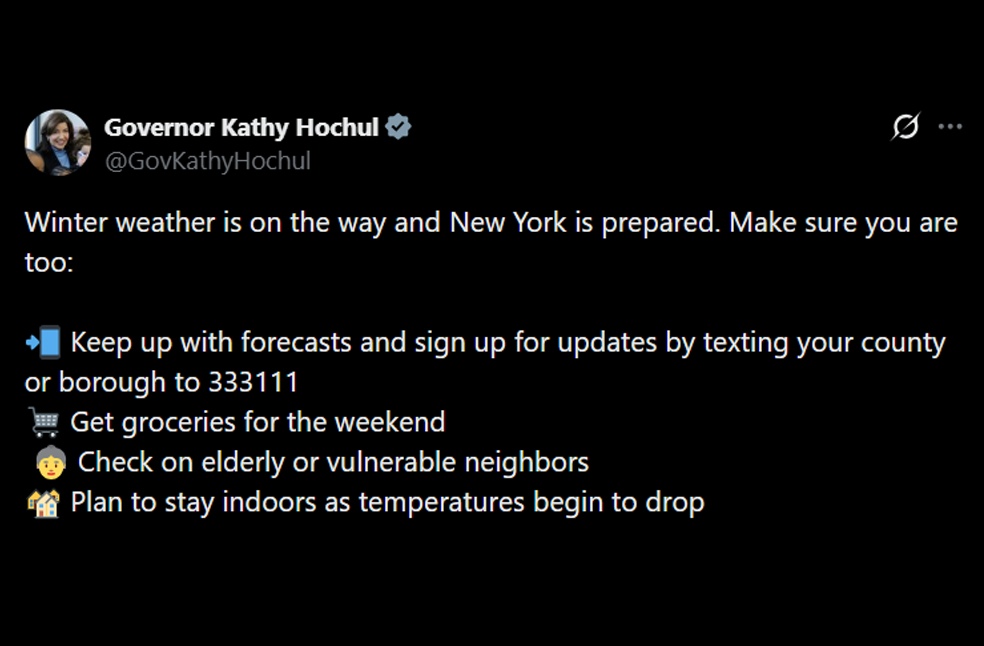
In New York, Governor Kathy Hochul declared a state of emergency for the entire state and said that she was coordinating with New York City’s new mayor, Zohran Mamdani, who took office on January 1. The winter storm could bring up to 18 inches of snow, marking the city’s most severe winter weather event in several years and presenting the first major operational test for the new mayor.
ALSO READ | Teachers raise alarm over declining school readiness in UK
